
This site contains affiliate links, view the disclaimer page for more information.
If you are trying to decide between Bruges vs Ghent, I am here to tell you that this is one of the best travel dilemmas you can have, because both cities are genuinely spectacular. I visited both on the same trip through Belgium, and the contrast between them caught me completely off guard. I thought I knew what to expect. I did not. By the time I left Belgium, I had strong opinions about both cities, a lot of waffle crumbs on my jacket, and a very clear answer to the question everyone asks before booking a trip to this part of Europe. So let me break it all down for you.
Table of Contents
First Impressions: Two Cities, Two Completely Different Feelings
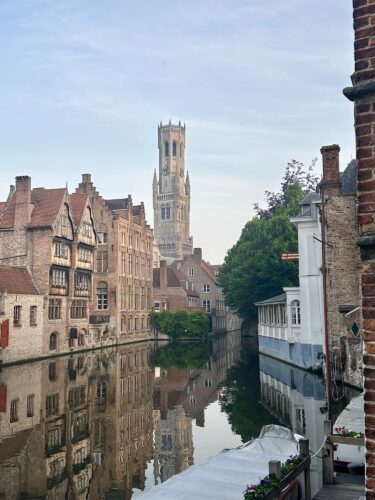
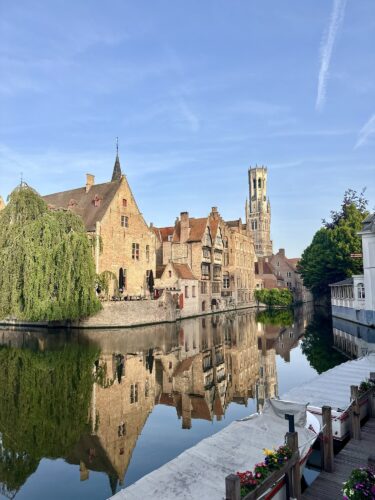
The moment you step off the train in Bruges, something shifts. The streets are narrow and cobbled, the buildings lean slightly toward each other like they are sharing a secret, and the canals reflect everything in that dreamy, slightly blurred way that makes you feel like you have wandered into a painting. It is beautiful in a way that feels almost unreal. My first thought was that I needed to slow down and just look at everything around me.
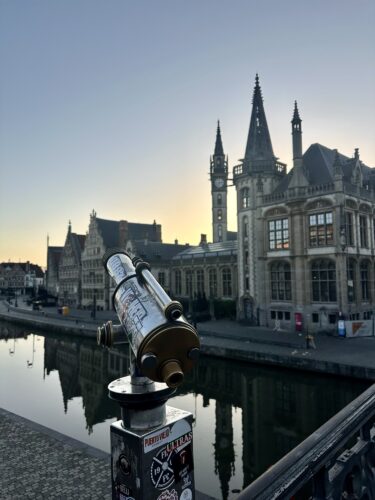
Ghent hit differently. It is bigger, louder, and has this unmistakable energy of a city that is actually being lived in. Students cycle past you at full speed. Locals sit outside at cafe tables and do not look up when tourists walk by. The architecture is just as dramatic as Bruges, but it does not feel preserved under glass. It feels alive. My first impression of Ghent was that this was a place where I could actually stay for a few days and start to feel like I belonged there. That contrast between the two cities sets the tone for everything else.
The Canals: Bruges vs Ghent on the Water
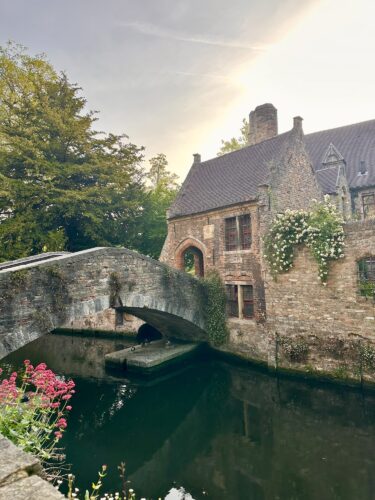
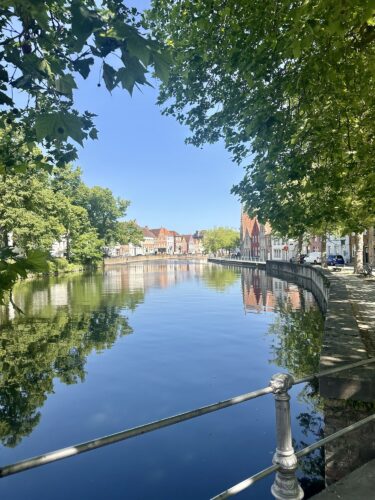
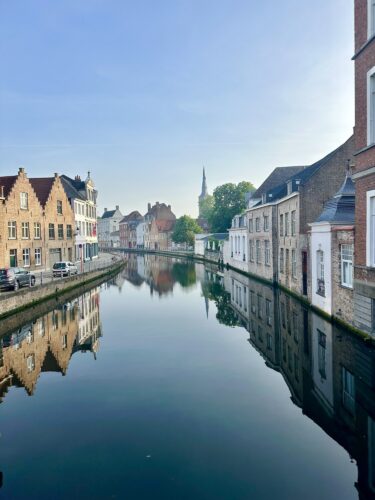
Both cities have canals, and both are stunning, but they function very differently in each place. In Bruges, the canals are the main attraction. They wind through the entire city, and everywhere you turn there is a perfect reflection of a brick building or a stone bridge. Taking a canal boat tour is basically mandatory, and I say that as someone who usually rolls her eyes at tourist boat tours. It was worth every minute. You float under low bridges, your guide points out centuries-old facades, and you get views of the city that you simply cannot get from the street. The canals in Bruges are postcard-perfect, and they know it.
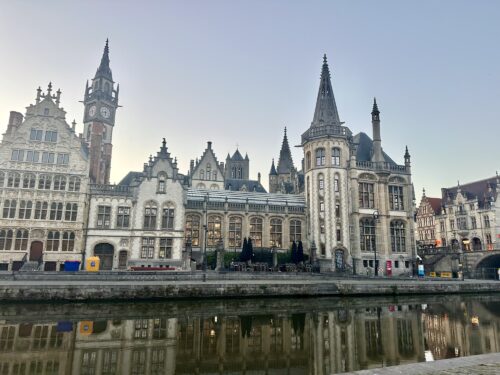
In Ghent, the canals share the spotlight with the Graslei and Korenlei, the two medieval guild quays that line either side of the water in the heart of the city. This is where you want to spend a long afternoon. The buildings that line this stretch are some of the most beautiful in all of Belgium, and the vibe is much more relaxed and local than anything you will find at a comparable spot in Bruges. People sit on the steps with beers, friends meet up after work, and the whole scene feels organic in a way that a tourist attraction rarely does.
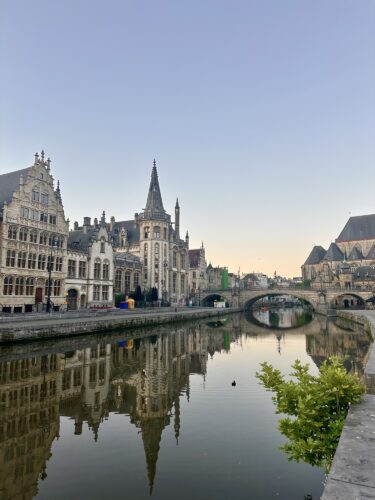
If you want the most photogenic canal experience, Bruges wins. If you want the most enjoyable canal experience, Ghent is your city.
Architecture: Medieval Magic vs. Something More Layered
Bruges is a UNESCO World Heritage Site, and walking through its historic center makes it obvious why. The entire medieval core of the city has been preserved almost perfectly. Walking from the Markt square to the Basilica of the Holy Blood to the edges of the canal district feels like moving through a living museum. The architecture is consistent, cohesive, and breathtaking.
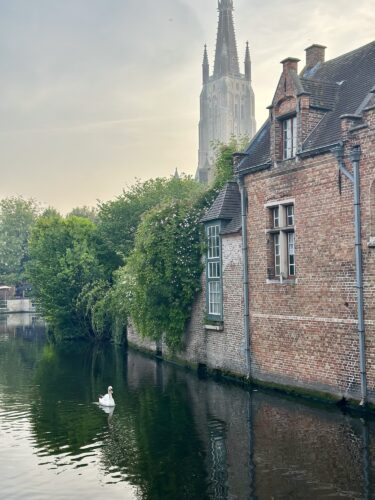
But here is the thing about a perfectly preserved medieval city: it can start to feel a little like a stage set after a while. Every building is old. Every street is picture-perfect. There is a point, and it came for me around hour three, where the beauty starts to feel almost uniform.
Ghent does not have that problem.
The architecture in Ghent is a layered mix of medieval, Gothic, Baroque, Renaissance, and Art Nouveau, and the variety makes it feel richer and more complex. You will turn a corner expecting more of the same and suddenly find yourself in front of a stunning Art Nouveau townhouse that has no business being that beautiful. The city keeps surprising you.
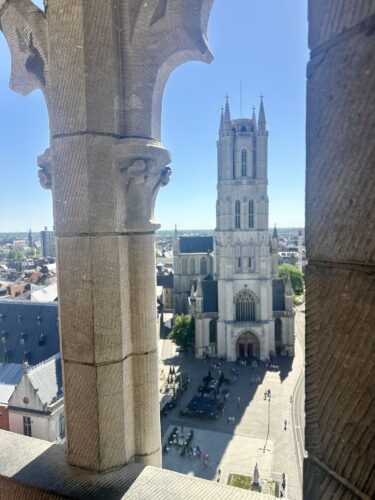
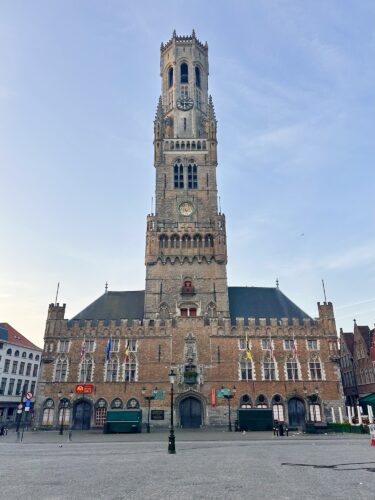
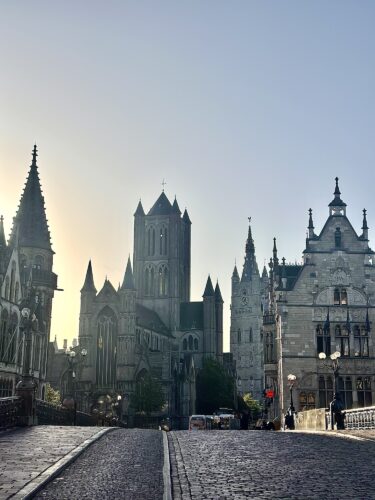
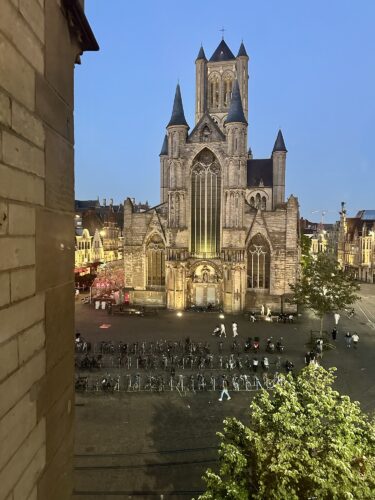
Both cities have their own Belfry, which I found endlessly fun as a comparison point. The Bruges Belfry towers over the Markt and is one of the most recognizable landmarks in Belgium. The Ghent Belfry is slightly older and stands alongside Saint Bavo’s Cathedral and the Saint Nicholas Church in a trio of towers that defines the Ghent skyline. Standing at the base of all three in Ghent and just looking up is one of those travel moments I will not forget.
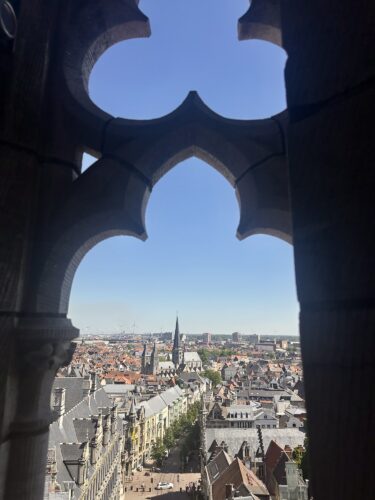
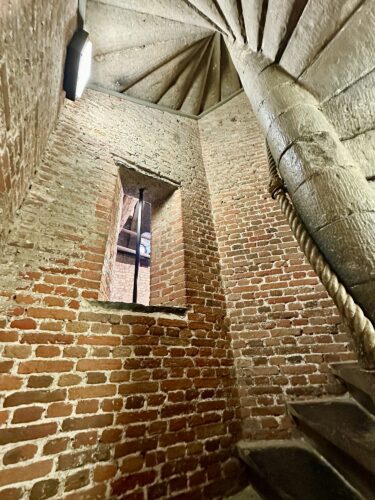
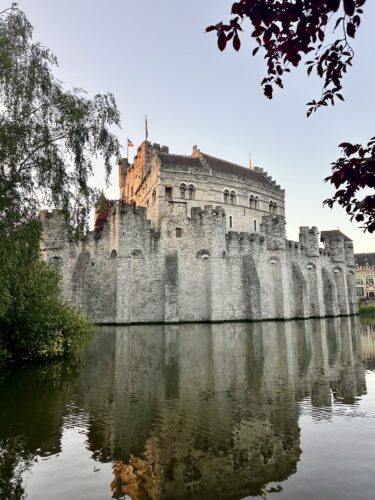
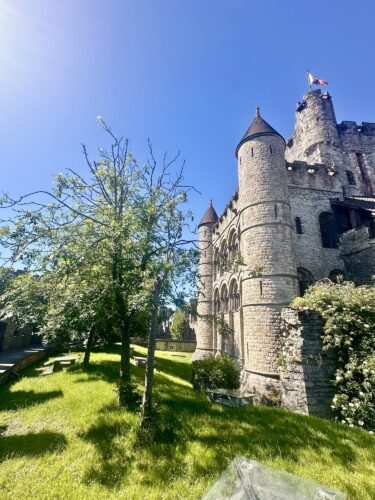
And then there is Gravensteen Castle in Ghent, a fully intact medieval castle sitting right in the middle of the city. It has a moat, towers, and a surprisingly dark history that the museum inside does not shy away from. There is nothing quite like it in Bruges, and it is worth the visit on its own.
The Crowd Factor
I need to be honest with you about this because it genuinely affects how you experience Bruges. Bruges is one of the most visited small cities in all of Europe. On a busy day, especially in summer, the crowds in the historic center can be intense. The streets around the Markt and along the main canal routes fill up quickly with day-trippers who have come in from Brussels for a few hours. It does not ruin the experience, but it does shape it. You will be jostling for position at the most popular viewpoints. You will wait in lines. You will share your perfect canal photo with forty other people taking the exact same shot.
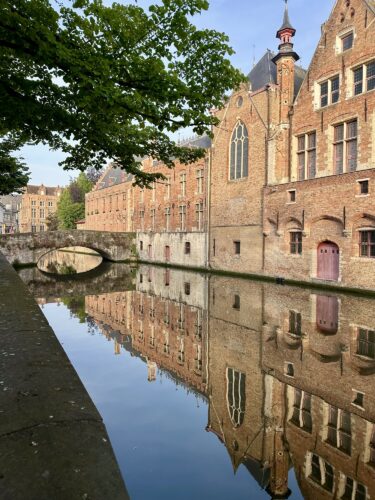
If you visit early in the morning, before 9am, Bruges is an entirely different city. The streets are quiet, the light is soft, and you can have whole stretches of canal to yourself. I cannot stress this enough: get up early in Bruges. It is worth it.
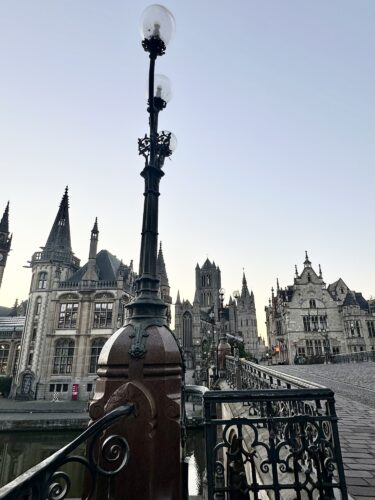
Ghent gets far fewer tourists, and it shows in the best possible way. The main attractions have visitors, of course, but you never feel like you are being swept along in a crowd. You can stand in front of the Ghent Altarpiece in Saint Bavo’s Cathedral and actually take a moment to absorb what you are looking at. You can wander the streets around Vrijdagmarkt square and feel like a person moving through a city rather than a tourist moving through a theme park.
Food and Drink: Waffles, Beer, and Where Ghent Pulls Ahead
Let me start with the thing everyone wants to know: yes, you will eat extremely well in both cities.
Belgian waffles, fries with mayo, chocolate, and some of the best beer in the world are available everywhere. This is not a country that will let you go hungry or thirsty.
But when it comes to the actual dining experience, Ghent has a clear edge.
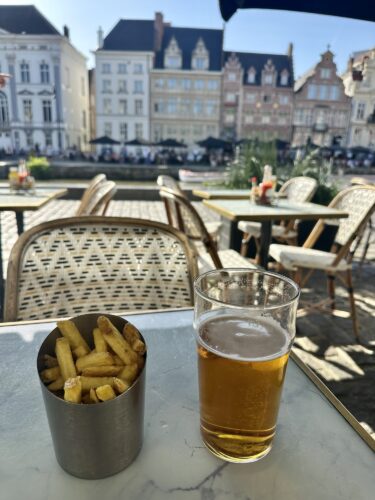
Bruges is heavily oriented toward tourists, and the restaurant scene reflects that. There are plenty of good meals to be had, but you have to be more careful about where you eat. The spots closest to the main squares tend to be overpriced and mediocre. The better restaurants are tucked away on side streets, and doing a little research before you go makes a real difference. What Bruges does exceptionally well is chocolate. The city has an incredible concentration of chocolatiers, and I spent an embarrassing amount of time and money in them.
Ghent, on the other hand, has a genuine food culture that goes beyond tourist dining. The city is famous in Belgium for its food scene, and the streets around Vrijdagmarkt and the areas east of the center are full of spots where locals actually eat. I had some of my favorite meals of the entire trip in Ghent.
Here is something that surprised me: Ghent has a strong tradition of vegetarian and vegan dining and is considered one of the most plant-friendly cities in Europe. There is even a weekly “veggie day” tradition that the city has promoted for years. As someone who likes to eat vegetables alongside all of those fries and waffles, I appreciated this more than I expected to.
A few things worth trying in both cities:
- Liege waffles (dense, caramelized, eaten warm from a street stall)
- Frites from a proper frituur with a ridiculous selection of sauces
- Waterzooi, a traditional Belgian stew that originated in Ghent and is served with chicken or fish
- Local Belgian beers, which differ by region and brewery and are worth exploring seriously
Things to Do: Building Your Itinerary
Here is a quick breakdown of the highlights in each city so you can start thinking about how you want to spend your time.
In Bruges, do not miss:
- Canal boat tour (do it in the morning for the best light and smaller crowds)
- Climbing the Belfry (there are 366 steps and the views are worth every single one)
- Basilica of the Holy Blood (small but genuinely fascinating, especially if you go on a day when the relic is displayed)
- Markt square (touristy but impossible to skip, and best with a beer at one of the cafe terraces)
- The chocolate shops (just budget time and willpower accordingly)
- Groeninge Museum if you want to see Flemish Primitive paintings up close
In Ghent, do not miss:
- Gravensteen Castle (budget at least two hours, the exhibits inside are surprisingly detailed)
- Saint Bavo’s Cathedral and the Ghent Altarpiece (this is one of the most important paintings in Western art history, and seeing it in person is genuinely moving)
- Graslei and Korenlei at golden hour (this is the move, trust me)
- Vrijdagmarkt square for a local atmosphere and good food options nearby
- Werregarenstraat, a narrow alley entirely covered in street art that changes constantly
- Patershol neighborhood for dinner, one of the oldest parts of the city and full of great restaurants
Can you do both cities in a single day? Technically yes, but I would not recommend it if you have any other option. Both cities deserve more time than a rushed few hours allows. If you are doing a day trip from Brussels, pick one and give it your full attention. If you have two days, you can absolutely do both and feel satisfied.
What to Pack for Bruges and Ghent
Both cities are compact and best explored on foot, so what you pack will make a real difference in how comfortable your days are. Shoes are the most important thing to get right. The streets in both cities are cobblestone, and not the gentle kind. They are uneven, slippery when wet, and ruthless on thin soles. Wear your most comfortable walking shoes, not your cutest ones. I learned this the hard way in Bruges and spent the second half of my afternoon regretting every decision I had made that morning.
Belgium is also a place where the weather can shift quickly, especially if you are visiting outside of peak summer. A light rain jacket or packable layer is worth throwing in your bag no matter what time of year you go.
A few other things worth having:
- A crossbody bag or small daypack to keep your hands free while walking and navigating narrow streets
- A reusable water bottle since there are not always obvious places to grab water between stops
- A portable charger so you are not hunting for an outlet mid-afternoon when your phone is at 12 percent and you still have three more things you want to photograph
- Cash in euros since some smaller shops, chocolatiers, and street food stalls are cash only
- A light cardigan or layer for churches and cathedrals, which tend to run cool even in summer
Both cities are very walkable and do not require much gear beyond the basics. Pack light, wear good shoes, and leave room in your bag for chocolate. You will thank yourself later.
Vibe Check: Who Is Each City Actually For?
This is the part of the comparison that I think matters most, because the right city depends entirely on what you are looking for when you travel.
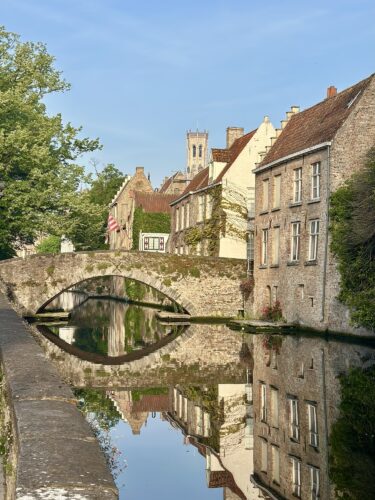
Bruges is for you if:
- You want somewhere that feels romantic and almost otherworldly
- Photography is a big part of how you experience travel
- You are visiting Belgium for the first time and want the classic experience
- You prefer a slower pace and spending a full day just wandering and absorbing atmosphere
- You are traveling with someone and want that fairytale setting
Ghent is for you if:
- You want to feel like a local rather than a tourist
- You love history that comes with real depth and context
- Food and the restaurant scene are important to you
- You are a repeat visitor to Belgium looking for something beyond the highlights
- You want a city with more creative energy and a younger vibe
Here is my honest take: I loved Bruges for the way it looked, but I loved Ghent for the way it felt. Bruges made me want to take photos. Ghent made me want to stay. If someone told me I could only go back to one of them, I would choose Ghent without much hesitation, and I say that knowing full well that the Bruges canals at sunrise are one of the most beautiful things I have ever seen.
Getting There and Getting Around
Both cities are easy to reach by train from Brussels, which makes them ideal additions to any Belgium itinerary.
Ghent is about 30 minutes from Brussels by train, which makes it the more accessible of the two for a quick day trip. Bruges is around an hour, still very manageable but slightly more of a commitment. Trains run frequently between Brussels and both cities throughout the day, so you do not need to plan far in advance.
Within each city, the best way to get around is on foot. Both historic centers are compact enough that you can walk almost everywhere, and that is genuinely the best way to experience them. In Ghent, you will also see a lot of locals cycling, and bike rentals are available if you want to cover more ground.
A few practical notes:
- Most of the major sights in Bruges have entrance fees, so budget accordingly
- Ghent is larger than it looks on a map, and some of the best neighborhoods are a 15-20 minute walk from the main square
- Both cities are busy on weekends, especially in summer, so a midweek visit if possible will give you a noticeably quieter experience
- I would recommend spending at least one night in whichever city you visit so you can see it in the evening when the day-trippers have gone
If you can only do one overnight, stay in Bruges. The city transforms completely after dark when the tourist crowds clear out, and walking those canal streets at night is something I still think about.
Bruges vs Ghent: The Final Verdict
So which city wins the Bruges vs Ghent debate? Honestly, they both do, for different reasons.
Bruges is the more iconic, more photogenic, and more immediately beautiful of the two. It earns every bit of its reputation, and if you are standing in front of a canal in the early morning with the city to yourself, you will understand why people have been making the trip here for centuries. Go for the beauty, the chocolate, and the canal boat. Give it a full day, get up early, and stay for dinner.
Ghent is the better city for travelers who want more than a beautiful backdrop. It has more to do, a better food scene, fewer crowds, and a depth of history that rewards curiosity. The Ghent Altarpiece alone is worth the trip. Go for the atmosphere, the castle, the waterfront at golden hour, and the feeling of being somewhere that has not been entirely reshaped around the experience of visiting it.
If you have the time, do both. Take the train from Brussels, spend a night in each, and let yourself be surprised by how different two cities that are less than an hour apart can actually feel. Belgium is a small country that consistently overdelivers, and these two cities are the best examples of why.
You really cannot go wrong here. You just have to go.
With love,
Bri and Cat
Affiliate Disclaimer:
As an Amazon Associate I earn from qualifying purchases. This comes at no additional cost to you. We only recommend products that we believe will add value to our readers.
Leave a Reply