
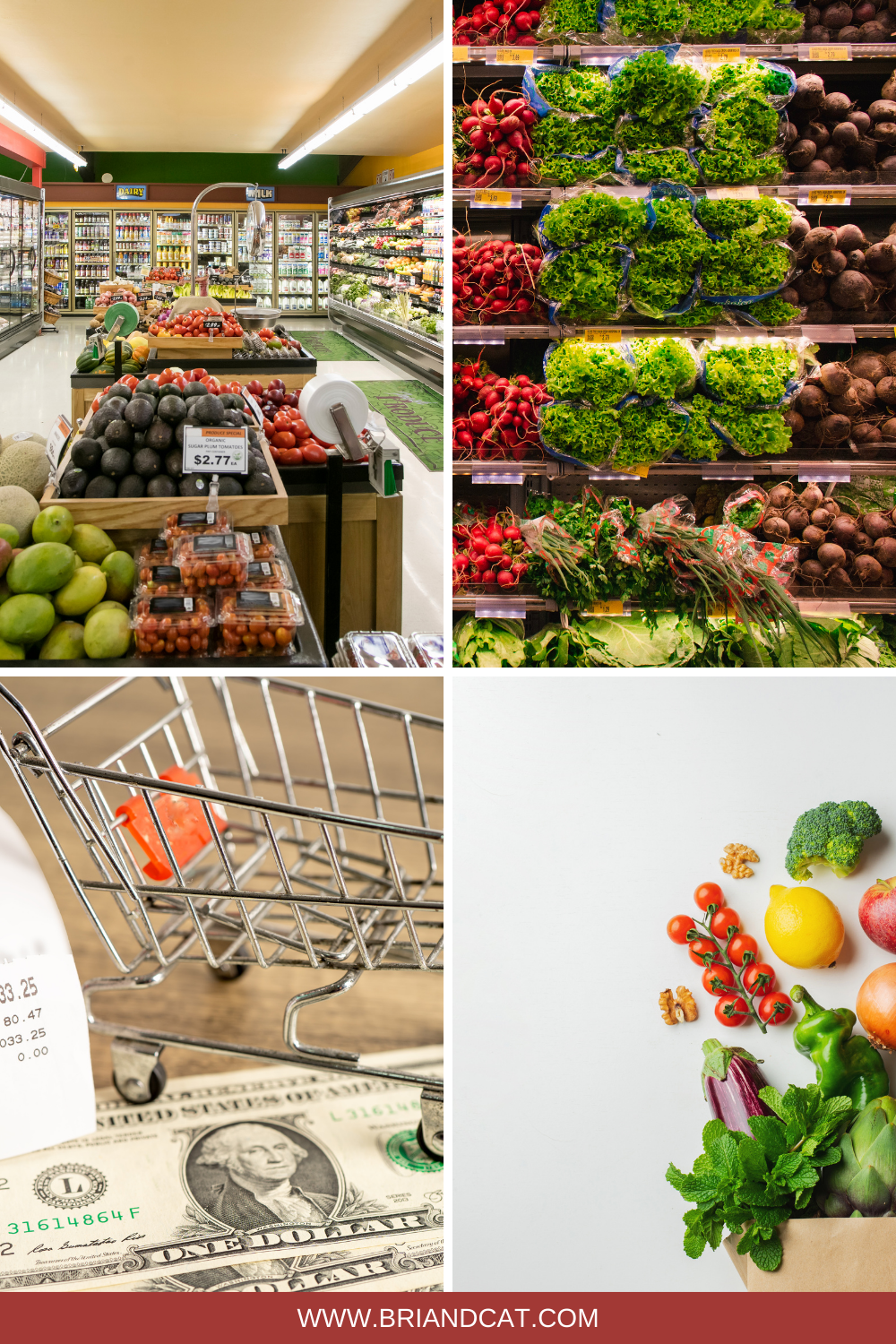
Let’s talk about something that quietly eats away at your budget every single week: the way you grocery shop. Learning how to grocery shop like a minimalist and cut your food bill in half was a game-changer for me. It’s not just about saving money (although that’s a huge win), it’s about being intentional, avoiding waste, and simplifying a part of life that often feels chaotic.
I used to walk into the grocery store with good intentions and walk out with kale I’d forget about, a random jar of miso paste I didn’t know how to use, and a receipt long enough to wrap a gift with. And then, let’s be real, I’d still order takeout on Thursday because I didn’t feel like cooking. Sound familiar?
Over time, I learned to rein it in. I now spend half as much on groceries, waste almost nothing, and eat better than ever. Here’s how I got there.
Table of Contents

Step 1: Rewire Your Grocery Mindset
Before we even talk shopping lists, we need to talk mindset. Grocery shopping like a minimalist means:
- Only buying what you truly need.
- Planning meals around ingredients you already have.
- Letting go of the “stock up just in case” mentality.
Minimalism in the grocery store doesn’t mean deprivation. It means clarity. You’re not sacrificing flavor or nutrition, you’re gaining focus and control.
I used to think having a full fridge meant I was “prepared.” But a full fridge that goes uneaten? That’s just wasted money.
The Hidden Cost of Food Waste
One of the most eye-opening things I learned on this minimalist grocery journey was just how much money I was throwing away, literally.
According to the USDA, the average American household wastes 30–40% of the food they buy. That can add up to over $1,500 a year for a family of four. That’s like buying groceries every week… and tossing a third of them straight into the trash.
When I started tracking what I was throwing away, half-used bags of salad, forgotten leftovers, moldy fruit, I realized I wasn’t just wasting food, I was wasting hard-earned money. Every soggy cucumber or expired yogurt was a dollar gone.
By shopping with intention and planning around what I actually eat, I now waste almost nothing. Not only does that feel good ethically and environmentally, it directly saves me hundreds of dollars a year.
So if you’ve ever looked at your grocery bill and wondered, Where did it all go?… check the trash. Food waste might be silently draining your wallet.
Step 2: Know Your Real-Life Eating Habits
One of the biggest mistakes people make (including me, for years) is shopping for the person they want to be, not the person they actually are.
Here’s what I mean:
- I wanted to be the person who juiced celery every morning. I’m not.
- I wanted to be the person who made elaborate vegan bowls with seaweed flakes. I didn’t.
- I wanted to bake homemade bread every week. I don’t.
Once I got honest with myself, my grocery list changed dramatically.
Ask yourself:
- What meals do I actually eat during the week?
- How many nights a week do I really cook?
- What ingredients do I consistently throw out?
Write it down. Track it for a week. You’ll be shocked at how often your habits and your shopping list are misaligned.
Step 3: Plan Simple Meals Around Overlapping Ingredients
This is where the magic happens. Planning simple meals, emphasis on simple, using overlapping ingredients is the key to minimalism in the kitchen.
Here’s how I do it:
Pick 3–4 core ingredients each week
- Example: Chicken thighs, chickpeas, kale, sweet potatoes.
- These ingredients become the base of multiple meals.
- Change it out based on whats in season
Build 4–5 easy meals using those ingredients:
- Roasted chicken with kale and sweet potatoes
- Sweet potato chickpea curry
- Chicken stir-fry with kale and garlic
- Chickpea salad with lemon and herbs
- Leftover bowl night: Mix and match
This system cuts waste, saves time, and ensures you’re using everything you buy. You’re not buying random ingredients for a one-off recipe you found on Pinterest. You’re being strategic.
Step 4: Make a Minimalist Grocery List (And Stick to It!)
Once you’ve built your meal plan, it’s time to make your list. I used to wander aisles aimlessly. Now I walk in with purpose.
Here’s how I build my list:
- Check pantry/fridge first: What do I already have?
- Write meals, not just ingredients: “Chicken + kale stir-fry” instead of just “chicken.”
- Group by category: Produce, protein, grains, dairy, etc.
And here’s the key: Stick. To. The. List.
Impulse buys are the enemy of minimalist shopping.

Step 5: Shop Your Pantry and Freezer First
Before every grocery trip, I challenge myself to make 2–3 meals using only what’s in my pantry or freezer. You’d be amazed at the stuff hiding back there.
One week, I found:
- A forgotten bag of quinoa
- A can of black beans
- Frozen spinach
- Half a jar of salsa
Boom: Black bean quinoa bowls with salsa and spinach. Dinner done, no money spent.
This habit alone easily saves me $20–$30 a week.
Step 6: Buy in Smaller Quantities More Often
This may sound counterintuitive to some people, especially if you’re used to big Costco hauls. But for me, buying smaller amounts more frequently has cut down waste dramatically.
Instead of buying a large tub of spinach (which I never finish), I buy a small bag once a week and actually use it. No wilted greens in the trash. No guilt.
Less waste = more money saved. Period.
Step 7: Avoid the Trap of “Sales” and Bulk Bins
Sales used to lure me in all the time.
- “Two for $5? I’ll take four!”
- “Buy one, get one free? Obviously.”
Except I didn’t need four. I didn’t need one. I just liked the deal. Minimalist shopping means ignoring flashy sales unless it’s something you already planned to buy. Same with bulk bins, great idea in theory, but it’s easy to overdo it. Remember: A good deal on something you don’t need is still money wasted.
Step 8: Embrace Boring Repetition (It’s Not What You Think)
People think eating the same meals every week is boring. I think it’s brilliant. I rotate through 10–12 meals I genuinely love and tweak them slightly based on what’s in season or on sale.
- Chicken tacos become black bean tacos.
- Greek salad becomes a warm quinoa bowl.
- Stir-fry gets a different sauce or veg.
This system keeps grocery trips fast, food prep easy, and waste minimal. Plus, I never have that “What should I make for dinner?” dread anymore.
My Before and After
Here’s a side-by-side of my grocery habits:
Before Minimalism:
- Weekly grocery bill: $140+
- Food wasted weekly: at least 20%
- Pantry stuffed with random “just in case” items
- Constant overwhelm and indecision
After Minimalism:
- Weekly grocery bill: $60–$70
- Food wasted: almost zero
- Pantry has what I use, and nothing else
- I know exactly what I’m eating and when
It didn’t happen overnight. But with time, it became second nature.
Tiny Habits That Make a Big Impact
Here are some small tweaks that helped me stay consistent:
- Never shop hungry: You’ll buy snacks. You know it.
- Use curbside pickup: Less temptation = more control.
- Shop with a calculator app: Watch your total add up as you shop.
- Keep a running “use me up” list on the fridge: Mine says things like “spinach, hummus, blueberries.”
- Freeze leftovers or extra portions immediately: Future-you will thank you.
You Don’t Have to Be Perfect
Minimalist grocery shopping is not about perfection. You’ll still occasionally throw away a half-eaten tub of hummus or forget about the last apple. That’s okay.
The goal is to build better habits, slowly and intentionally. You’ll spend less, waste less, and probably eat better too.
If you’re looking to simplify your life, lower your stress, and save money every single week, start with your grocery cart. Learn how to grocery shop like a minimalist and cut your food bill in half, and you just might find it impacts more than just your wallet.
With love,
Bri & Cat
Leave a Reply