
This site contains affiliate links, view the disclaimer page for more information.
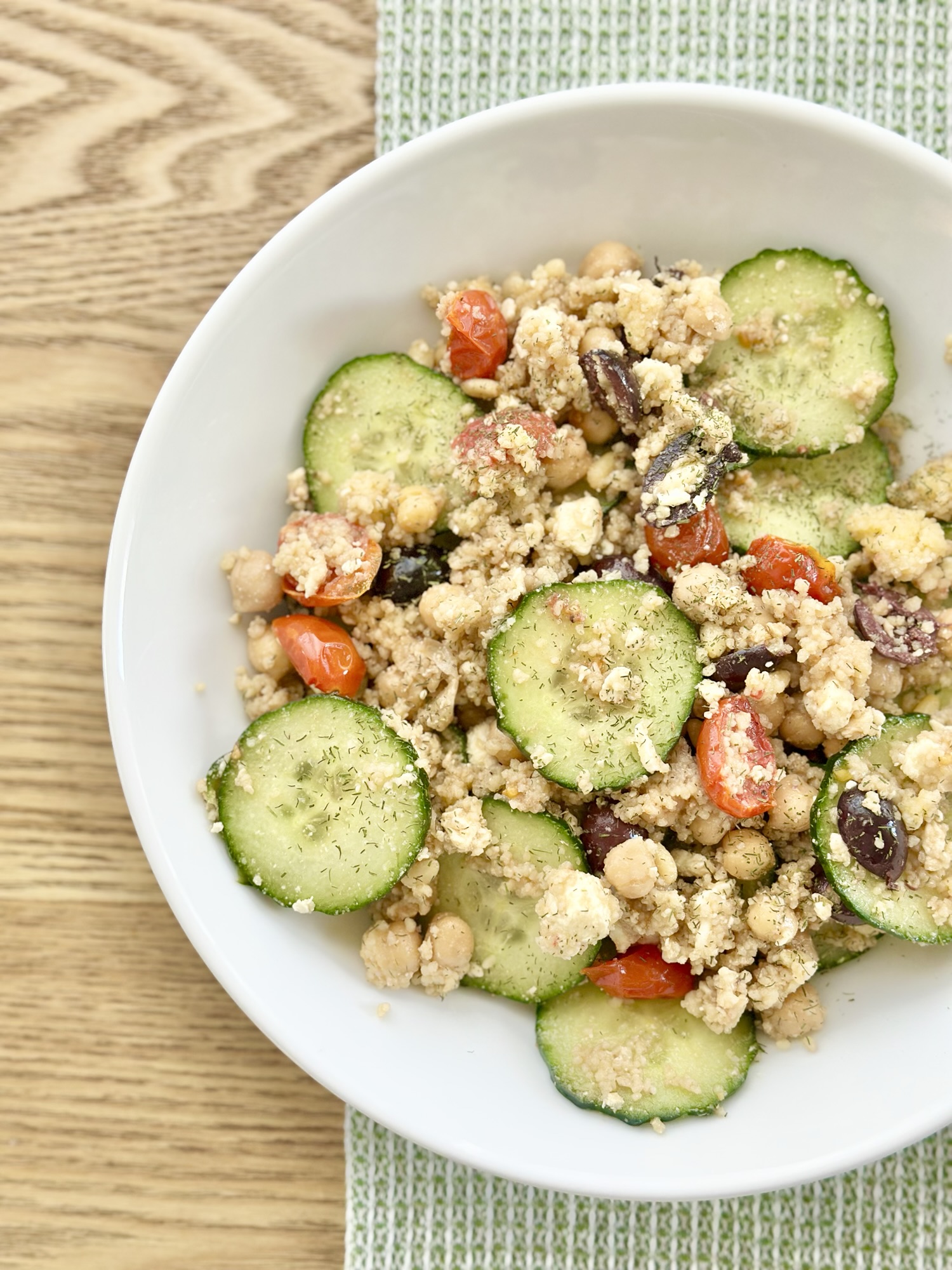
Greek couscous salad is one of those recipes that quietly becomes part of your routine before you even realize it has. It’s not flashy or complicated, but it checks every box I want from a meal: fresh, satisfying, flexible, and realistic for real life. This is the kind of dish I make once for a specific reason, maybe a dinner with friends or a week of lunches, and then find myself craving again and again.
I’ve made versions of this salad for quick lunches, summer gatherings, and nights when I want something light but not sad. It works just as well scooped into a bowl with a fork as it does served on a platter with tzatziki and warm pita. And the best part? It somehow manages to feel both comforting and refreshing at the same time.
This Greek couscous salad has become one of those recipes I instinctively reach for when I want something I know will taste good, hold up in the fridge, and leave me feeling genuinely satisfied after eating.
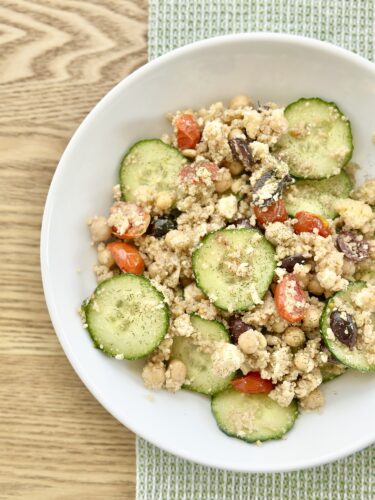
Table of Contents
Why This Greek CousCous Salad Always Works
I’ve cooked a lot of Mediterranean-inspired food over the years, and one thing I’ve learned is that balance matters more than complexity. This salad works because every ingredient plays a clear role. Nothing is there just to fill space.
The couscous provides a soft, fluffy base that absorbs flavor beautifully without becoming heavy. The cucumber adds crunch and freshness. Chickpeas bring protein and heartiness. Feta and Kalamata olives give that salty, briny contrast that makes Greek flavors so irresistible. Pine nuts add subtle richness and texture, while tomatoes, especially when slow-roasted, bring sweetness and depth.
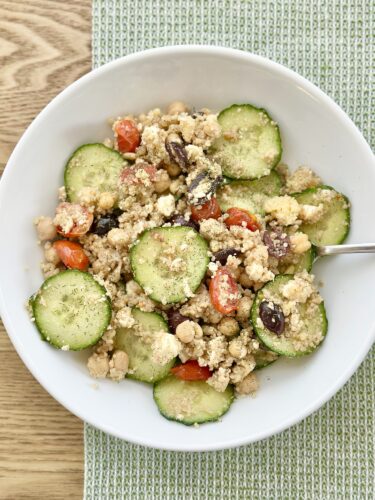
What really makes this salad stand out, though, is how well it fits into everyday life. I don’t have to plan an entire meal around it. I don’t need to eat it immediately for it to be good. In fact, it often tastes better after sitting in the fridge for a few hours. That’s the kind of recipe I value most.
The Ingredient List
This recipe uses simple, familiar ingredients, but the magic is in how they come together.

Salad Ingredients
- English cucumber: I always use English cucumbers here because they’re crisp, mild, and don’t need to be peeled. They bring a refreshing crunch that keeps the salad from feeling heavy.
- Feta cheese: Salty, creamy feta is essential. It balances the lemon and olive oil and adds richness throughout the salad.
- Chickpeas: Chickpeas make this salad filling enough to stand on its own. They also soak up the dressing beautifully.
- Kalamata olives: These add that unmistakable Greek flavor, briny, bold, and slightly tangy.
- Pine nuts: A small amount goes a long way. They add richness and a subtle buttery crunch.
- Couscous: Light, fluffy, and perfect for absorbing flavor.
- Cherry tomatoes: Slow-roasted for depth and sweetness, or raw if you’re short on time.
Dressing Ingredients
The dressing is intentionally simple. I didn’t want anything overpowering, just enough to bring everything together.
- Olive oil
- Balsamic olive oil
- Lemon juice
- Dried dill
- Salt and pepper
And finally, tzatziki for serving, which I’ll talk more about later.
Slow-Roasted Tomatoes: A Small Step That Makes a Big Difference
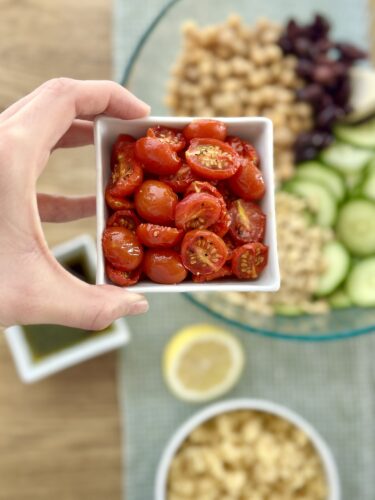
Slow-roasted cherry tomatoes are optional in this recipe, but they’re one of those additions that quietly elevate everything else. When tomatoes roast low and slow, their flavor concentrates. They become sweet, soft, and almost jam-like, with a richness that raw tomatoes simply can’t replicate.
I usually make them when I have a little extra time at home, often on a weekend afternoon. I’ll halve the tomatoes, toss them with olive oil, salt, and pepper, spread them on a baking sheet, and let the oven do the work while I go about my day.
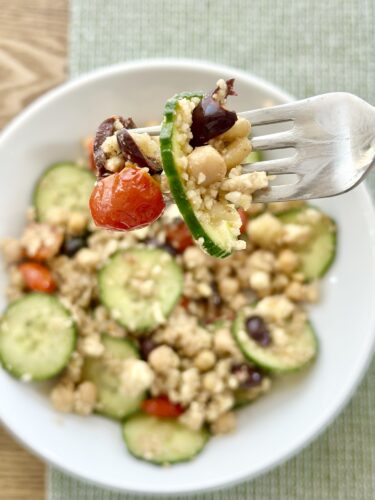
How I Slow-Roast Them
- Halve the cherry tomatoes
- Toss with olive oil, salt, and pepper
- Roast at 175°F for 2–3 hours
They come out deeply flavorful and incredibly versatile. I use them in salads, grain bowls, pasta dishes, and sandwiches throughout the week.
That said, this Greek couscous salad still turns out beautifully with raw cherry tomatoes. I’ve made it both ways countless times, and it always works. Use what fits your schedule.
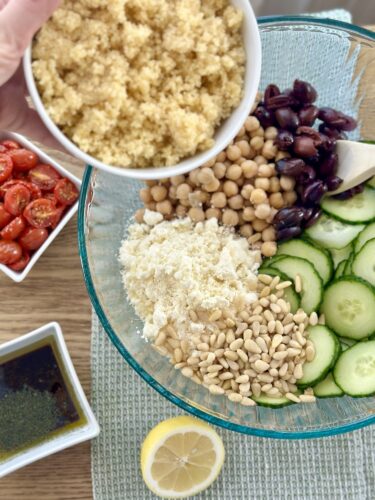
Cooking the Couscous
Couscous cooks quickly, which is one of the reasons I love it. But there’s one step you shouldn’t rush: cooling it completely before adding it to the salad.
Hot couscous can melt feta, soften cucumbers, and change the overall texture of the dish. Letting it cool ensures that everything stays crisp, fresh, and well-defined.
I usually cook the couscous first, fluff it with a fork, and then set it aside while I prep the rest of the ingredients. By the time I’m ready to assemble the salad, it’s cooled enough to mix in without issue.
Preparing the Vegetables
This part of the recipe is straightforward, but it’s where the salad starts to come together visually and texturally.
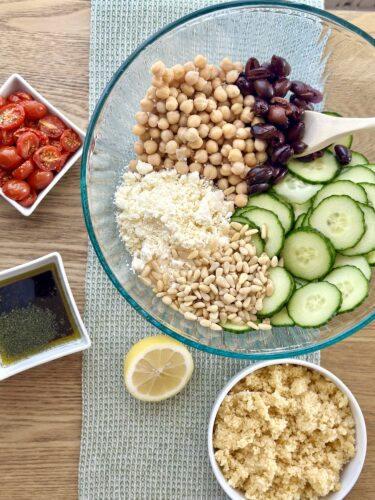
I slice the English cucumber thin, either with a mandolin or a sharp knife, so that it distributes evenly throughout the salad. The goal is to have a little crunch in every bite without large chunks overpowering everything else.
Then I drain and rinse the chickpeas, halve the Kalamata olives, crumble the feta, and measure out the pine nuts. Once everything is prepped, assembling the salad takes just a few minutes.
Assembling the Greek Couscous Salad
Assembly is simple and forgiving. This isn’t a delicate recipe, you don’t need to worry about exact placement or perfect layering.
1. Build the Base
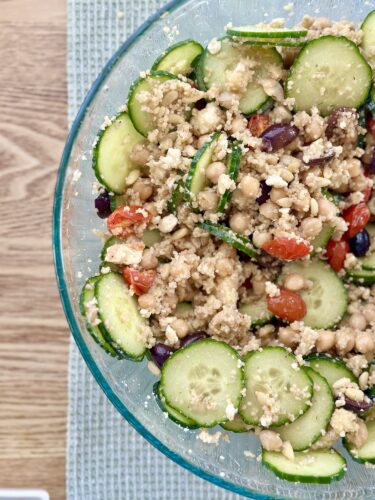
In a large mixing bowl, combine the cucumber, chickpeas, feta, pine nuts, and Kalamata olives. Toss gently until everything is evenly distributed. At this stage, the salad already looks incredible. The combination of fresh cucumber and salty feta is always a good sign.
Once the couscous is completely cooled, add it to the bowl and toss gently. The couscous should blend seamlessly with the vegetables rather than clumping together.
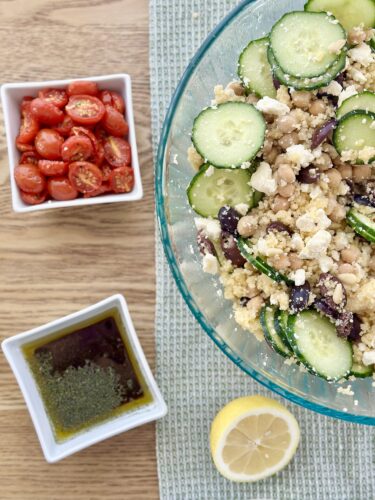
2. Add The Dressing: Light, Bright, and Balanced
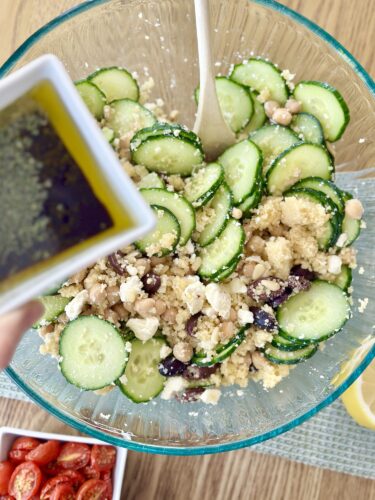
The dressing is intentionally understated. I didn’t want anything that would overpower the fresh ingredients or compete with the tzatziki. I whisk together olive oil, balsamic olive oil, lemon juice, dried dill, salt, and pepper, then drizzle it over the salad. A gentle toss is all it takes to coat everything evenly. This is the moment where I always taste and adjust. Sometimes I add a little more lemon for brightness. Sometimes it needs an extra pinch of salt. Trust your palate here.
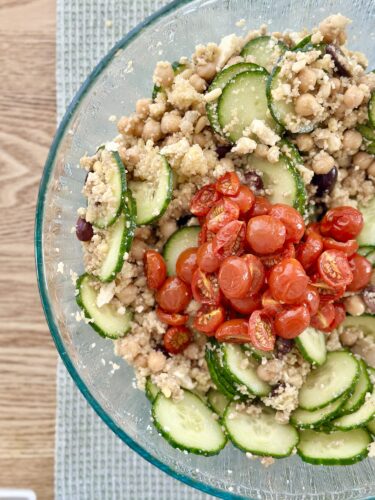
3. Add the Tomatoes
Last, fold in the slow-roasted cherry tomatoes, or raw tomatoes if that’s what you’re using. This is where the salad gains warmth and depth. The tomatoes soften the sharper flavors and bring everything into balance.
Couscous vs. Pasta: Why I Choose It Here
I love pasta salads, but they don’t always love me back. They can feel heavy, overly starchy, or just too much for a midday meal. Couscous, on the other hand, gives you that comforting grain element without weighing everything down. Couscous cooks quickly, cools fast, and blends seamlessly with vegetables. It absorbs dressing evenly and keeps its texture, which is especially important if you’re making this salad ahead of time.
I’ve found that couscous is far more forgiving than pasta when it comes to storage and leftovers.For this Greek couscous salad, it creates the perfect foundation, neutral enough to let the other flavors shine, but substantial enough to make the dish feel complete.
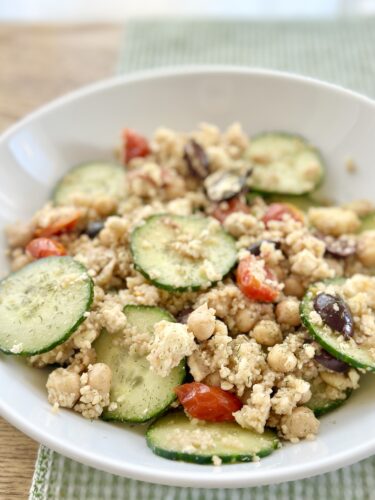
Serving with Tzatziki
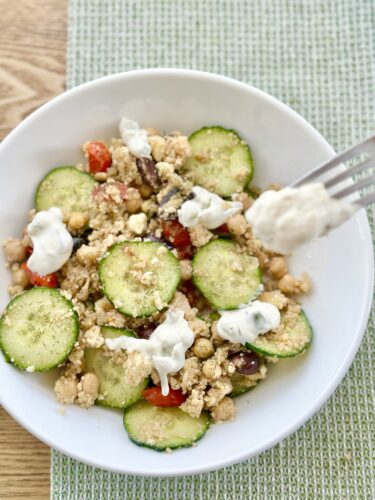
Tzatziki is what turns this salad from great into unforgettable. Instead of mixing it directly into the salad, I prefer serving it underneath or on top. This keeps the vegetables crisp and lets everyone control how much creaminess they want.
You can:
- Spread a thin layer of tzatziki on a platter and spoon the salad over it
- Add generous dollops of tzatziki on top of individual servings
I almost always use my homemade tzatziki, It’s creamy, tangy, and incredibly easy to make.
Tips, Variations, and Substitutions
One of the reasons I love this recipe is how adaptable it is.
You can:
- Swap couscous for pearl couscous or orzo
- Add grilled chicken, shrimp, or lamb
- Use toasted pine nuts for deeper flavor
- Skip feta for a dairy-free version
- Use dairy-free tzatziki if needed
No matter how you adjust it, the core flavors hold up beautifully.

Make-Ahead and Storage Notes (Why This Is One of My Favorite Meal Prep Salads)
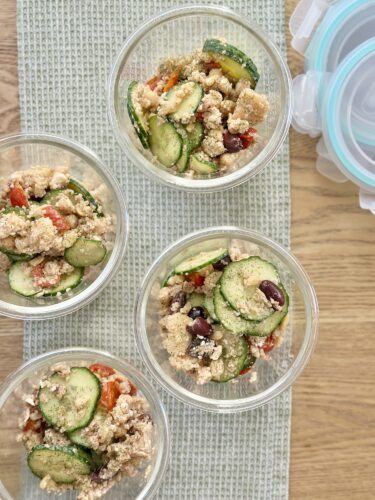
One of the biggest reasons I make this Greek couscous salad so often is how well it works for meal prep. This is the kind of recipe that actually earns a spot in your weekly routine because it holds up beautifully in the fridge and tastes just as good, if not better, after a day or two.
You can prepare the entire salad in advance, with one small exception on the side: the tzatziki. I like to mix together the couscous, vegetables, tomatoes, and dressing, then store everything in an airtight container in the refrigerator. As it sits, the flavors have time to meld and deepen, and the couscous absorbs just enough of the dressing without becoming soggy.
By the next day, the salad tastes more cohesive and balanced, which is exactly what I want when I’m pulling lunch from the fridge between meetings or errands.
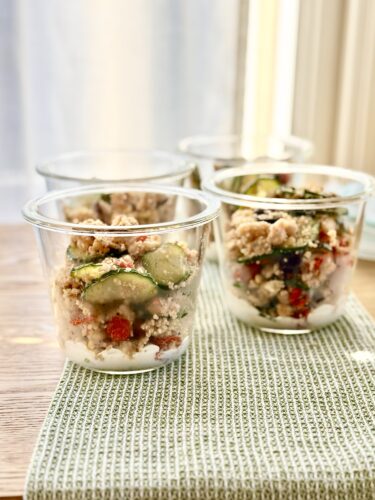
For individual portions, I often build this salad into meal prep jars. I’ll start by adding tzatziki to the bottom of the jar, then layer the salad ingredients on top. Keeping the tzatziki separate like this preserves the texture of the vegetables and couscous while still giving you that creamy element when you’re ready to eat. When it’s time for lunch, I just shake or stir everything together, and it’s perfect.

A few meal prep tips that make this recipe even better:
- Store the salad without tzatziki if prepping in a large container
- Add tzatziki just before eating, or keep it at the bottom of individual jars- I love using these meal prep containers
- Keep the salad in an airtight container for up to 3–4 days
- Give it a quick toss before serving to redistribute the dressing
This Greek couscous salad is one of those rare recipes that feels just as satisfying on day three as it does when freshly made. It’s filling without being heavy, fresh without being bland, and easy enough that I actually look forward to eating it all week long.
If you’re someone who likes meals that simplify your week rather than add more work, this salad is a really good one to have in your back pocket.
Homemade Recipes to Pair With This Salad
If you’re making this Greek couscous salad, there are a couple of homemade recipes that pair so naturally with it that I almost think of them as part of the same meal. They’re simple, reliable, and the kind of recipes you’ll find yourself making again and again once you have them in your rotation.
Homemade Tzatziki Sauce
Tzatziki is more than just a topping here, it’s what gives this salad its creamy contrast and brings all of the bright Mediterranean flavors together. A good homemade tzatziki is cool, tangy, and fresh, with just the right balance of yogurt, cucumber, garlic, and lemon.
I make tzatziki constantly. It’s one of those sauces that instantly elevates whatever you pair it with, whether that’s this Greek couscous salad, grilled chicken, roasted vegetables, or warm pita bread. When I’m meal prepping, I almost always have a container of it in the fridge because it turns simple meals into something I actually look forward to eating.
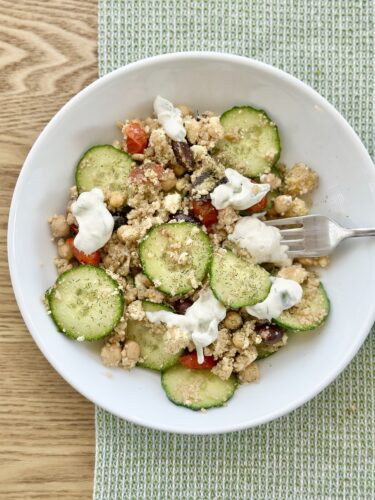
For this salad, I love using tzatziki as a base or layering it into meal prep jars rather than mixing it directly in. It keeps everything fresh and lets you control how creamy each serving is. If you’ve never made tzatziki from scratch before, this is the perfect recipe to start with, it’s easy, forgiving, and far better than anything store-bought.
Get the recipe here: How to Make the Best Vegan Tzatziki Recipe with Just 5 Ingredients
Slow-Roasted Cherry Tomatoes
Slow-roasted cherry tomatoes might seem like a small addition, but they add an incredible amount of depth to this salad. Roasting them low and slow concentrates their flavor, turning them sweet, soft, and almost jam-like. They balance the saltiness of the feta and olives and add warmth to an otherwise cool, crisp salad.
I often make a full batch of slow-roasted tomatoes and use them throughout the week. They’re perfect not only in this Greek couscous salad, but also in pasta, grain bowls, sandwiches, and even on toast with a little ricotta or hummus. Having them on hand makes it easy to add extra flavor to simple meals without much effort.
Get the recipe here: The Sweetest Slow-Roasted Tomatoes You’ll Ever Taste (With Just 3 Ingredients!)
Recipe: Greek Couscous Salad with Tzatziki

Prep Time: 20 minutes
Cook Time: 2–3 hours (for slow-roasted tomatoes, optional)
Total Time: 30 minutes active
Servings: 4–6
Ingredients
Salad
- 1 large English cucumber, thinly sliced
- 1 cup feta cheese, crumbled
- 1 (15 oz) can chickpeas, drained and rinsed
- ½ cup Kalamata olives, halved
- ¼ cup pine nuts
- 1 cup dried couscous, cooked according to package instructions and cooled
- 1 pint cherry tomatoes, halved and slow-roasted
- Optional: Use raw halved cherry tomatoes for a quicker version
Dressing
- ¼ cup olive oil
- 3 teaspoons balsamic olive oil
- ½ teaspoon dried dill
- Juice of ½ lemon
- Salt and pepper, to taste
For Serving
- Tzatziki sauce (homemade or store-bought)
Supplies Needed
- Baking sheet (for slow roasted tomatoes)
- Medium saucepan (for cous cous)
- Large mixing bowl
- Mandolin or sharp knife
Instructions
- Slow Roast the Tomatoes (Optional):
Preheat oven to 175°F. Toss halved cherry tomatoes with olive oil, salt, and pepper. Spread cut-side up on a baking sheet and roast for 2–3 hours until soft and jammy. Let cool. - Cook the Couscous:
Prepare couscous according to package directions. Fluff with a fork and allow to cool completely. - Prepare the Vegetables:
Thinly slice the English cucumber using a mandolin or sharp knife. Drain and rinse the chickpeas. Halve the Kalamata olives. - Assemble the Salad:
In a large mixing bowl, add the cucumber, chickpeas, feta, pine nuts, and olives. Toss gently. - Add Tomatoes and Couscous:
Fold in the slow-roasted (or raw) cherry tomatoes, then add the cooled couscous and toss to combine. - Make the Dressing:
In a small bowl, whisk together olive oil, balsamic olive oil, lemon juice, dried dill, salt, and pepper. - Dress the Salad:
Pour dressing over the salad and toss until evenly coated. Taste and adjust seasoning as needed. I like to add a sprinkle of dill to the top once all mixed together. - Serve:
Serve over a thin layer of tzatziki or add a few dollops of tzatziki on top just before serving.
Notes
- For meal prep, store salad and tzatziki separately.
- This salad keeps well in the fridge for 3–4 days.
- Great served with grilled chicken, salmon, or warm pita.
This Greek couscous salad is the kind of recipe that earns its place in your regular rotation. It’s fresh without being boring, filling without being heavy, and flexible enough to fit into almost any meal plan.
It’s the salad I make when I want something reliable. Something I know I’ll enjoy. Something that feels good to eat. And those are always the recipes worth keeping.
With love,
Bri and Cat
Affiliate Disclaimer:
As an Amazon Associate I earn from qualifying purchases. This comes at no additional cost to you. We only recommend products that we believe will add value to our readers.
Greek Couscous Salad with Tzatziki
Ingredients
- 1 large English cucumber, thinly sliced
- 1 cup feta cheese, crumbled
- 1 can (15 oz) chickpeas, drained and rinsed
- 1/2 cup Kalamata olives, halved
- 1/4 cup pine nuts
- 1 cup dried couscous, cooked according to package instructions and cooled
- 1 pint cherry tomatoes, halved and slow-roasted
- Optional: Use raw halved cherry tomatoes for a quicker version
- 1/4 cup olive oil
- 3 tsp balsamic olive oil
- 1/2 tsp dried dill
- Juice of ½ lemon
- Salt and pepper, to taste
- Tzatziki sauce (homemade or store-bought)
Method
- Preheat oven to 175°F. Toss halved cherry tomatoes with olive oil, salt, and pepper. Spread cut-side up on a baking sheet and roast for 2–3 hours until soft and jammy. Let cool.
- Prepare couscous according to package directions. Fluff with a fork and allow to cool completely.
- Thinly slice the English cucumber using a mandolin or sharp knife. Drain and rinse the chickpeas. Halve the Kalamata olives.
- In a large mixing bowl, add the cucumber, chickpeas, feta, pine nuts, and olives. Toss gently.
- Fold in the slow-roasted (or raw) cherry tomatoes, then add the cooled couscous and toss to combine.
- In a small bowl, whisk together olive oil, balsamic olive oil, lemon juice, dried dill, salt, and pepper.
- Pour dressing over the salad and toss until evenly coated. Taste and adjust seasoning as needed. I like to add a sprinkle of dill to the top once all mixed together.
- Serve over a thin layer of tzatziki or add a few dollops of tzatziki on top just before serving.
Notes
- For meal prep, store salad and tzatziki separately.
- This salad keeps well in the fridge for 3–4 days.
- Great served with grilled chicken, salmon, or warm pita.
Leave a Reply