
This site contains affiliate links, view the disclaimer page for more information.
Making your own homemade hand soap was one of those things I always thought was reserved for the super crunchy, homesteading types who also churn their own butter and sew their own curtains. I am not that person, at least not entirely. But after one too many bottles of store-bought soap left my hands feeling like sandpaper and my sensitive-skin breaking out in a rash, I decided it was time to figure out what exactly I was slathering on our skin multiple times a day. What I found honestly surprised me.
The average commercial hand soap contains a long list of ingredients that read more like a chemistry exam than a personal care product. Synthetic fragrances, parabens, sulfates, triclosan, artificial dyes, the list goes on. And the thing is, we’re not using this stuff once in a while. We’re using it five, ten, sometimes fifteen times a day. Every single person in my house. Every single day. Once I started paying attention, I couldn’t unsee it. And once I tried making my own homemade hand soap? I never really went back.
Table of Contents
Why Store-Bought Hand Soap Might Not Be as Clean as You Think
I want to be clear: I’m not here to scare you. But I do think we deserve to know what’s in the products we use, especially when it comes to things we put on our skin and the skin of our kids. Here are a few common ingredients found in many mainstream hand soaps that are worth being aware of:
- Synthetic fragrances: The word “fragrance” on a label can legally represent a blend of hundreds of different chemicals, many of which are not disclosed. Some are known allergens and hormone disruptors.
- Parabens: Used as preservatives, parabens have been flagged in research for their potential to mimic estrogen in the body.
- Sodium Lauryl Sulfate (SLS): This is the ingredient that makes soap foam up so satisfyingly. It’s also a known skin irritant, especially with repeated exposure.
- Triclosan: An antibacterial agent that the FDA actually banned from some soaps back in 2016 due to safety concerns, but it still appears in other products.
- Artificial dyes: Those pretty pink and blue soaps get their color from synthetic dyes that offer zero benefit to your skin and can cause reactions in sensitive individuals.
None of this means every commercial soap is dangerous. But when you realize you can make an effective, genuinely clean alternative in about two minutes with four ingredients, it starts to feel like a no-brainer.
The Benefits of Making Your Own Homemade Hand Soap
Before I get into the actual recipe, I want to talk about why I think DIY hand soap is worth your time, because it really does go beyond just avoiding a few questionable chemicals.
It’s incredibly affordable. Liquid castile soap is one of the most cost-effective cleaning ingredients you can buy. A large bottle will last you months and can be used for everything from hand soap to body wash to cleaning your floors. When you dilute it to make hand soap, you’re stretching that bottle even further. I calculated once that each refill of my soap dispenser costs me well under a dollar. Compare that to what you’re paying for a name-brand pump at the grocery store.
You reduce plastic waste. Instead of buying a new plastic bottle every few weeks, I just refill the same glass dispenser over and over. This one small switch has made a noticeable difference in how much plastic leaves our house. It’s not going to save the planet on its own, but it feels good and it adds up.
You control what goes on your skin. This is the big one for me. When I make my own hand soap, I know exactly what’s in it. No mystery fragrances, no preservatives I can’t pronounce, no dyes that serve zero purpose. Just clean, simple ingredients that work.
It’s genuinely moisturizing. One of the biggest complaints people have about hand soap, especially if you wash your hands as frequently as I do, is that it dries out your skin. The Vitamin E oil in this recipe makes a real difference. My hands used to get so dry and cracked in the winter, and since switching to this soap, that problem has almost completely gone away.
It’s customizable and honestly kind of fun. There’s something genuinely satisfying about mixing up a batch of soap with an essential oil blend that makes your bathroom smell like a spa. I’ve gotten my kids involved in picking out scent combinations, and it’s become a little ritual we all enjoy. You can change up the scent with the seasons, make different blends for different rooms, or keep it completely unscented if that’s your preference.
It’s safe for the whole family. Because castile soap is plant-based and free from harsh synthetic chemicals, this recipe is gentle enough for kids, people with eczema, and anyone with sensitive or reactive skin. That was a game-changer for our household.
What You’ll Need: The Ingredients and Why They Work
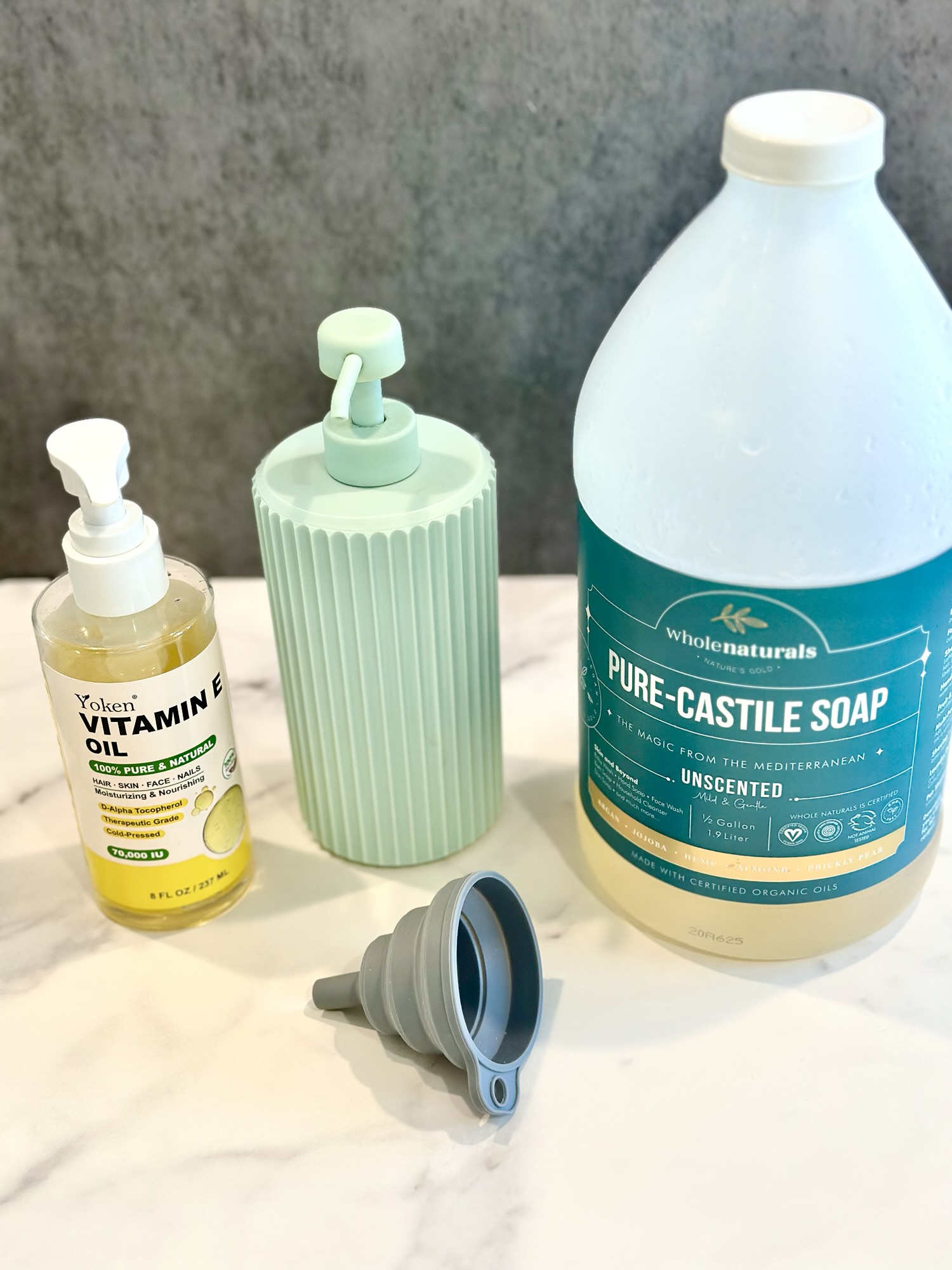
One of the things I love most about this recipe is how short the ingredient list is. You need three things, and a fourth if you want to add scent. That’s it.
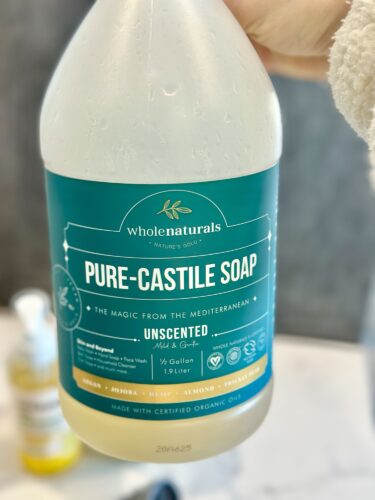
Castile soap is a true soap, not a detergent, made from plant oils like olive, coconut, or hemp. It’s been around for centuries and it works. It cleans effectively, it rinses clean, it doesn’t strip your skin’s natural oils the way harsher detergents can, and it’s fully biodegradable. Any quality liquid castile soap will work. They come in a variety of scents, or you can grab the unscented baby version if you want a truly blank slate.
Water
Plain water dilutes the castile soap down to the perfect consistency for a hand soap pump. Castile soap is concentrated enough that using it straight would be way too harsh and would go through your supply in no time. Equal parts water and soap is the sweet spot, it pumps smoothly, lathers well, and cleans effectively without being stripping.
If you have access to distilled water, use it. Tap water works fine too, but distilled water will extend the shelf life of your soap because it has no minerals or bacteria that can degrade the product over time. With distilled water, your soap will stay fresh for several weeks. With tap water, plan to use it up within a couple of weeks.
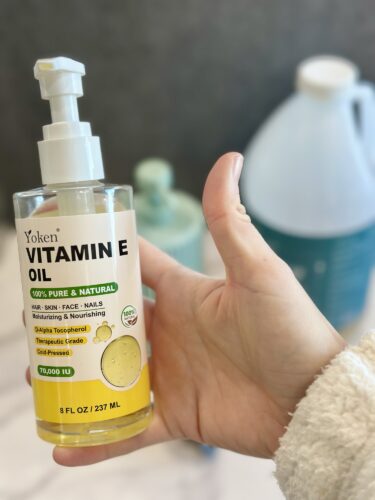
This is the ingredient I get the most questions about, and it’s also the one that makes the biggest difference. Vitamin E oil is a powerful antioxidant that’s deeply moisturizing and nourishing for skin. It helps counteract the drying effect that comes with frequent hand washing, which means your hands actually feel soft after you wash them instead of tight and dry.
I add 5 to 8 pumps of Vitamin E oil per dispenser. It blends right in and doesn’t make the soap feel greasy at all, it just makes it noticeably more moisturizing. You can find Vitamin E oil at most health food stores, pharmacies, and online. A little goes a long way, so one bottle will last you a really long time.
This is where things get fun. Essential oils are completely optional, but they give your soap a natural scent and some of them have added skin benefits. The general rule is to add about 10 to 15 drops per dispenser. A little goes a long way with essential oils, so don’t overdo it.
The Recipe
This is so simple it almost feels silly to write out, but here it is.
What you need:
- Liquid castile soap
- Water (distilled preferred)
- Vitamin E oil (5–8 pumps)
- Essential oils of your choice (10–15 drops, optional)
- A soap dispenser, glass is ideal, but any pump bottle works
How to make it:
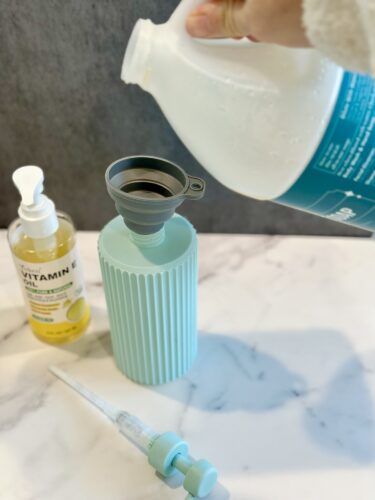
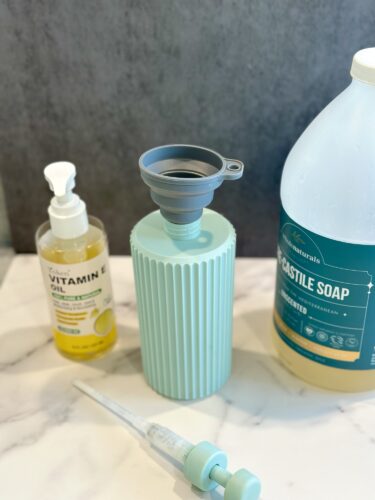
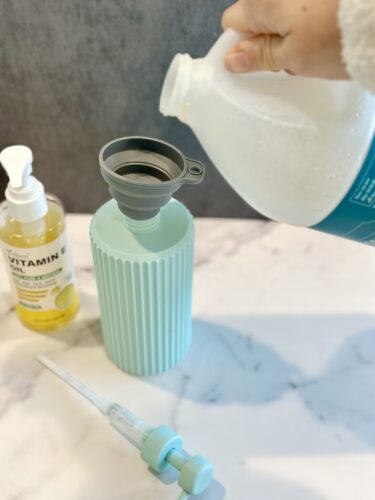
Step 1: Pour your water in first. This is the most important step, if you add the castile soap first and then try to add water, you’re going to agitate the soap and end up with a dispenser full of bubbles and foam that will overflow and take forever to settle. Always add water first. It keeps everything calm and makes mixing easy.
Step 2: Add an equal amount of liquid castile soap. So if you added half a cup of water, add half a cup of soap. Pour it in slowly and gently along the side of the bottle.
Step 3: Add your 5 to 8 pumps of Vitamin E oil. Don’t skip this, it’s what keeps your hands from drying out.
Step 4: If you’re using essential oils, add your 10 to 15 drops now.
Step 5: Put the pump lid on and give it a very gentle swirl to combine everything. Don’t shake it, shaking will introduce air bubbles and cause foaming. Just a slow swirl is all it needs.
That’s it. You’re done. Your homemade hand soap is ready to use.
One more note: the water and soap can separate slightly over time, so give the dispenser a gentle swirl before each use. This is totally normal and not a sign that anything is wrong.
Fragrance Combinations to Try
This is genuinely one of my favorite parts of making homemade hand soap. Choosing a scent combination feels like a small, creative act, and it makes something as mundane as washing your hands feel a little more special. Here are some of my go-to blends:
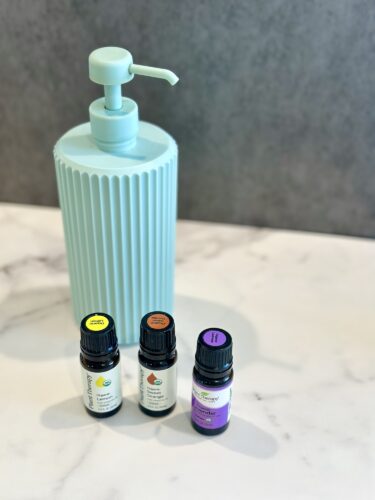
Morning Refresh: Lemon + Peppermint This is the one I keep at the kitchen sink. The lemon is bright and clean, and the peppermint adds a little wake-up energy. If you’ve ever used a lemon dish soap and loved the way it smelled, this is the hand soap version of that, except it’s actually good for your skin.
Spa Day: Lavender + Eucalyptus This is the classic. Lavender is calming, eucalyptus is clarifying, and together they smell like a spa bathroom in the best possible way. It’s also great if anyone in the house is dealing with congestion because the eucalyptus provides a little aromatic relief.
Citrus Burst: Orange + Grapefruit This one is pure happiness in a bottle. It’s uplifting, bright, and a little energizing. I make this one in the summer because it just feels sunny and fresh. Kids tend to love it too, which is a bonus.
Garden Party: Rose + Geranium This is my more “grown-up” blend, floral, slightly sophisticated, and really lovely. I tend to use it in the guest bathroom because it feels a little more special. Rose essential oil can be pricey, so if you want to stretch it, geranium carries a lot of the floral note on its own.
Fresh Forest: Cedarwood + Tea Tree For anyone who prefers a more earthy, grounded scent, this is the one. Cedarwood smells warm and woody, and tea tree has natural antibacterial properties that feel especially appropriate for hand soap. A great option during cold and flu season.
Zen Blend: Frankincense + Bergamot This is a more unusual combination, but one of my favorites. Frankincense is grounding and earthy, and bergamot is citrusy with a slightly floral edge, it’s one of the notes in Earl Grey tea, if you want a reference point. Together they smell sophisticated and calming, and using this soap feels genuinely luxurious.
Feel free to experiment beyond these suggestions. Start with a single oil if you’re new to essential oils, and build from there as you get a sense of what you love.
Tips for Getting the Best Results
Use a foaming soap dispenser if you can. A foaming pump aerates the soap as it comes out, which means you get a beautiful lather with less product. It also makes the soap feel more luxurious. Glass foaming dispensers look beautiful on a bathroom counter too.
Keep the ratio consistent. It’s tempting to add a little extra soap to get more lather, but too much castile soap can leave a residue on your skin. The equal parts ratio is well-tested and works really well, trust it.
Store your soap out of direct sunlight. UV light can degrade essential oils over time and shorten the shelf life of your soap.
Make smaller batches more often. Because there are no preservatives in this recipe, it has a shorter shelf life than commercial soaps. Smaller, fresher batches will always feel and perform better.
Common Questions I Get About Homemade Hand Soap
Does it actually clean as well as store-bought soap?
Yes, and here’s why: castile soap is a real soap. It works by the same basic chemistry as any other soap, it surrounds and lifts away dirt and bacteria so they can be rinsed away. The lather might be slightly different from what you’re used to, but the cleaning action is fully effective.
Is it safe for kids?
Absolutely. Many parents use Dr. Bronner’s baby formula, which is unscented and formulated to be especially gentle, as the base. You can skip the essential oils entirely for very young children and you still have a gentle, effective hand soap.
How long does it last?
With distilled water, your soap will typically stay fresh for three to four weeks. With tap water, aim to use it within two weeks. Given how often most households wash their hands, a single dispenser usually doesn’t last that long anyway.
Can I use it as a body wash?
Yes! The same formula works beautifully in the shower. Vitamin E oil makes it extra moisturizing for full-body use.
The Bottom Line
Making homemade hand soap is one of those small changes that has a surprisingly large impact. It’s better for your skin, better for your wallet, better for the environment, and it genuinely only takes a few minutes to make. Once you have the supplies on hand, refilling your dispenser becomes a two-minute task you do every couple of weeks.
I started doing this because I was frustrated with products that were drying out my hands and irritating my skin. I kept doing it because I love knowing exactly what’s going into the soap we use every single day. And honestly? I kept doing it because it makes me happy to mix up a new scent blend and set a freshly filled dispenser on the counter. It’s a small thing, but it feels good.
If you’ve been curious about making your own cleaning and personal care products but don’t know where to start, this is the place. It requires no special equipment, no expertise, and almost no time. Just a bottle, four ingredients, and two minutes. Give it a try this week. I’d bet you’ll be a convert after one batch. If you make a batch, I’d love to know what essential oil combination you tried first, drop it in the comments below!
With Love,
Bri and Cat
Affiliate Disclaimer:
As an Amazon Associate I earn from qualifying purchases. This comes at no additional cost to you. We only recommend products that we believe will add value to our readers.
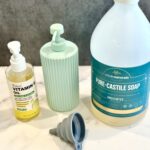
Homemade Hand Soap
Equipment
- soap dispenser Glass is ideal, but any pump bottle works
- Kitchen Funnel
Materials
- 1 cup Liquid castile soap
- 1 cup Water (distilled preferred)
- 5-8 pumps Vitamin E oil (5–8 pumps)
- 10-15 drops Essential Oils of your choice
Instructions
- Pour your water in first. This is the most important step, if you add the castile soap first and then try to add water, you’re going to agitate the soap and end up with a dispenser full of bubbles and foam that will overflow and take forever to settle. Always add water first. It keeps everything calm and makes mixing easy.
- Add an equal amount of liquid castile soap. So if you added half a cup of water, add half a cup of soap. Pour it in slowly and gently along the side of the bottle.
- Add your 5 to 8 pumps of Vitamin E oil. Don’t skip this, it’s what keeps your hands from drying out.
- If you’re using essential oils, add your 10 to 15 drops now.
- Put the pump lid on and give it a very gentle swirl to combine everything. Don’t shake it, shaking will introduce air bubbles and cause foaming. Just a slow swirl is all it needs.
Leave a Reply