
This site contains affiliate links, view the disclaimer page for more information.
If you have been trying to figure out where to go on the Dalmatian coast, let me tell you about Brac Croatia and why it quietly became my favourite stop on an entire Croatia trip. It does not have the party reputation of Hvar. It does not have the tour-bus crowds of Dubrovnik. What it has is something harder to find: a sense that you are actually experiencing an island the way locals do, even in summer. The food is good, the water is impossibly clear, and if you know where to go, you will have beaches almost entirely to yourself.
This post covers everything from how I got there, where I stayed, what I did, and the small tips that made the trip work. If you are planning a Croatia itinerary and Brac is on your radar, read this first.
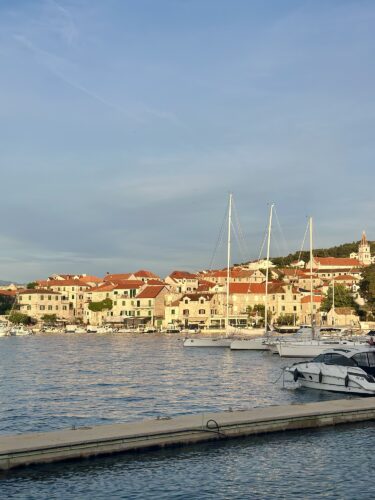
Table of Contents
Starting in Split: Your Gateway to the Islands
Almost every island trip in Dalmatia starts in Split, and for good reason. The city is a transport hub, a cultural experience in itself, and home to the ferry terminals that connect the mainland to places like Brac. I spent a couple of days in Split before heading to the island, which I would recommend to anyone. Walk through Diocletian’s Palace, eat at one of the restaurants tucked inside ancient stone walls, and get a feel for the pace of Croatian coastal life before you slow down even further on the islands.
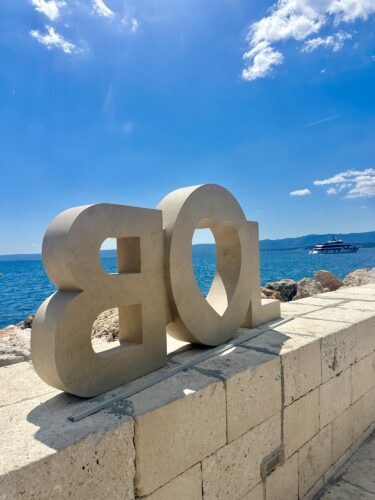
The ferry from Split to Bol on Brac is a smooth and scenic crossing. You can sit on the deck, watch the coastline drift by, and feel the trip already beginning to wash over you. It takes roughly two hours and runs multiple times a day during the summer season, so you have flexibility with timing. I would suggest booking tickets in advance during peak months, even though the ferry is not always packed. Having a confirmed spot removes one small stress from the day.
Arriving in Bol: First Impressions of Brac Croatia
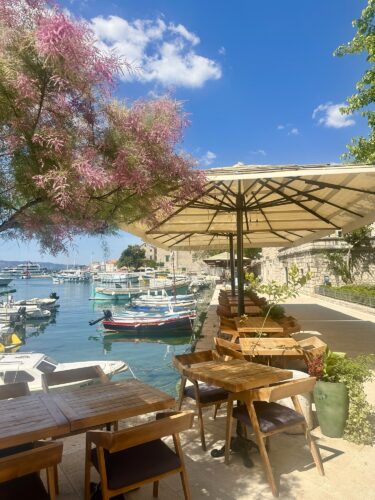
Bol is the first thing most people see when they arrive in Brac by ferry, and it makes a strong impression. The town is small, built around a waterfront promenade lined with cafes and restaurants, with old stone buildings climbing the hillside behind it. It has a relaxed energy that does not feel manufactured for tourists. People actually live here, fish here, and go about their lives in between waves of visitors.
I spent some time exploring Bol before making my way across the island. A few things worth knowing:
- Bol is best explored on foot. The old town is compact and walkable.
- The famous Zlatni Rat beach (the golden horn shaped beach that appears in every Croatia travel photo) is a short walk west of the town centre. It is worth seeing, especially early in the morning before the crowds arrive.
- There are plenty of places to hire bikes, scooters, or cars right in Bol if you want to start exploring the rest of the island.
- The coffee culture here is strong. Sit down, order a coffee, and expect it to last an hour. No one is rushing you.
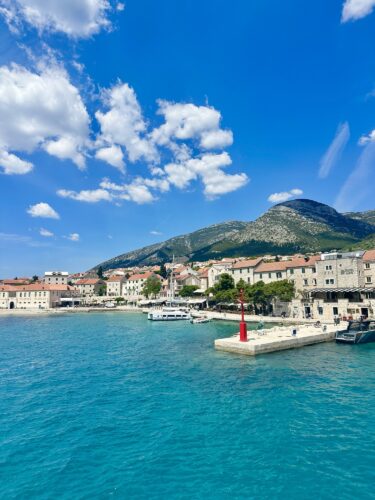
Bol gave me a good introduction to the rhythm of Brac Croatia. But I knew I wanted to see more than the main tourist hub, so I arranged a rental car and headed to the other side of the island.
Crossing the Island: Why You Need a Car in Brac
Renting a car on Brac is one of the best decisions I made on the whole trip. The island is not huge, but the differences between the north and south coasts are dramatic, and public transport will not take you to the places worth finding. With a car, the whole island opens up.
The drive from Bol on the south coast up and across to the north side takes you through the interior of the island. Pine forests, dry stone walls, olive groves, and small villages that look like they have not changed much in centuries. The road winds and climbs and the views are worth stopping for more than once. Give yourself time for this drive. Do not just treat it as a route to get somewhere. It is part of the experience.
Where I Stayed: Grand View Hotel in Postira
On the northern coast of Brac, tucked away from the busier tourist spots, sits the small town of Postira. This is where I based myself for most of my time on the island, and it is a decision I would make again without hesitation.
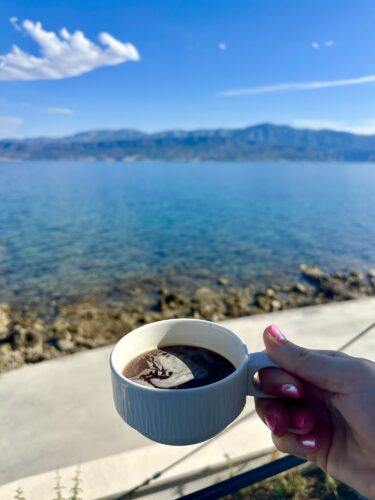
The Grand View Hotel in Postira is my top accommodation recommendation in Brac Croatia. The name delivers on its promise. The views over the water from the hotel are genuinely stunning, especially in the early morning when the light is soft and the sea is calm. The hotel itself has a warmth to it that larger resorts rarely manage. The staff are attentive, the rooms are comfortable, and the location puts you close to local life rather than at the centre of tourist infrastructure.
Postira itself is a genuine small Croatian town. There is a harbour, a few restaurants, a bakery, a small market. You are not going to find cocktail bars and beach clubs here. What you will find is something that feels more real: locals going about their evenings, kids playing near the water, older men talking outside cafes. If that sounds like your kind of travel, Postira and the Grand View Hotel will suit you perfectly.
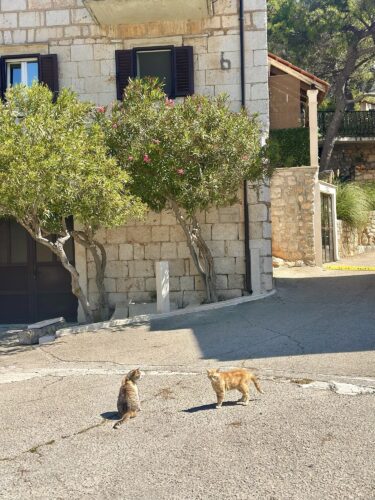
For anyone who wants to experience Brac beyond the obvious spots, I cannot recommend this combination highly enough.
The Beach That Stopped Me in My Tracks: Plaza Vela Lozna
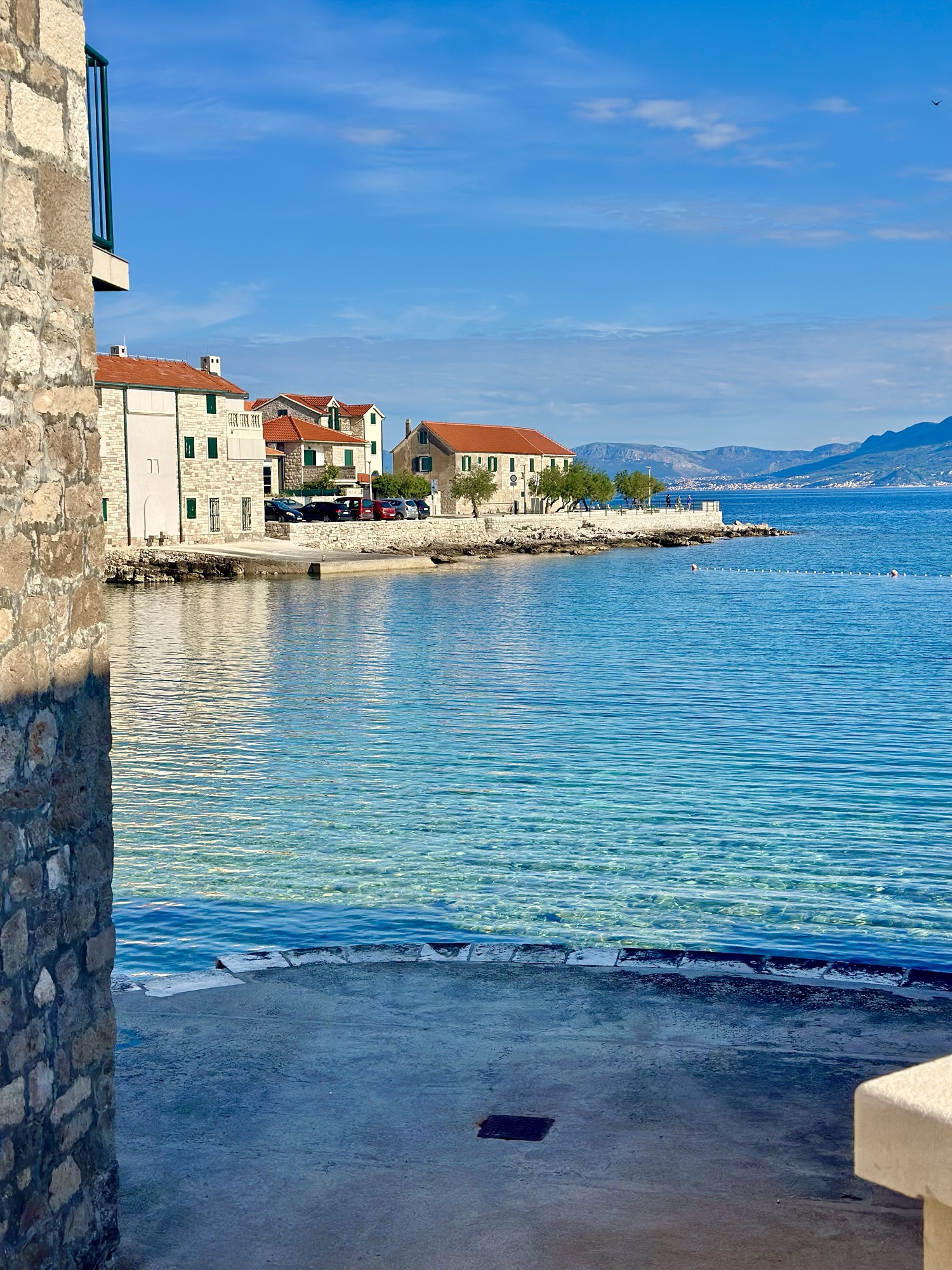
Near Postira, there is a beach called Plaza Vela Lozna. I almost did not find it. It is not the kind of place that appears on the first page of a Google search. There was no beach bar, no sunbed rental, no crowd. What there is: a stretch of clean pebbles, crystal water that shifts between turquoise and deep blue depending on the depth, pine trees providing shade, and on the day I went, almost nobody else there.
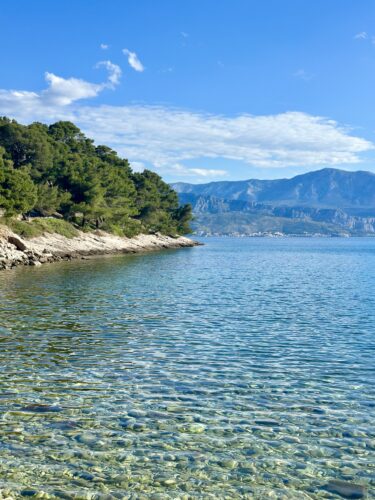
This is the kind of beach that people imagine when they think about the Croatian coast but rarely find once they actually arrive. Most of the famous beaches are beautiful but busy. Plaza Vela Lozna near Postira is beautiful and quiet, which in my opinion is better.
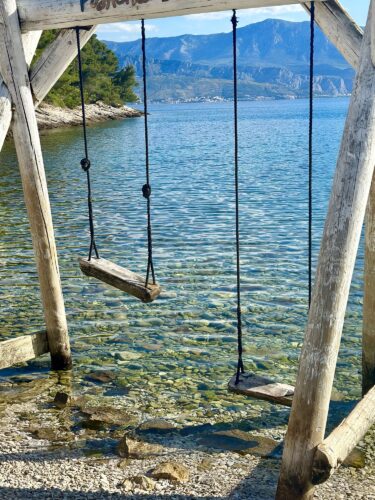
The water was perfect for swimming, clear enough to see the bottom at a significant depth. I’d strongly recommend packing water shoes for Croatia, since the majority of its beaches are rocky rather than sandy.I spent a long time here doing absolutely nothing and it was exactly right. If you are staying in Postira or anywhere on the north coast of Brac, make this beach a priority. Go in the morning if you can, take a book, and plan to stay longer than you originally intended.
Visiting Brac in Late May: Why the Timing Matters
One of the best choices I made on this trip was visiting at the end of May. Brac Croatia in late May occupies a sweet spot that is hard to beat. The weather was warm and sunny every day, with temperatures sitting comfortably in the mid to high twenties Celsius. The sea was warm enough to swim in without hesitation, the evenings were pleasant without being cold, and the light had that long golden quality that makes everything look better. It felt like proper summer.
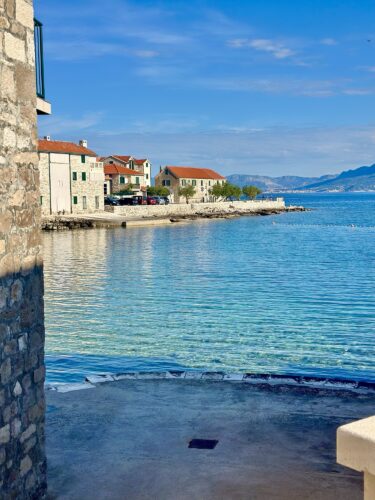
At the same time, the peak July and August crowds had not arrived. Restaurants had tables available. The beaches had breathing room. Accommodation prices were lower. You could have a conversation with a local without feeling like you were competing with a hundred other tourists for their attention.
If you have any flexibility in when you travel to Brac Croatia, late May or early June is the answer. September is also excellent if spring does not work for you. Both shoulder seasons give you the weather without the intensity of high summer.
The Boat Tour: The Best Way to See the Island from the Water
One of the highlights of the whole trip was a boat tour we took around part of the island. I want to be specific about what made it special, because a generic “take a boat tour” recommendation is not very useful. Here is what we actually did and saw.
Bobovisca
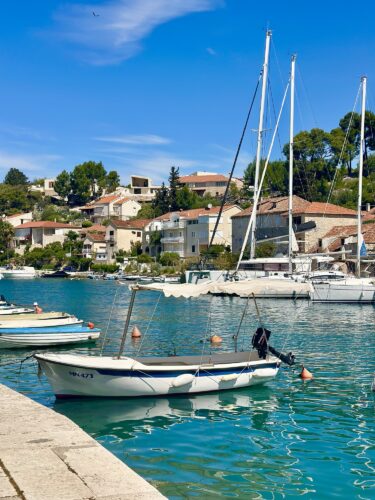
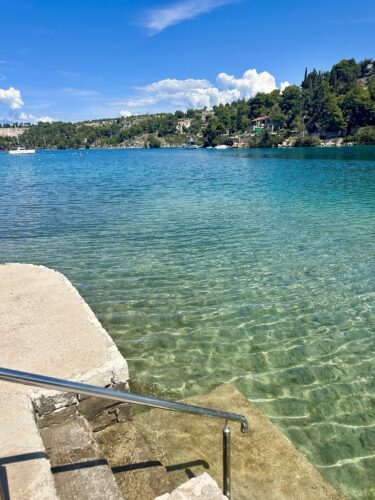
One of the stops on the tour was the town of Bobovisca, a small settlement sitting around a sheltered natural harbour on the west side of the island. The water inside the harbour was calm, clear, and irresistible. We dropped anchor and jumped in for a swim. The town itself, seen from the water, looks like something from a painting. Old stone houses arranged around the edge of the cove, boats moored quietly, not much sound beyond the water and a few birds. It was one of those moments where you stop and think: this is exactly why I travel.
Lunch in Milna
After Bobovisca we made our way to Milna, another harbour town on the west coast of Brac. Milna has been a popular yachting destination for decades and it shows: the waterfront is lined with restaurants catering to visitors arriving by sea, and the quality of the food is genuinely good. We had lunch sitting outside with a direct view of the water, ordered fresh fish and local wine, and spent far longer at the table than we planned to. The kind of lunch that turns into an afternoon.
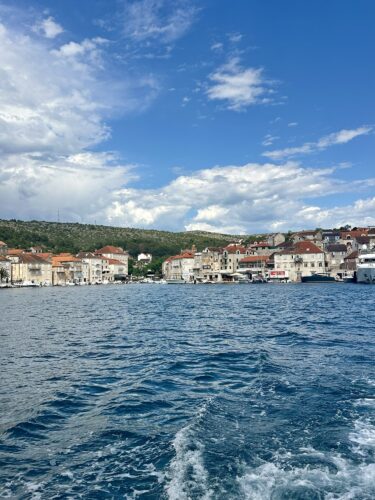
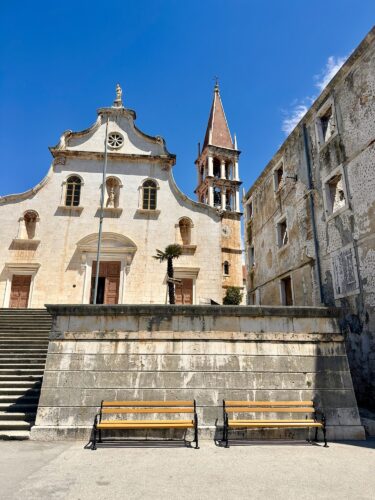
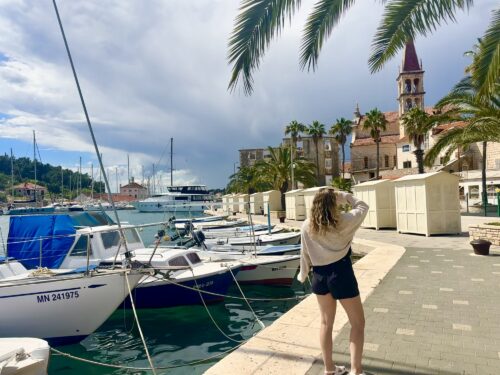
If you are doing a boat tour around Brac, make sure Milna is on the itinerary. It is an excellent place to stop and eat.
The Submarine Tunnels at Potkop Smrka
This was the stop I expected least and ended up finding most interesting. Along the coastline there are old submarine tunnels that date back to the Yugoslav era, carved directly into the rock to hide military submarines from aerial surveillance during the Cold War. Seeing them from the water, these dark rectangular openings cut into the cliff face, was striking in a way I had not anticipated.
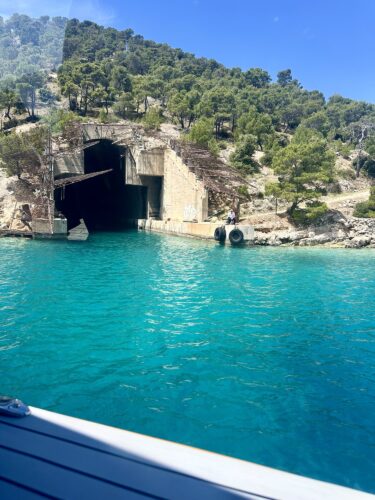
Our guide explained some of the history behind the tunnels, the broader context of Yugoslav military strategy in the Adriatic, and what the tunnels were used for. It was the kind of moment that reminded me how much history this part of the world contains, and how often it sits just below the surface of what looks like a straightforward beach holiday destination. Croatia has a complicated and layered past, and taking time to engage with even a small piece of that history made the trip feel more meaningful. If you are doing a boat tour in Brac Croatia, look for one that includes the tunnels at Potkop Smrka. It is worth it.
A Note on the Gelato
This is a small thing but I am including it because it genuinely made an impression: the gelato in Brac is excellent. I do not know if it is the quality of the local dairy, the fact that the island takes its food seriously, or simply that ice cream tastes better when you are eating it in the Mediterranean sun, but whatever the reason, the gelato I had on this trip was some of the best I have ever eaten.
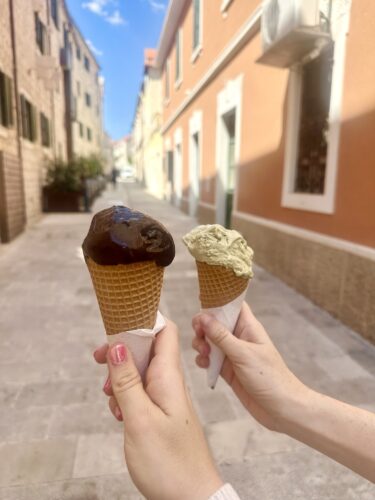
You will find gelato shops in Bol and in the smaller towns scattered around the island. Try multiple places. Try flavours you would not normally choose. It is cheap, delicious, and in my experience one of the small pleasures that sticks in your memory long after the bigger experiences start to blur together. Do not skip it.
Moving On: Ferry from Bol to Hvar
After several days on Brac, we caught the ferry from Bol to Hvar. This connection is convenient and well-timed for anyone doing an island-hopping itinerary along the Dalmatian coast. You do not need to go back through Split, which saves time and keeps the momentum of the trip going.
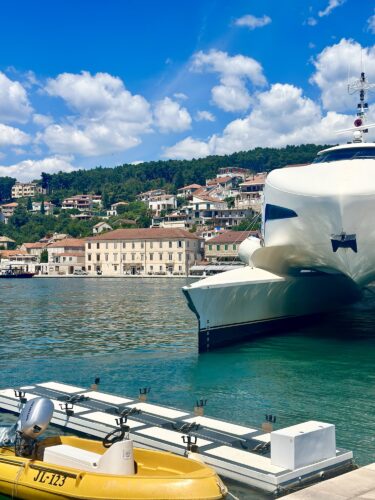
Hvar is a different kind of island experience, more developed, more famous, more of a social scene. The contrast with the quieter north coast of Brac was noticeable immediately. Both have their place in a good Croatia trip, but if I am honest, the days I spent in Brac Croatia felt more like genuine discovery.
Practical Tips for Visiting Brac Croatia
Before I wrap up, here are the practical details worth knowing:
Getting there: Take the ferry from Split to Bol. It runs multiple times daily in summer and takes around two hours. Book ahead in peak months.
Getting around: Rent a car. It is the only way to properly explore the island, access quieter beaches, and get between the north and south coasts comfortably. Most rental companies operate in Bol and can arrange pickup and dropoff at the ferry terminal.
Where to stay: The Grand View Hotel in Postira is my recommendation if you want to experience a different side of Brac. If you prefer to be in the main tourist hub, Bol has good options and puts you close to Zlatni Rat beach.
When to go: Late May, early June, or September. You get the weather without the peak-season crowds and prices.
What to eat and drink: Fresh fish, local olive oil, and wine from the island and the wider Dalmatian region. And definitely the gelato.
How long to spend: I would suggest a minimum of three nights to do the island justice. Four or five nights is better if you want to slow down and actually relax rather than rush between sights.
Day trips and boat tours: Book a boat tour through your accommodation or a local operator in Bol. Make sure the itinerary includes stops at Bobovisca, Milna, and the submarine tunnels at Potkop Smrka if you want the full experience.
Final Thoughts on Brac Croatia
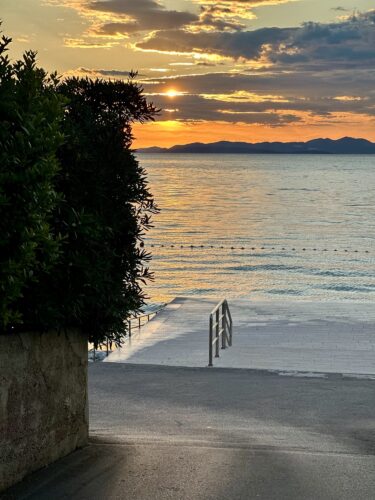
Brac Croatia is the kind of place that rewards a little extra effort. It is easy to stay in Split, day-trip to Hvar, and feel like you have done the Dalmatian islands. But if you are willing to get on the ferry and actually spend time on Brac, stay somewhere like Postira rather than defaulting to the main tourist town, rent a car and find the quiet beaches and the interior villages, you will get something that most visitors to Croatia do not get.
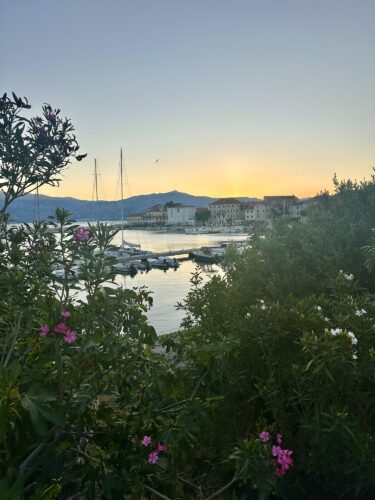
You will get an island that still feels like itself. The water is extraordinary. The people are welcoming. And the gelato, as I have already mentioned, is exceptional.
If you are building a Croatia itinerary and wondering whether Brac deserves a spot, let me save you the deliberation: it does. Give it three or four days, stay on the quiet north coast, rent a car, take the boat tour, find Plaza Vela Lozna, and eat as much gelato as you can justify. You will not regret it.
With love,
Bri and Cat
Affiliate Disclaimer:
As an Amazon Associate I earn from qualifying purchases. This comes at no additional cost to you. We only recommend products that we believe will add value to our readers.
Leave a Reply