
This site contains affiliate links, view the disclaimer page for more information.
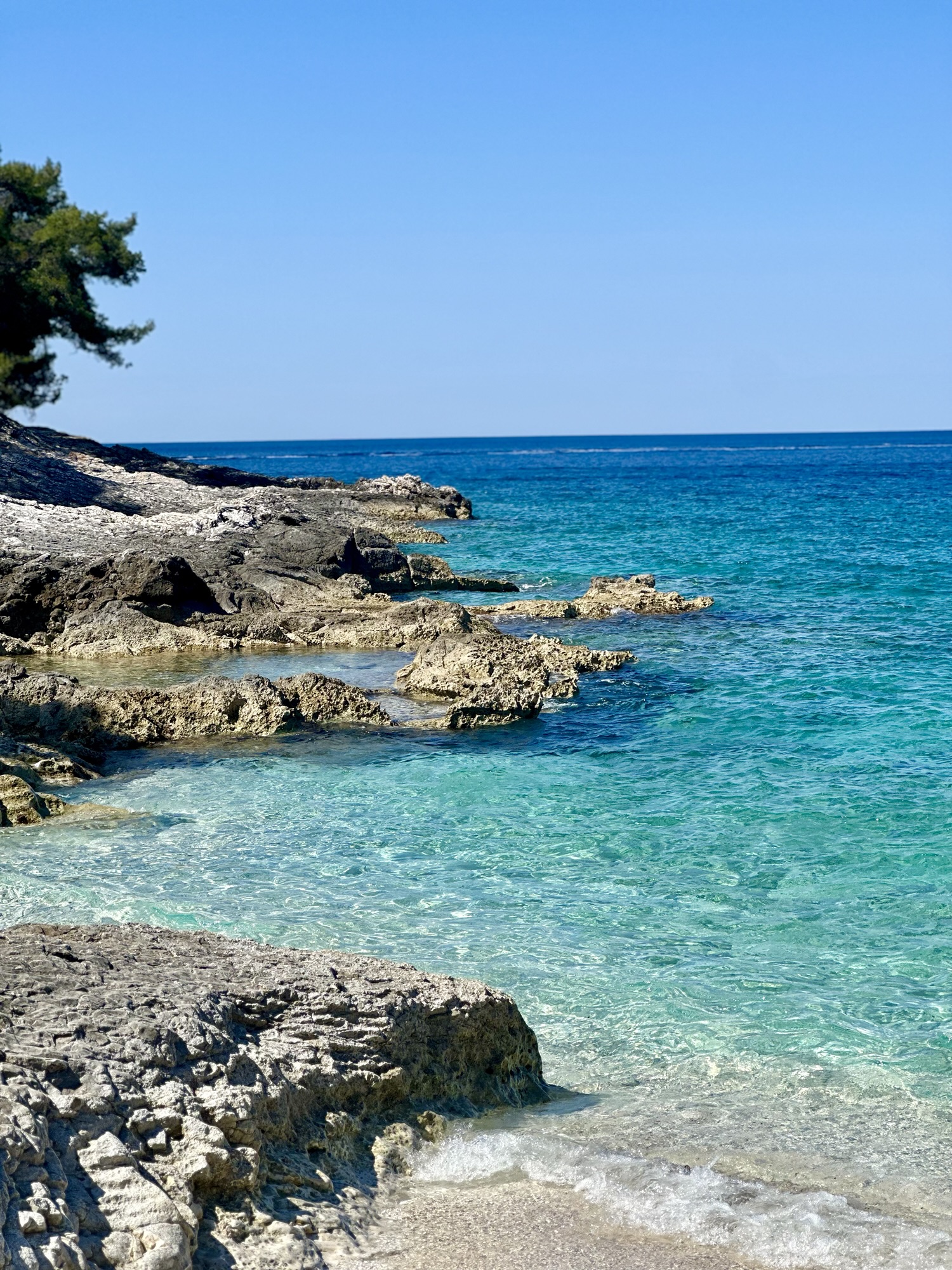
Hvar, Croatia is one of those places that lives up to the hype, and then quietly exceeds it in ways you do not see coming. Most people arrive expecting glamour: yacht-lined harbours, beach clubs with cocktails, and the kind of golden Adriatic light that makes every photo look edited. And yes, all of that is here. But Hvar has another side, one that involves abandoned villages, secret island restaurants, and coastal trails that most tourists never find. This guide covers all of it, from how to get there and where to stay, to the hidden lunch spot that might be the most memorable meal you will ever have.
I visited Hvar for several days and came away with a long list of things I wished I had known before arriving, alongside a handful of experiences I would go back for in a heartbeat. Here is everything you need to plan your own trip.
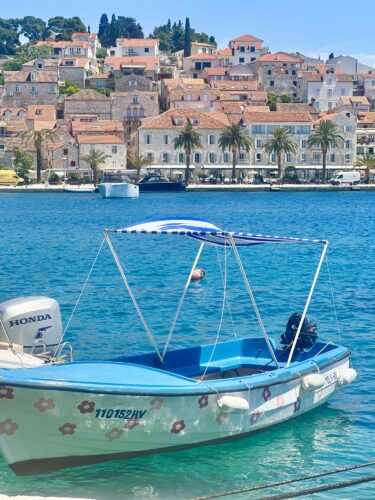
Table of Contents
Getting to Hvar, Croatia: Ferry Options and What to Expect
One of the first things to understand about Hvar is that it is an island, which means your journey involves a ferry no matter where you are coming from. The good news is that Croatia has a well-organised ferry system and getting to Hvar is genuinely part of the experience.
There are two main ways to arrive:
Option 1: Ferry from Split to Hvar Town
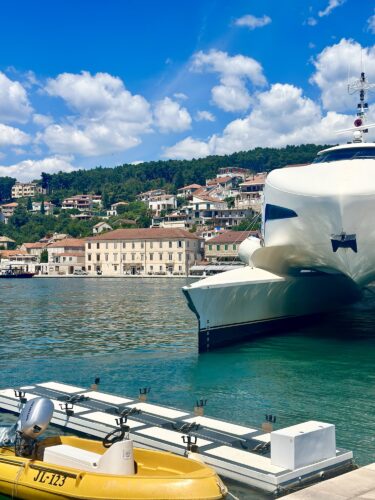
This is the most straightforward route and the one most travellers take. Jadrolinija operates regular car and passenger ferries from Split to Stari Grad on the island, and there are also faster catamaran services that go directly into Hvar Town harbour. If you are not bringing a car, the catamaran is the easiest option. The journey takes around one hour and drops you right in the heart of things. Split itself is a fantastic city worth spending a day or two in, so this route lets you combine both.
Option 2: Ferry from Bol (Island of Brac) to Jelsa
This is the route I took, and I would recommend it to anyone who wants a slightly more off-the-beaten-path arrival. I was staying on the island of Brac, specifically in the town of Bol, which is famous for its iconic Zlatni Rat beach. From Bol, there is a ferry that crosses to Jelsa, a quiet and charming harbour town on the north coast of Hvar. The crossing itself is beautiful, with open water views and a sense that you are genuinely island-hopping in the Mediterranean.
The one thing to factor in is that Jelsa is not Hvar Town. From Jelsa, you will need to take a taxi to reach Hvar Town, which takes about 30 minutes and costs around 30 to 40 euros depending on the time of day and the driver. It is worth it, but just plan for it in your budget and schedule. I made the mistake of underestimating how long this leg would take and arrived at my accommodation later than expected.
Whichever route you take, arriving by sea gives you your first proper look at the island: terracotta rooftops, pine trees rolling down to the water, and the unmistakable blue of the Adriatic. It sets the tone perfectly.
Where to Stay: Why Hvar Town Is the Best Base
There are several towns on Hvar worth considering, including Jelsa, Stari Grad, and Vrboska, all of which are quieter and more residential. But if it is your first visit and you want to be close to restaurants, beach clubs, shopping, nightlife, and the ferry connections for day trips, Hvar Town is the place to base yourself.
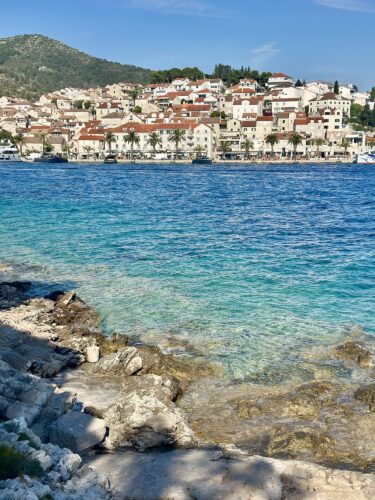
Hvar Town sits at the western tip of the island around a beautiful natural harbour. The old town is compact and walkable, built around a large Renaissance piazza, which is one of the largest in Dalmatia. The streets are narrow and paved with smooth white stone, lined with lavender shops, local wine bars, and boutiques selling linen clothing. It is genuinely lovely to wander.
Accommodation ranges from budget-friendly private rooms in local homes to high-end design hotels with infinity pools overlooking the harbour. I stayed in a mid-range boutique option just a few minutes walk from the main square, which was ideal. Book well in advance if you are visiting in July or August; Hvar Town fills up fast and prices rise sharply in peak season.
Exploring Hvar Town: How to Spend Your First Day
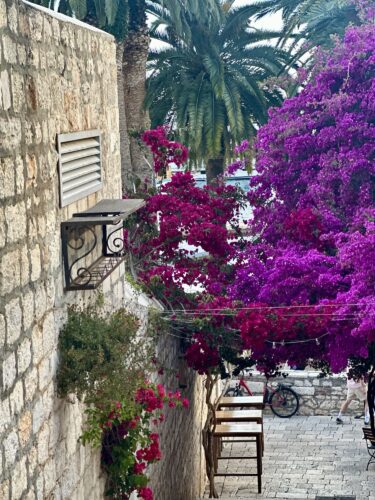
Your first day in Hvar Town practically plans itself. Start by just walking. The old town is small enough to cover on foot in a couple of hours, and the pleasure is in the details: a doorway covered in bougainvillea, a view of fishing boats at the end of a narrow lane, the smell of lavender from a market stall.
The main piazza is a great place to sit with a coffee and get your bearings. It connects the harbour to the old town and is surrounded by the Cathedral of Saint Stephen, old stone palaces, and a handful of outdoor cafes. In the morning it is calm and photogenic. By evening it transforms into a lively gathering spot with a very European energy.
Shopping in Hvar Town is genuinely enjoyable, which is not something I say often. You will find quality local products: lavender oil and sachets (Hvar is famous for its lavender fields), local wine, artisan jewellery, and handmade ceramics. It is worth spending an hour browsing and picking up a few things to bring home.
The Spanish Fortress: Do Not Skip This
If there is one thing I would tell every first-time visitor to Hvar Croatia, it is this: walk up to the fortress. I almost skipped it because I was tired from the ferry journey and it looked like a steep climb. That would have been a mistake.
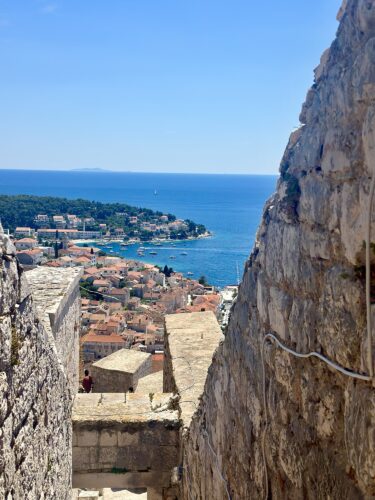
The Fortica, also called the Spanish Fortress or Spanjola, sits on the hill directly above Hvar Town and takes about 15 to 20 minutes to reach on foot from the main square. The path winds through old residential streets before opening up to a steep rocky trail. It is not a technically difficult walk but you will want comfortable shoes and a bottle of water.
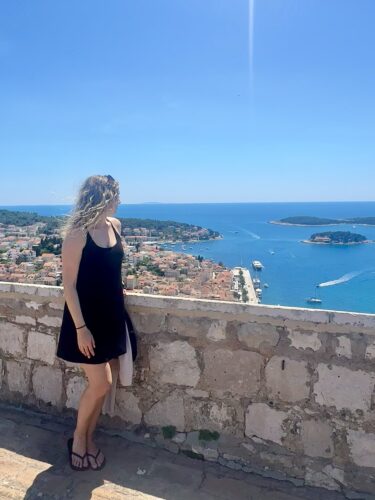
Once you are at the top, the view is extraordinary. You can see:
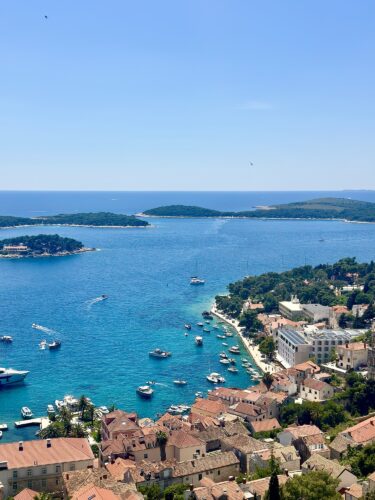
- The entire sweep of Hvar Town below, with its red rooftops and harbour
- The Paklinski Islands scattered across the turquoise water to the west
- The Adriatic stretching out in every direction
- On a clear day, the mainland mountains in the distance
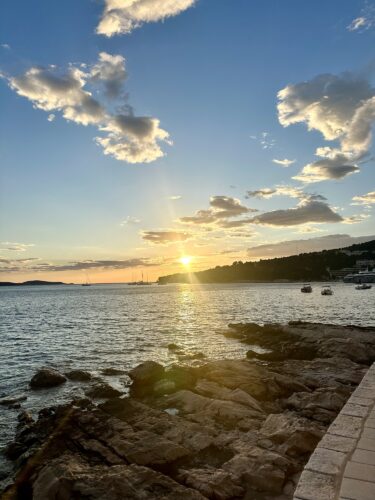
I went in the late afternoon, which I would highly recommend. The light at that time of day turns everything golden, and the Paklinski Islands look almost unreal from above. I stayed for nearly an hour just sitting and taking it in.
The fortress itself dates back to the 16th century and was built primarily to defend against Ottoman attacks. Inside there is a small museum and the walls and towers are well preserved. It is also a useful history lesson: Hvar has been fought over by Venetians, Ottomans, Habsburgs, and more, and the fortress is a physical reminder of how strategically important this island was. Entrance costs a few euros and is completely worth it.
Beach Club Day: How to Do It Right
Spending a full day at a beach club is, I think, one of the quintessential Hvar Croatia experiences. I had one of those days and it was exactly what I needed after a couple of active days of exploring.
The setup is simple. You arrive, rent a sun lounger for around 20 euros, which typically covers the full day, and you are handed a towel and shown to your spot. Food and drinks are ordered directly to your chair. The water is right there. That is the entire plan, and it is a very good one.
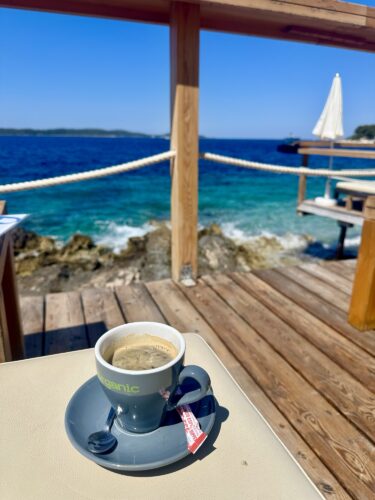
The quality of beach clubs in Hvar Town varies, so it is worth doing a bit of research before you go. Some are very much about the scene: loud music, cocktail menus, a younger crowd. Others are more relaxed and family-friendly. I opted for something in the middle and had a wonderful, lazy day with good food and cold wine.
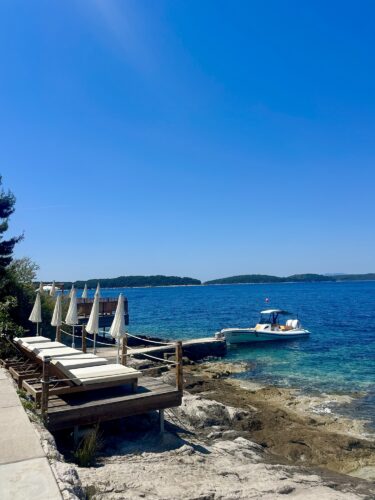
A few practical tips for beach club days in Hvar:
- Arrive early if you want a good spot, especially in high season
- Most beach clubs have a minimum spend if you are renting a sunbed, so check this in advance
- The water around Hvar Town is very clean and clear, perfect for snorkelling if you bring a mask
- Bring cash as a backup, some smaller clubs do not take cards reliably
Beach clubs are also a great option if you are travelling solo. There is a naturally sociable atmosphere, and it is easy to strike up a conversation with the people around you.
The Coastal Hike to Milna: One of the Best Walks on the Island
This hike was the highlight of my active days on Hvar and one I recommend without hesitation. The trail runs along the coast from Hvar Town to the small village of Milna, taking roughly one and a half to two hours depending on your pace and how many times you stop to take photos (which will be often).
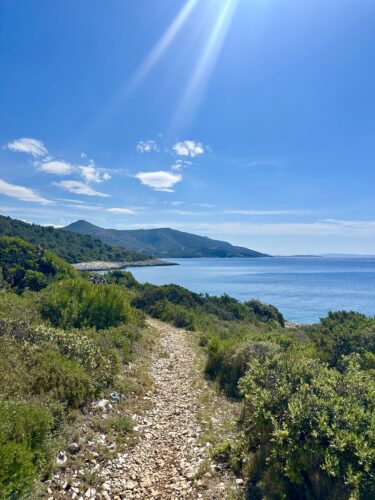
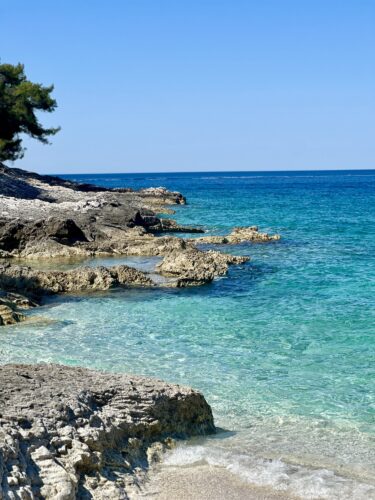
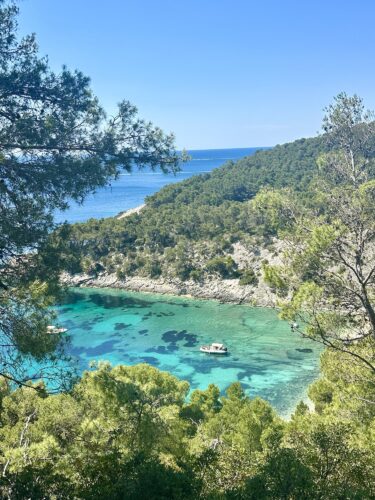
I did this walk with a group of friends, which made it more fun, but it is equally manageable solo. The path starts at the western edge of Hvar Town and follows the coastline, giving you continuous views of the sea and the Paklinski Islands. In places the trail rises above the water and you get these sweeping panoramas that feel almost cinematic. In other sections it dips close to the shore and you can hear the waves below.
The terrain is rocky in places so proper walking shoes are important. Trainers are fine; flip flops are not. Bring sun cream, water, and a light layer for the shadeless sections. The walk is not strenuous but the sun exposure can be intense in summer.
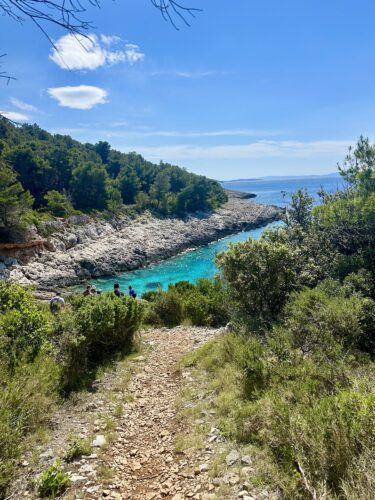
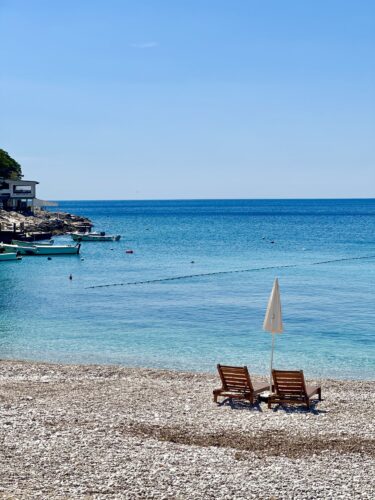
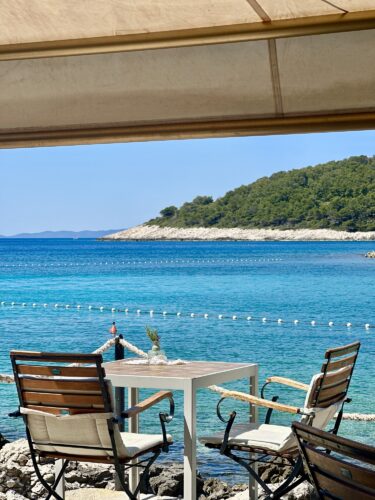
Arriving in Milna is a reward in itself. The village is tiny and sits right on a sheltered bay with calm, shallow water. After the walk, we headed straight to the beach for a swim and then found a shaded spot to have drinks. The pace in Milna is noticeably slower than Hvar Town, and it was lovely to sit there and just breathe.
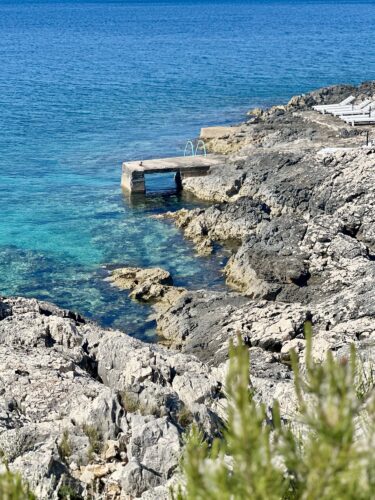
From Milna, we headed to lunch, and that is where things got really interesting.
Konoba Stori Komin: Lunch in an Abandoned Village
I have eaten in a lot of memorable places. A rooftop in Marrakech, a floating restaurant in Vietnam, a farmhouse in Tuscany. But Konoba Stori Komin, tucked inside the abandoned village of Malo Grablje above Milna, is genuinely unlike anything else I have experienced.
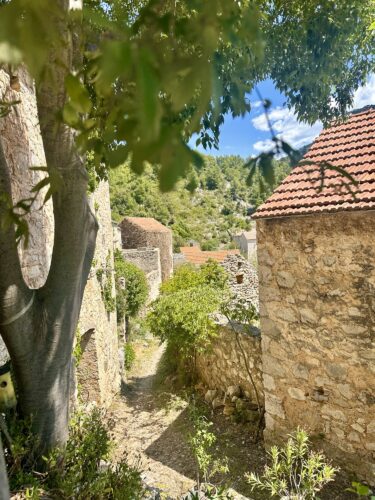
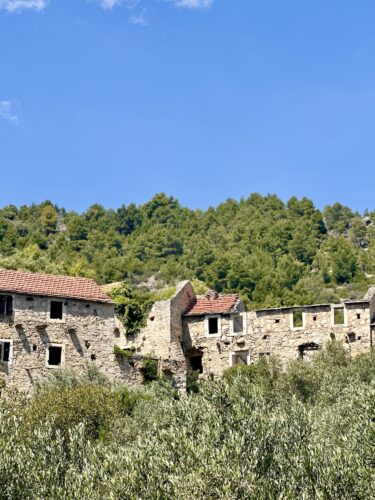
Here is the backstory, and it is worth knowing before you go. Malo Grablje is a village that was evacuated in the 1960s. The entire population, at the time around 200 people, left the hilltop settlement and relocated to the coastal village of Milna below. The reasons were practical: better access to fishing, easier transport connections, a more viable life by the sea. Almost overnight, Malo Grablje was simply left behind.
Today, walking into the village feels like stepping into a place where time stopped. The stone houses are still standing, their roofs caved in or open to the sky. Doorways lead into rooms filled with decades of silence. Fig trees grow through walls. It is eerie and beautiful at the same time.
And right in the middle of all of this, there is a restaurant.
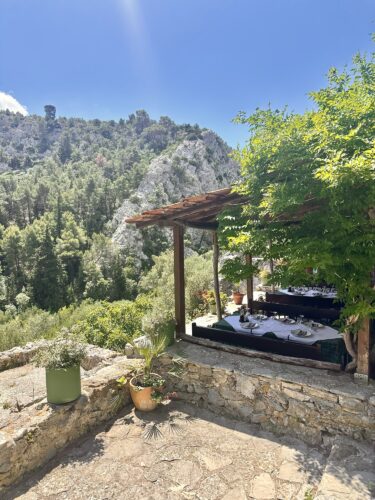
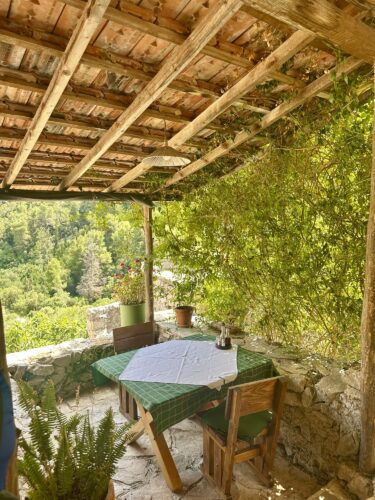
Konoba Stori Komin is a family-run konoba, which is the Croatian word for a traditional tavern or inn. They make their own wine, grow much of their own produce, and cook food that is deeply rooted in the Dalmatian tradition. We had slow-cooked lamb, grilled fish, local cheeses, bread baked in a peka (a traditional bell-shaped lid buried in embers), and the house wine, which was earthy and excellent.
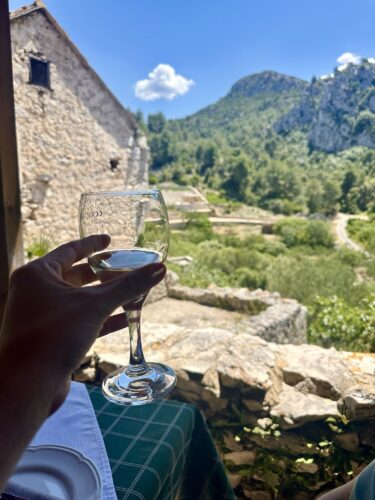
The atmosphere is impossible to recreate. You are sitting in the stone courtyard of an abandoned settlement, surrounded by crumbling houses and ancient olive trees, eating food that tastes like it has been made the same way for generations. It is completely unique.
A few things you absolutely need to know before going:
- Reservations are essential. This place is not a secret to locals and savvy travellers, and it fills up. Contact them well in advance, especially in peak season.
- Plan your transport. Malo Grablje is a 30-minute walk uphill from Milna. It is doable, but after a coastal hike and a beach swim, a taxi or a pre-arranged driver makes more sense. Ask your hotel to help organise this.
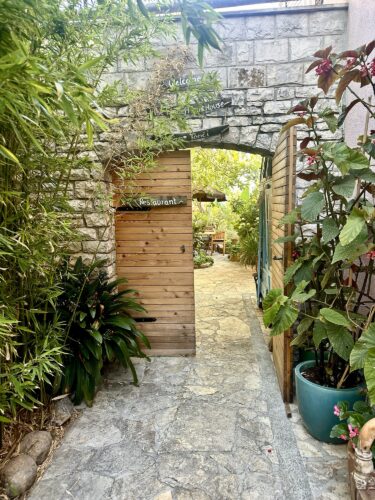
- Arrive 15 minutes early. The walk through the abandoned village to reach the restaurant is part of the experience. Give yourself time to explore before your meal starts. Wander into the old houses, look at the crumbling church, take it all in.
- It is cash only, or at least it was when I visited. Bring euros.
This lunch is the kind of experience that comes up in conversation for months afterwards. Do not miss it.
Paklinski Islands Boat Tour: The Perfect Final Day
The Paklinski Islands sit just offshore from Hvar Town and on a clear day they look almost unreal from the fortress above. Getting out to them by boat is, without question, one of the best things to do in Hvar Croatia.
On my last day, a group of us booked a half-day boat tour that took us through the archipelago. There are a handful of larger islands and dozens of smaller ones, many of them uninhabited. The water between the islands is extraordinarily clear, in shades of turquoise and deep blue that look more Caribbean than Mediterranean. We swam in several coves, floated in water so clear you could see the bottom at several metres depth, and generally felt very lucky to be there.
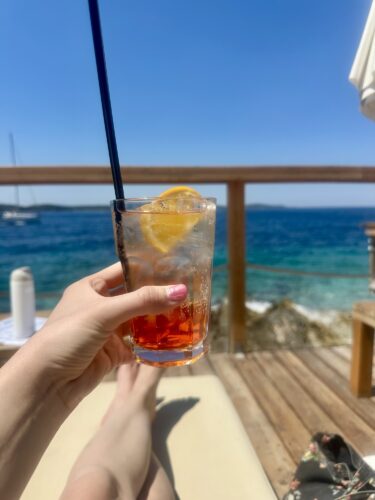
One of the highlights of the boat tour was stopping at Laganini Lounge Bar on Palmizana island. Laganini is a local institution: a relaxed, open-air beach bar set under pine trees directly above the water. We had cold drinks, and spent about an hour swimming off their dock before the boat moved on. It is the kind of place that makes you reconsider your entire life back home.
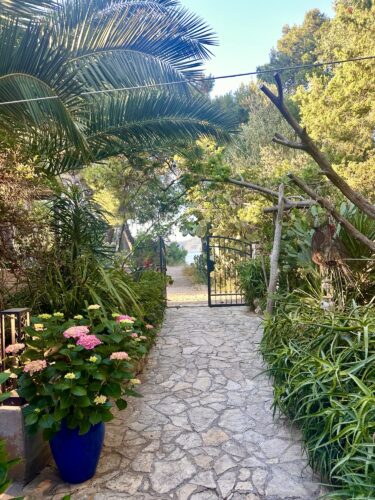
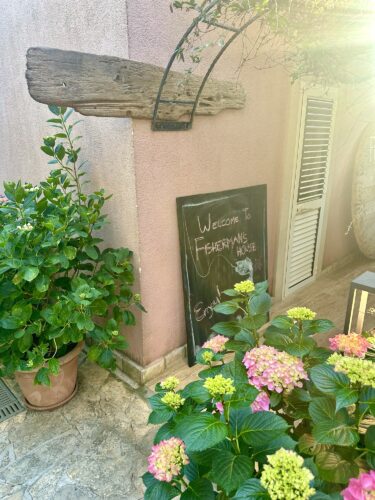
For dinner on my final night, we went to The Fisherman’s House, a restaurant with a well-deserved reputation for excellent fresh fish and seafood. It was the right note to end on: good wine, great food, the smell of the sea, and the knowledge that Hvar had delivered on every promise.
If you are short on time and can only do one day trip during your visit, make it the Paklinski Islands. Book a boat tour through your hotel or at the harbour, where several operators offer half-day and full-day options. Prices vary but expect to pay around 50 to 80 euros per person for a shared tour, or considerably more for a private charter.
Practical Tips for Visiting Hvar, Croatia
Before I wrap up, here are the details that make a real difference when planning a trip to Hvar Croatia.
When to go. July and August are peak season: very busy, expensive, and hot. June and September are my strong recommendations. The weather is warm, the water is swimmable, and the island is noticeably less crowded. May and October are quieter still, cooler but beautiful.
Getting around the island. Hvar Town is walkable, but for getting to Jelsa, Stari Grad, or other villages, you will need a taxi, rental car, scooter, or bike. Taxis are reliable but add up quickly. Scooters are popular and give you the most freedom.
Language and money. Croatia uses the euro as of 2023. Most places in Hvar Town accept cards, but smaller restaurants, markets, and beach bars sometimes prefer cash. Croatian is the local language but English is widely spoken throughout the island.
Reservations. If you want to eat at the better restaurants in Hvar Town, book ahead. This is especially true in July and August when the island is at peak capacity. For Konoba Stori Komin, booking weeks in advance is not unreasonable.
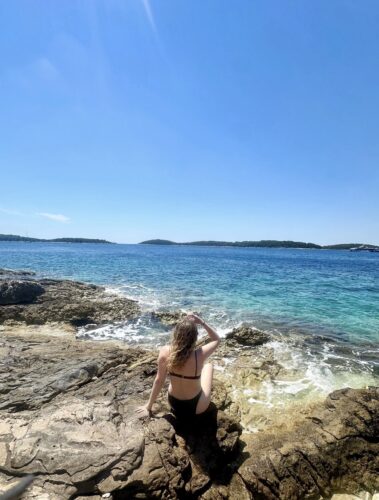
What to pack. Comfortable walking shoes. Water shoes. Croatia’s beaches are almost entirely pebble and rock, not sand. This is part of what makes the water so brilliantly clear, but it also means walking into the sea barefoot is a painful shuffling experience that nobody warns you about until it is too late. A quality reef-safe sunscreen. The Adriatic sun is serious, especially on the water. I bring a factor 50 reef-safe option. A reusable water bottle. A plug converter. Croatia uses the Type F European plug (the standard two round-pin plug), which means travelers coming from the US, UK, or Australia will need an adapter. A portable battery pack, you will be glad to have this for long days of taking photos and navigating.
Budget. Hvar is one of the more expensive islands in Croatia, particularly in Hvar Town. Expect to pay more for food and accommodation here than you would in Split or Dubrovnik’s surroundings. That said, value is excellent if you choose wisely: a 20-euro sunbed for an entire day, a bottle of local wine for 15 euros, a filling konoba lunch for around 25 euros per person.
Final Thoughts
Hvar Croatia rewards travellers who go beyond the harbour and the beach clubs, though there is nothing wrong with spending a day doing exactly that. The island has a remarkable range: glamorous and quiet, ancient and contemporary, immediately beautiful and slowly, unexpectedly moving.
Walking into an abandoned village to have lunch made from homemade wine and produce grown in the same soil for centuries is not something I expected from a Croatian island with a reputation for parties and yachts. But that is exactly what Hvar delivers when you take the time to look past the surface.
Whether you have three days or a full week, Hvar is worth every hour. Plan carefully, book ahead, wear decent shoes, and leave room for the unexpected. The best moments here have a tendency to be the ones that were not on the original itinerary.
With love,
Bri and Cat
Affiliate Disclaimer:
As an Amazon Associate I earn from qualifying purchases. This comes at no additional cost to you. We only recommend products that we believe will add value to our readers.


Leave a Reply