
This site contains affiliate links, view the disclaimer page for more information.
The first time I made this focaccia pizza recipe, I almost didn’t share it. It felt too simple. Too slow. Too ordinary for a recipe post. But then my sister called from across the country asking me to walk her through it step by step after I had made it for a family dinner. That’s when I realized: this one is worth writing down.
If you’ve been searching for a focaccia pizza recipe that feels genuinely rewarding without being complicated, you’ve landed in the right place. This isn’t a rushed weeknight shortcut or a gimmick. It’s a slow, intentional dough that rewards your patience with a crust so good it honestly doesn’t need much on top, though we’re going to put plenty on it anyway.

Table of Contents
Why I Became Obsessed With Focaccia Pizza
I’ve gone through phases with pizza. There was my thin-crust era. My sourdough experiment (we don’t talk about the sourdough experiment). My “just buy Trader Joe’s dough” season, which honestly lasted longer than I’d like to admit. But focaccia pizza is where I landed and stayed.
Here’s the thing about traditional pizza dough: it’s finicky. You have to stretch it just right, get the temperature exactly so, and if you’ve ever watched a carefully shaped round slowly spring back into a lumpy oval, you know the particular frustration I’m talking about. Focaccia pizza is different. You’re not fighting the dough, you’re working with it.
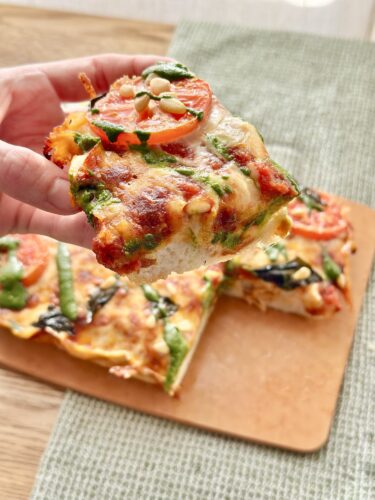
The dough gets pressed into a pan. It puffs into itself. It wants to be thick and soft and golden. There’s no special technique, no pizza stone required, no high-drama oven temperature. Just a bowl, a pan, some olive oil, and time. And the result? A crust with a pull-apart softness on the inside and a deeply golden, olive-oil-crisped edge on the outside that I would honestly eat as a snack on its own.
What Makes a Focaccia Pizza Recipe Different From Regular Pizza?
Let me make the distinction clearly, because it matters. Classic focaccia is an Italian flatbread, dimpled, olive-oil-soaked, often topped with herbs and flaky salt. It’s a bread, not a pizza vehicle. But somewhere along the way, people started adding sauce and cheese to it, and an entire pizza category was born.
A focaccia pizza recipe produces something that sits between the two:
- Thicker and airier than traditional pizza dough
- More olive oil, which creates a richer, crisper crust
- Baked in a pan, not on a stone or pizza peel
- Softer interior with a distinctly bread-like chew
- More forgiving in every single way
It’s the difference between a New York-style slice and a Sicilian slice. If you’ve ever had a thick, pan-baked Sicilian square with those caramelized, crispy edges? That’s the energy we’re going for. Rustic. Generous. Unapologetically carb-forward. I also find it more satisfying to make. There’s something meditative about a dough that just needs time, not technique.
The Ingredients (You Already Have Everything)
One of the reasons I make this focaccia pizza recipe as often as I do is because the ingredient list never intimidates me. There’s no trip to a specialty store, no bread flour sourcing adventure, no hunting down a specific type of yeast.
Here’s everything you need:
- 4 cups all-purpose flour
- 1 ¾ cups warm water (think: warm bath, not hot tub)
- 1 packet active dry yeast (2 ¼ tsp)
- 1 ½ tsp granulated sugar
- 2 tsp salt
- 5–6 tablespoons olive oil, divided
That’s it. Six ingredients. (Just add your desired pizza toppings)
A few notes on the ingredients:
On the water temperature: This is the one place where I’d urge you to actually pay attention. Water that’s too hot will kill your yeast. Too cold and it won’t activate properly. I aim for around 100–110°F. If you don’t have a thermometer, stick your wrist under the tap, it should feel noticeably warm but not at all uncomfortable. That’s your range.
On the olive oil: Use something you’d actually want to taste, because you’ll taste it in every bite. This isn’t the place for the dusty bottle at the back of the pantry. I use a mid-range everyday olive oil, nothing precious, but something decent. The oil is doing real work here: flavor, texture, and that signature golden crust.
On the flour: All-purpose is absolutely fine. I’ve made this with bread flour and the result is slightly chewier, which some people love. Either works. Don’t let flour type become a reason to delay making this.
How to Make This Focaccia Pizza Recipe, Step by Step
I’m going to walk you through exactly what I do, with the details that most recipes skip over.
Step 1: Wake Up Your Yeast (5–10 minutes)
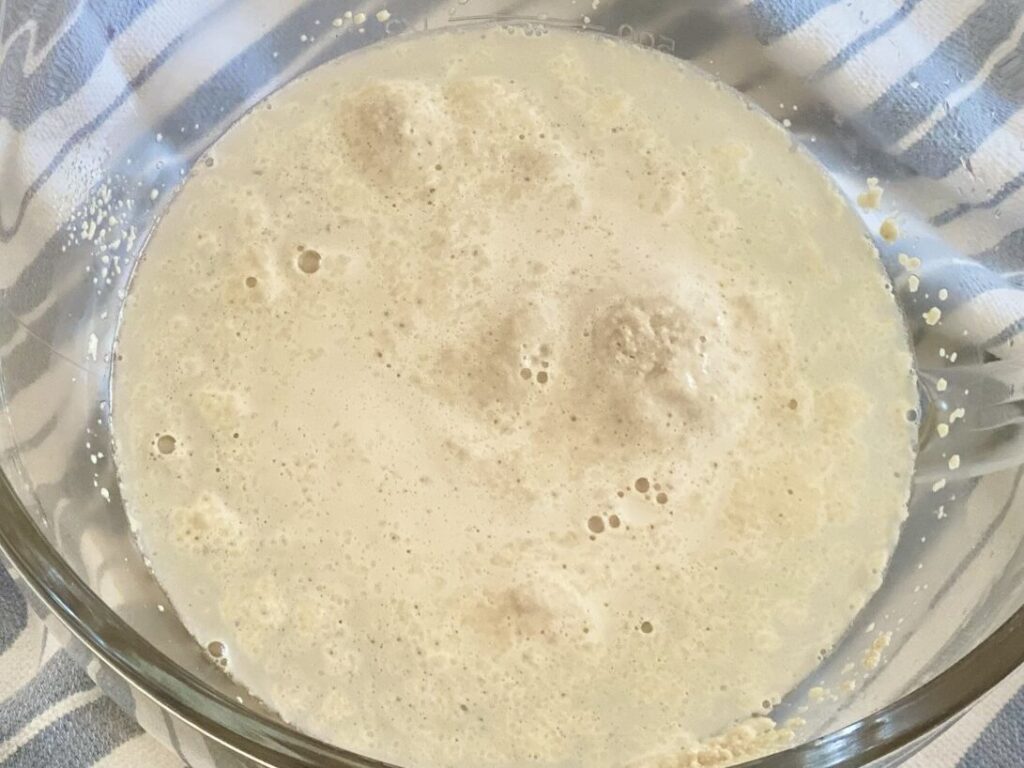
In a large bowl, combine the warm water and sugar. Sprinkle the yeast over the top.
Now: walk away for 5 to 10 minutes.
When you come back, it should look foamy and slightly puffy on the surface. That foam is the yeast activating- it’s alive, it’s ready, and your bread is going to rise beautifully.
If nothing happens after 10 minutes? Your yeast is likely expired. Check the date on the packet and start over. It’s frustrating in the moment but saves you hours of waiting for a dough that was never going to rise. This little test is worth doing every single time. I’ve skipped it before when I was impatient. Learned my lesson.
Step 2: Mix the Dough (5 minutes)
Add the flour and salt to your yeast mixture. Stir until everything comes together into a shaggy, slightly sticky dough. It will not look smooth. It will not look polished. It will look like a mess, and that’s exactly right.
No kneading. No special technique. Just stir until there’s no more dry flour visible. This is legitimately the hardest part of the recipe, and it takes about four minutes.
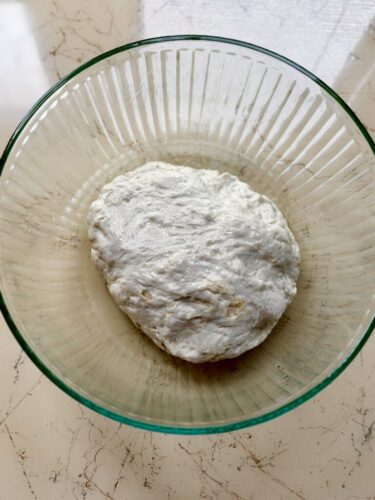
Step 3: The First Rise (3 Hours)
Drizzle about 2 tablespoons of olive oil over the dough, cover the bowl with plastic wrap or a clean kitchen towel, and set it somewhere at room temperature. Then leave it alone for three hours. I’m serious. Don’t check it every 20 minutes. Don’t move it to a sunnier spot. Don’t panic when it looks the same after one hour (it’s working, I promise). Just… go live your life.
Make coffee. Take a walk. Watch an episode of something. Fold your laundry.
When you come back, the dough will have approximately doubled in size and will be filled with air bubbles beneath the surface. This long, slow rise is where all the flavor develops. It’s the difference between bread that tastes like something and bread that tastes like nothing. Don’t rush it.
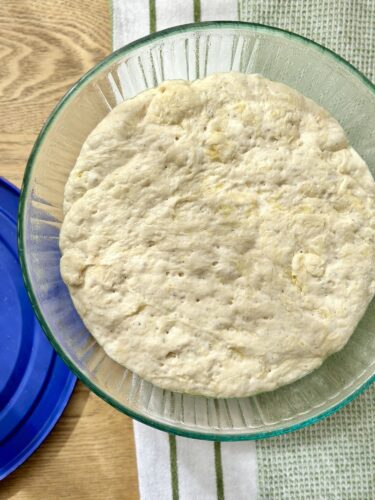
Step 4: Divide and Shape (5 minutes)
Here’s where this focaccia pizza recipe gets flexible in a way I love.
Using two forks (or just your hands, which is what I sometimes end up doing), gently pull the edges of the dough toward the center, rotating the bowl as you go. This loosely shapes it into a ball without deflating all those beautiful air bubbles.
Now cut the dough in half.
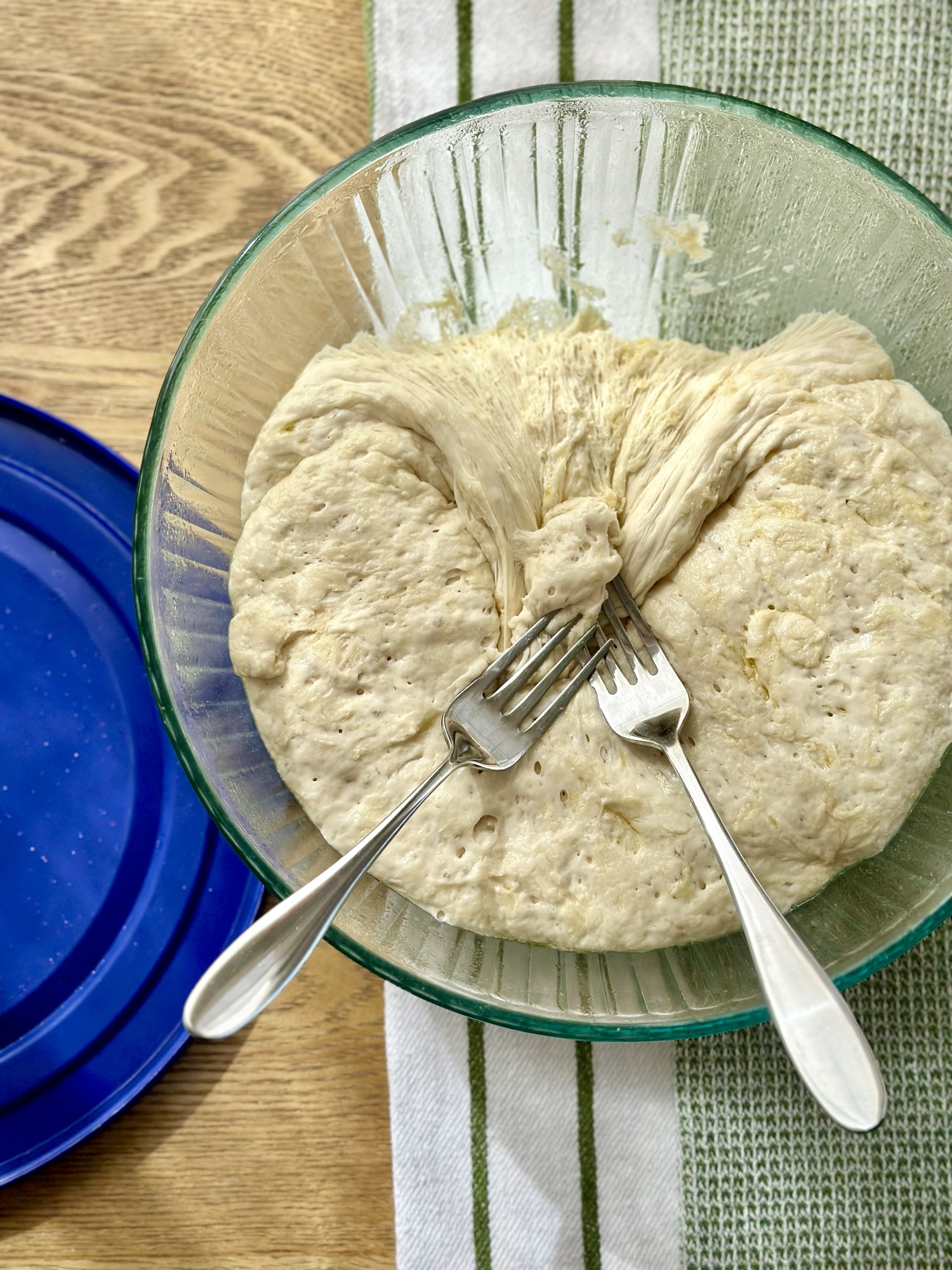
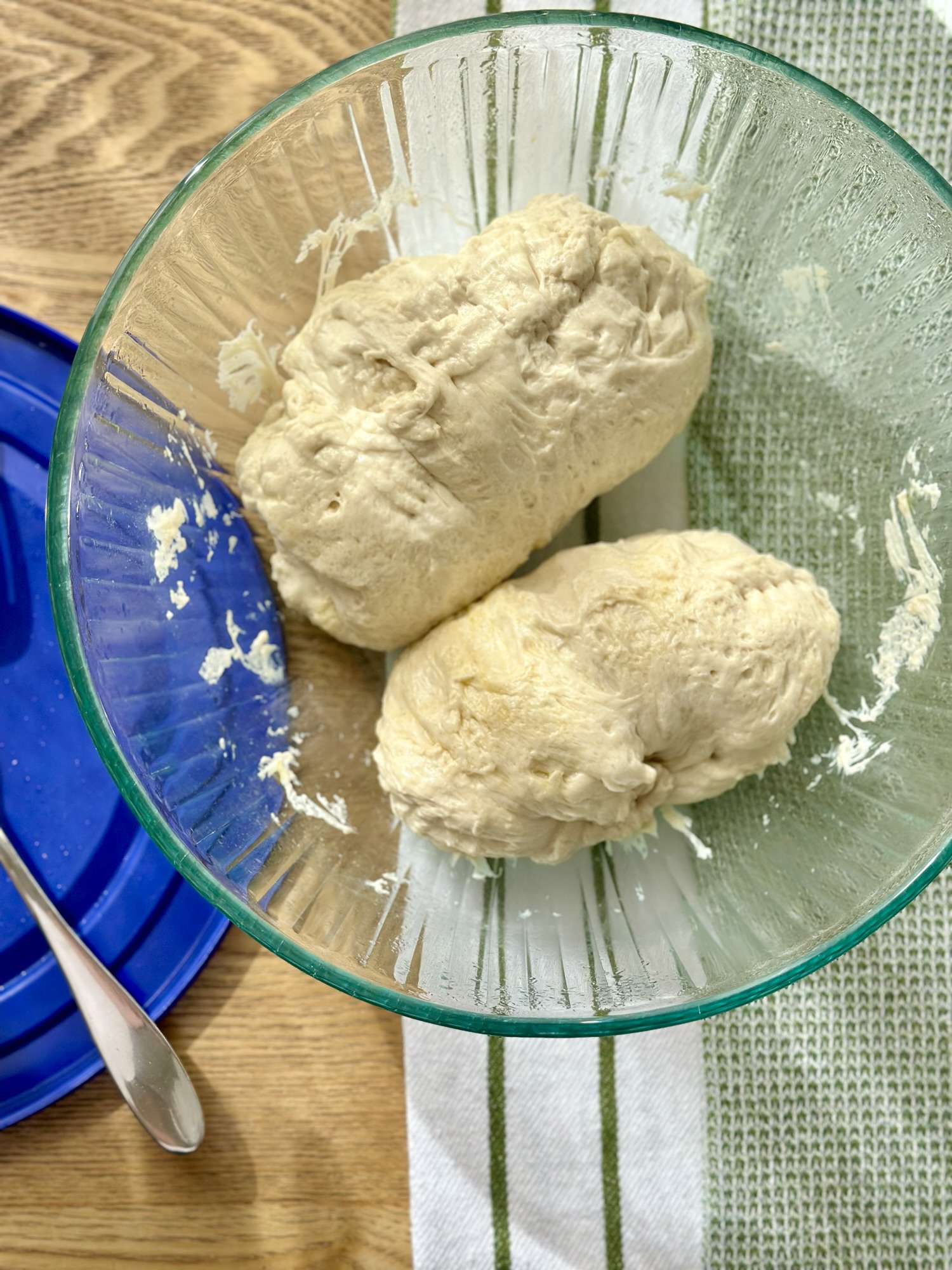
At this point you have options, and all of them are good:
- Two focaccia pizzas: great for feeding a group, great for making different versions side by side
- One focaccia pizza + one plain focaccia loaf: my personal favorite when I want variety or if I’m hosting; the loaf bakes alongside the pizza and gets eaten immediately with olive oil and salt
- Save half for later: the dough keeps in the fridge for up to two days, so you can have fresh pizza two nights in a row with almost zero extra effort
I’ve done all three versions. There’s genuinely no wrong choice.
Step 5: The Second Rise (1 Hour)
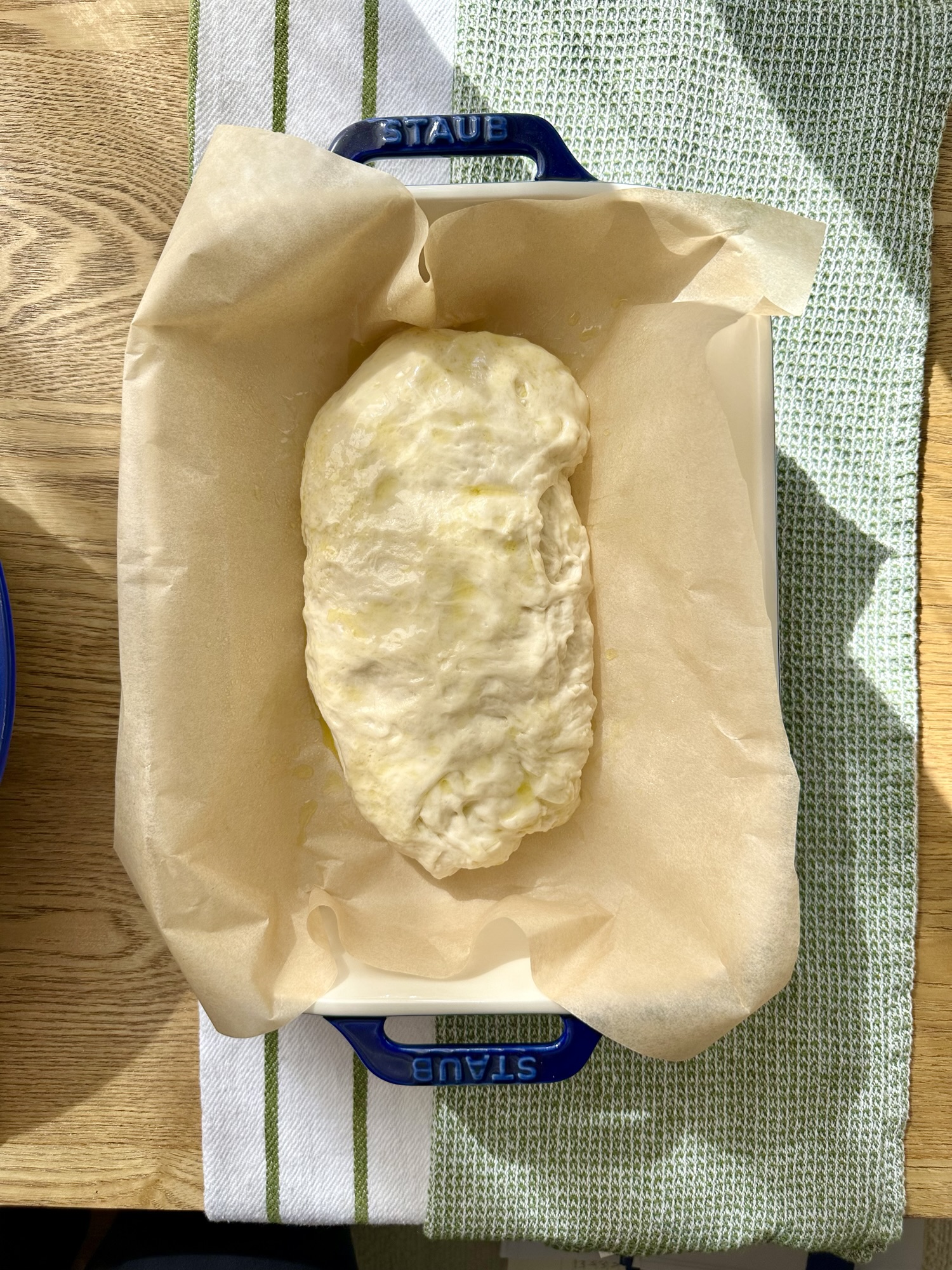
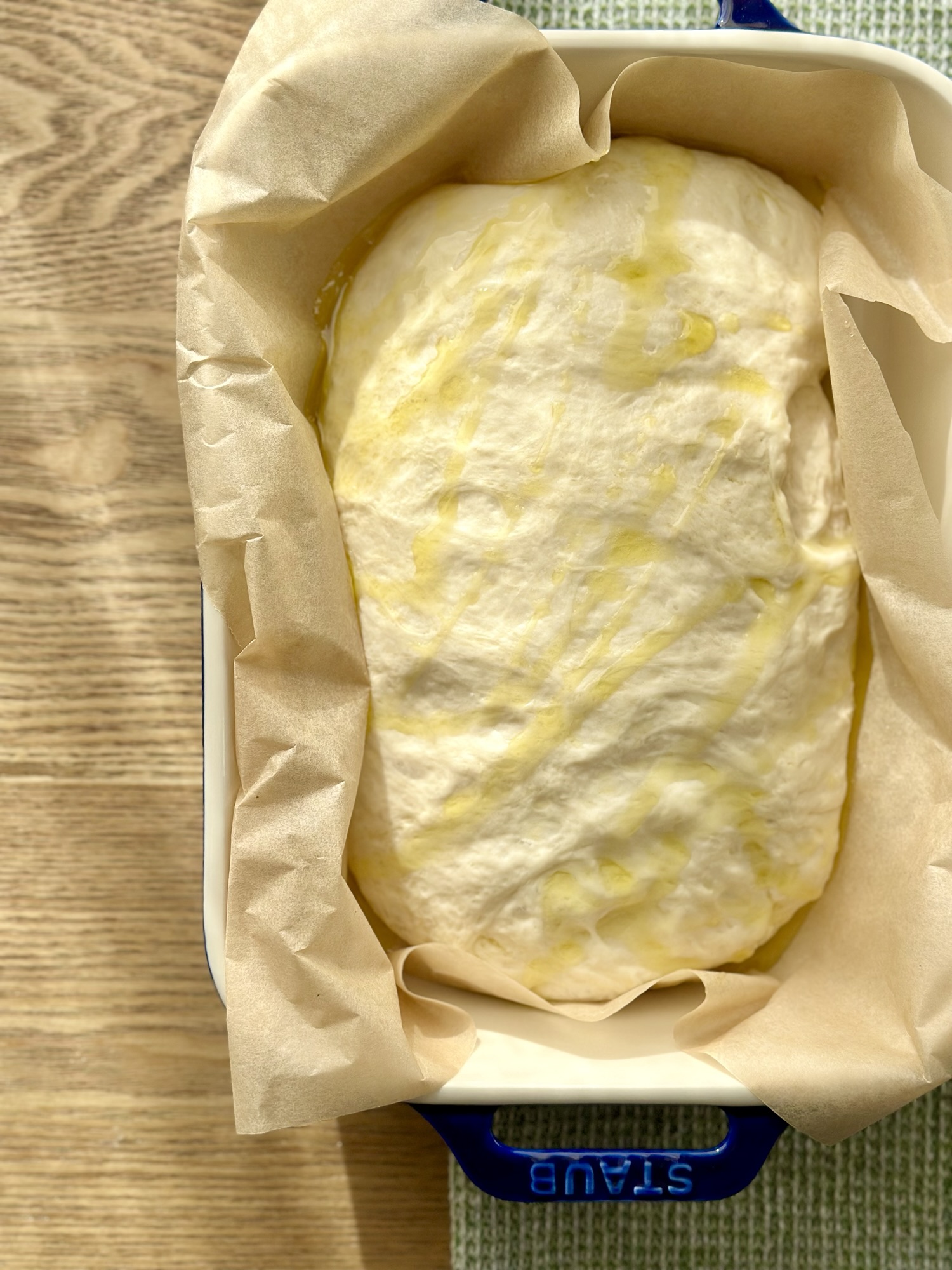
Coat your hands generously in olive oil- this is not a step to be stingy with-and transfer your dough to a parchment-lined 9×13-inch baking pan. Press it out gently toward the edges. It won’t fill the pan completely. That’s fine. It’ll expand. Cover loosely and let it rise for one more hour.
This second rise is what gives focaccia pizza its signature pillowy interior. It’s also why the texture is so different from other pizza styles. After this rise, the dough will be soft, jiggly, and full of air. Handle it gently from here on.
Step 6: Add Focaccia Dimples
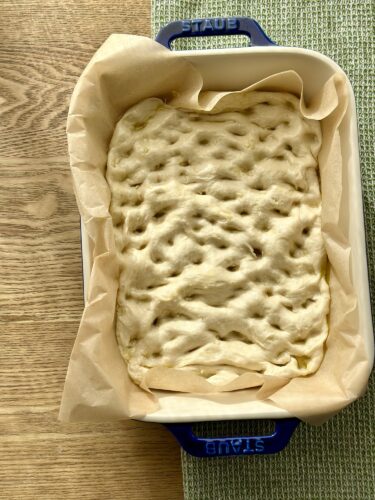
Drizzle 1 to 2 tablespoons of olive oil over the surface of the risen dough, then press your fingers firmly across it to create the characteristic focaccia dimples. These little wells catch the oil, crisp up beautifully, and help the crust hold its structure once you add toppings.
If you want, press some minced garlic into the dimples. I almost always do. It blooms in the oven and the whole kitchen smells incredible.
Turning the Dough Into Pizza
Pre-Bake First
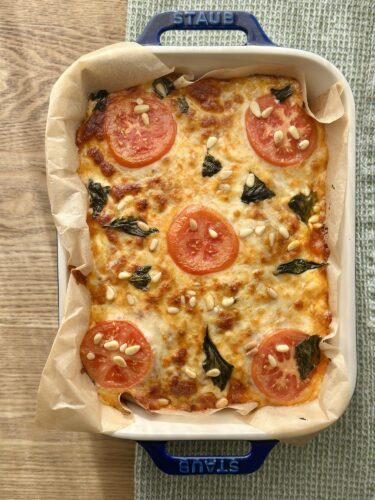
Before you touch a pizza single topping: pre-bake the dough. Preheat your oven to 400°F. Bake for about 12 minutes, until the surface is just set and beginning to look golden at the edges.
This step is non-negotiable if you want a crispy-bottomed pizza. Skipping it means your toppings’ moisture will sink straight into the dough, and you’ll end up with a soft, slightly soggy bottom. Not the goal.
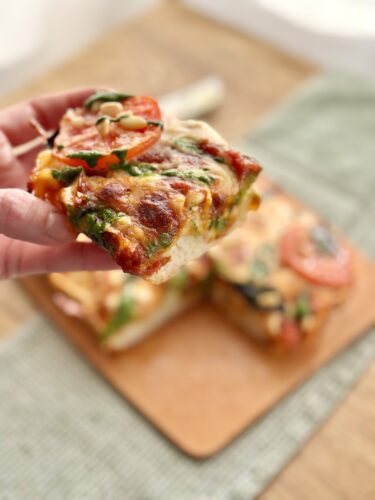
Add Your Toppings
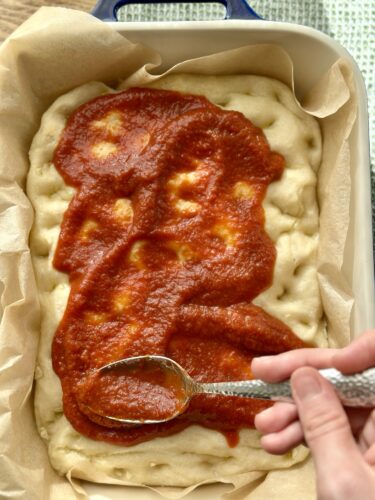
Pull the pre-baked crust out of the oven and add your toppings while it’s hot.
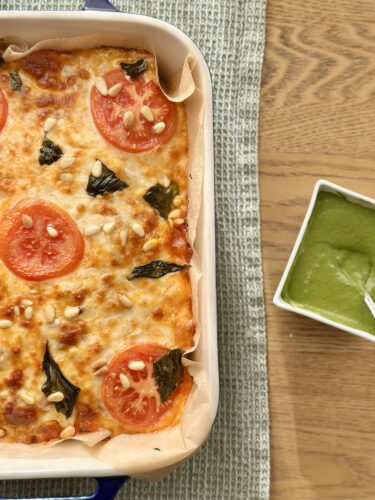
My current go-to combination is genuinely simple:
- Red pizza sauce, spread in a thin, even layer
- Fresh mozzarella, torn rather than sliced
- Sliced Roma tomatoes
- A handful of fresh basil leaves (added after baking)
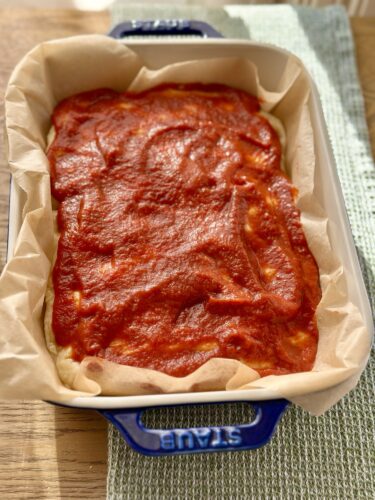
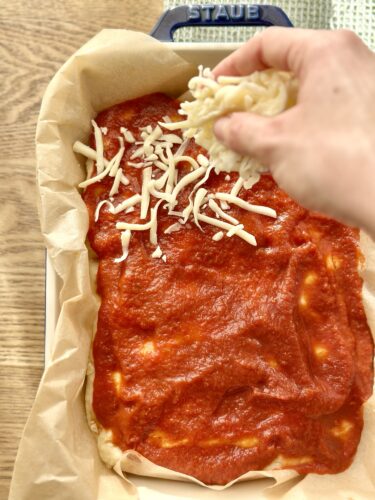
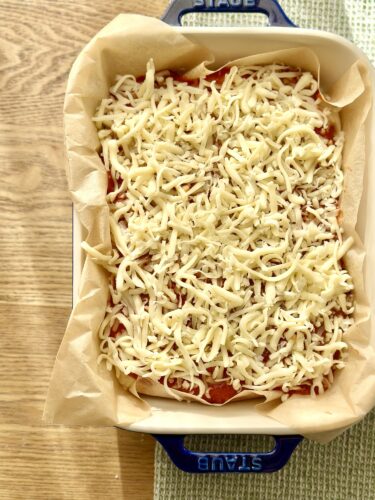
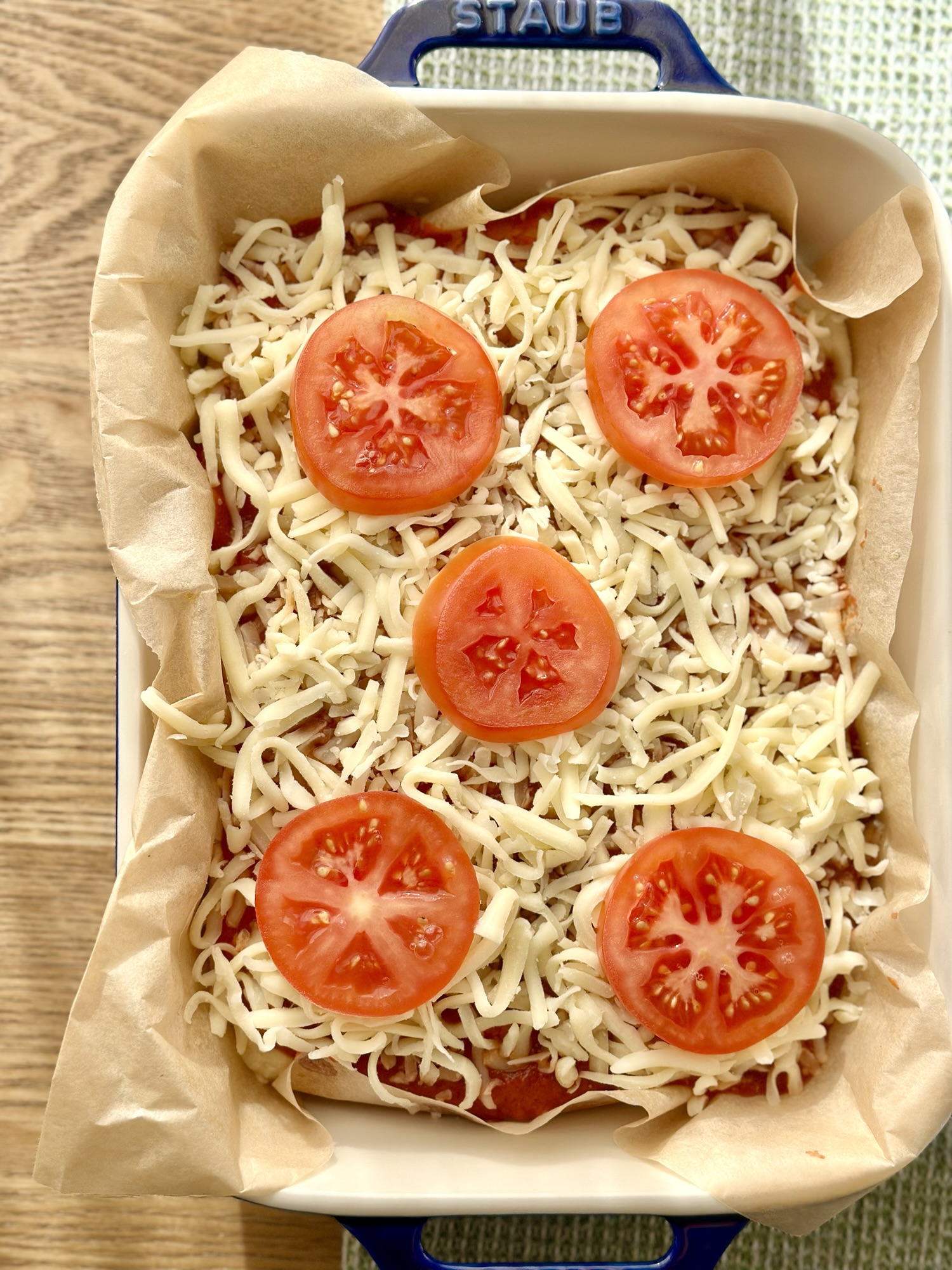
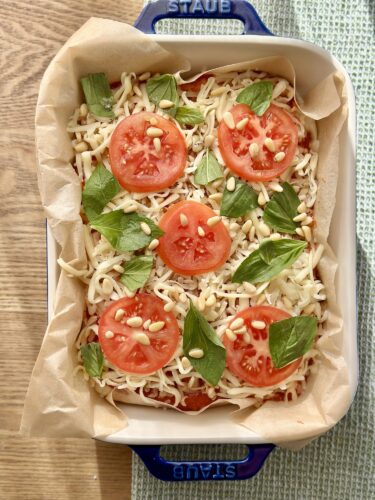
But this focaccia pizza recipe is a canvas. I’ve also made:
Pesto Veggie: Pesto base, thinly sliced zucchini, halved cherry tomatoes, fresh mozzarella. This is my summer version and it’s the one I get the most requests for.
White Pizza: Olive oil and garlic base, dollops of ricotta, shredded mozzarella, wilted spinach. Rich and satisfying in a completely different way from a tomato-based pizza.
Caramelized Onion and Mushroom: A fall version I make every October without fail. The sweetness of the onions against the earthy mushrooms is something I look forward to all year.
The Final Bake
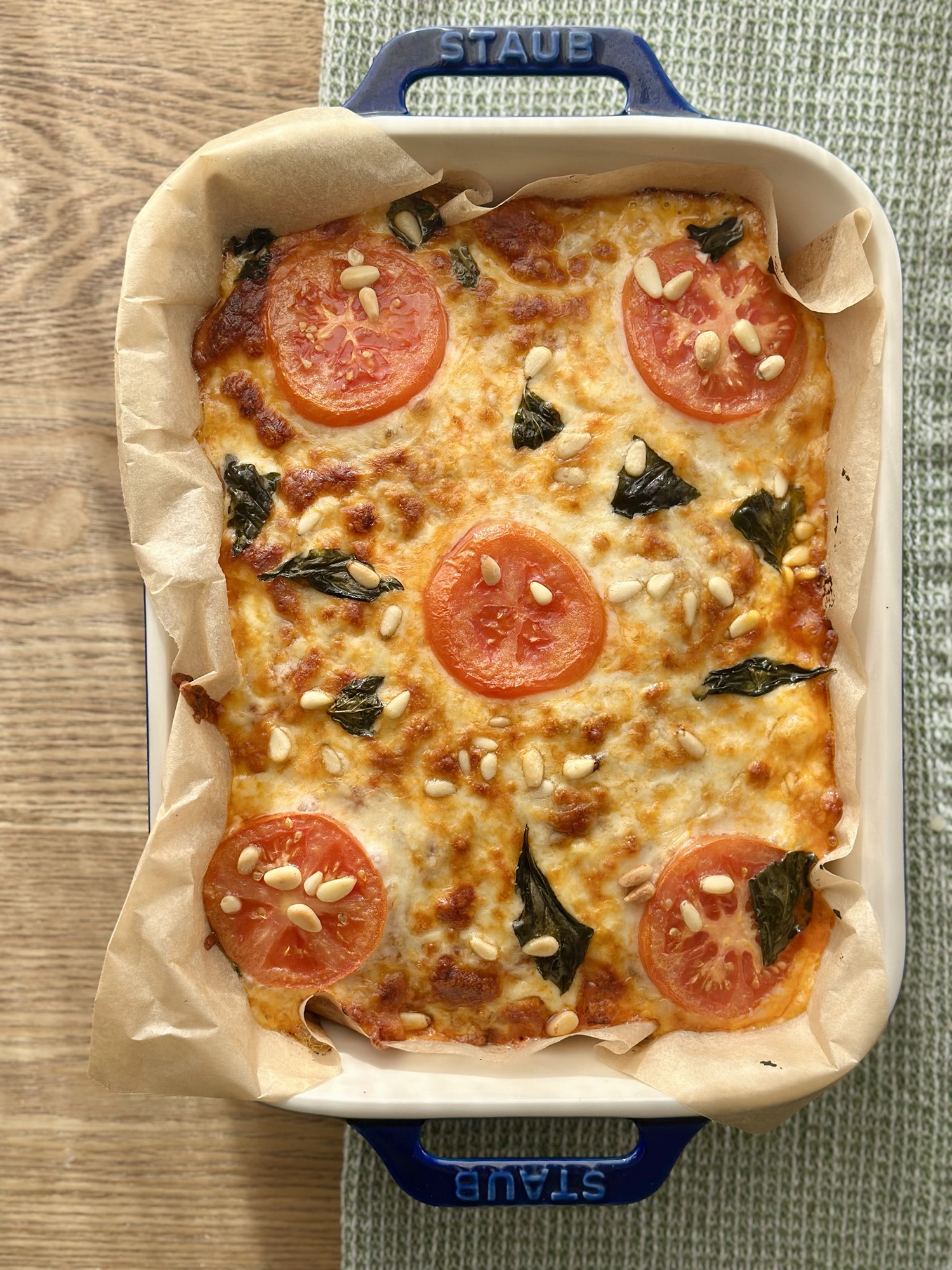
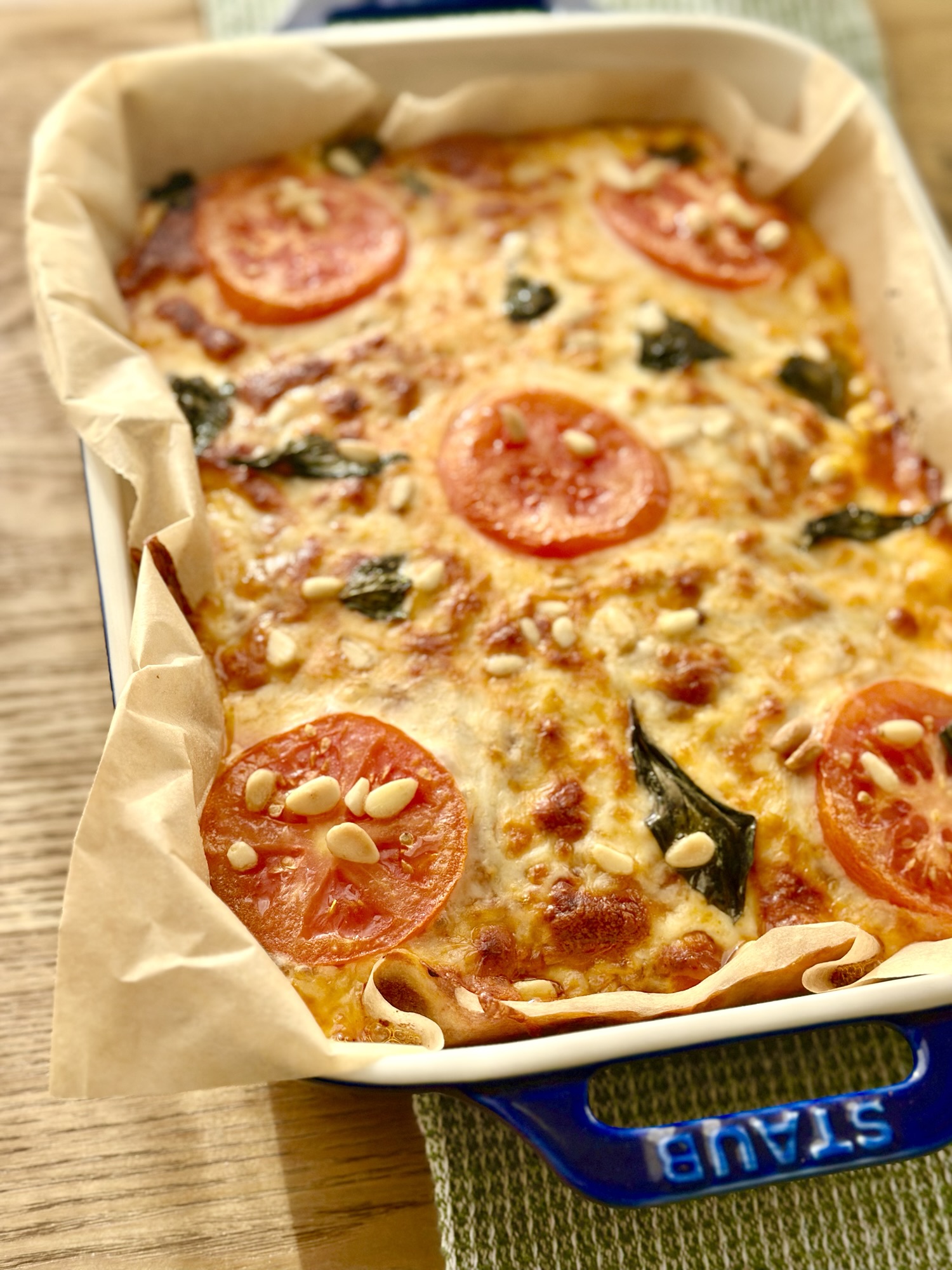
Back into the 400°F oven for another 10 to 12 minutes.
You’re looking for:
- Cheese that’s fully melted and showing some golden spots
- Edges that have gone deeply golden and slightly crisp
- A crust that’s pulling very slightly away from the sides of the pan
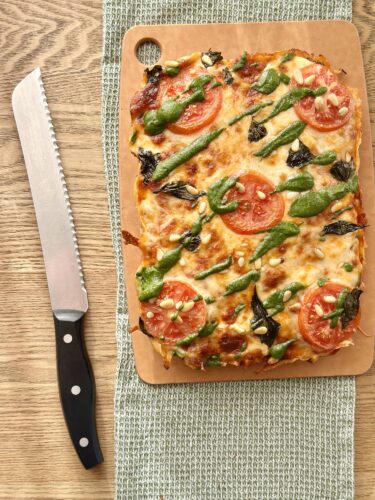
Let it cool in the pan for at least 10 minutes before cutting. I know this is hard. Do it anyway. The cheese sets, the crust firms up, and the slices hold together so much better.
My Favorite Finishing Touch
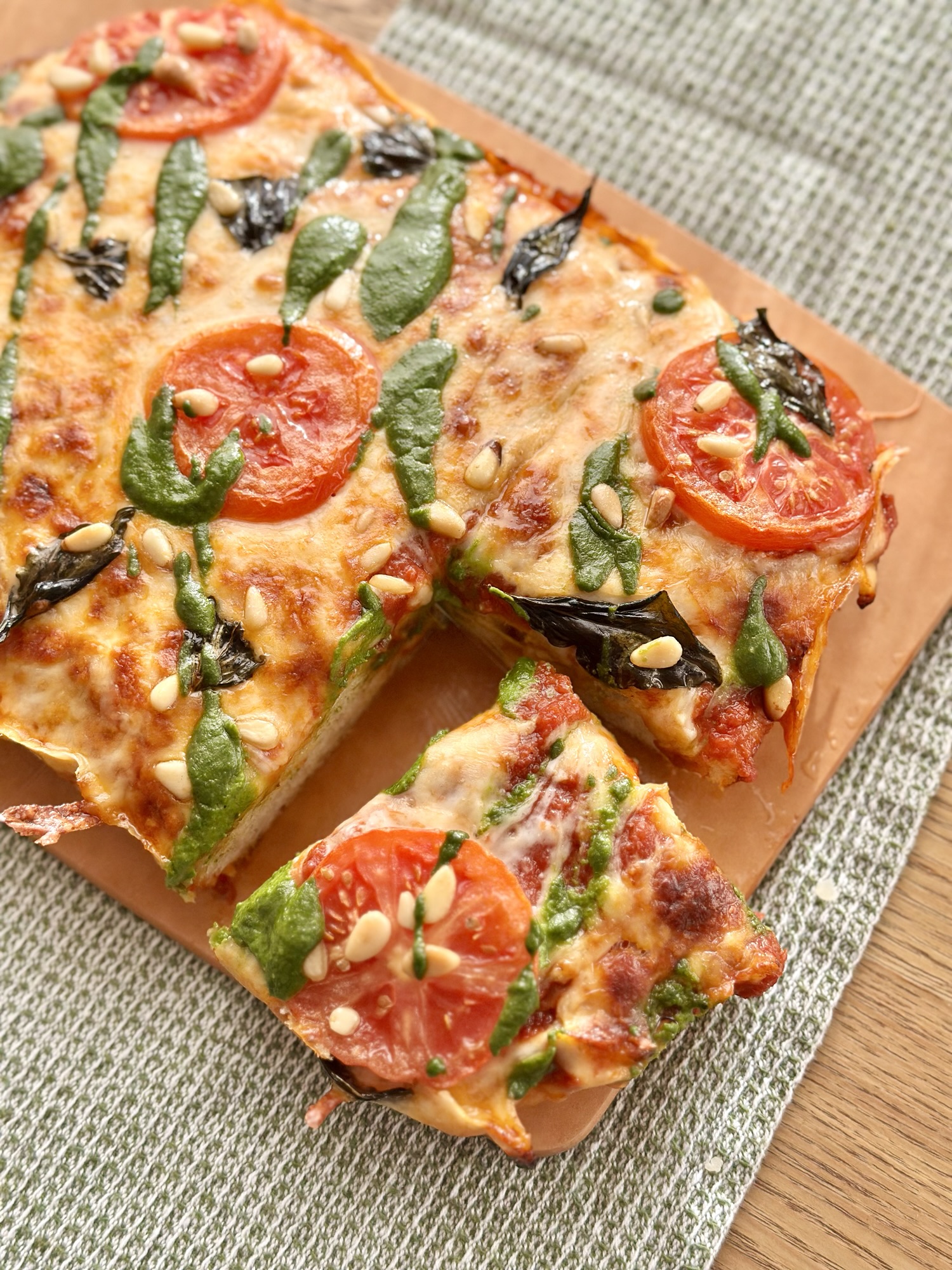
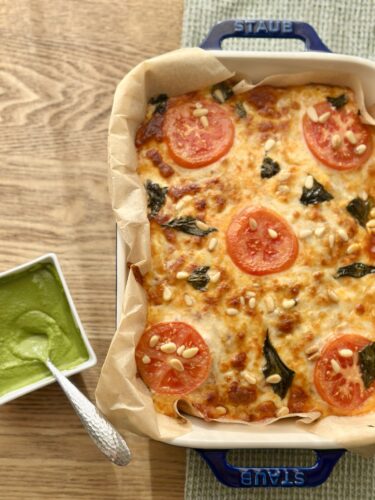
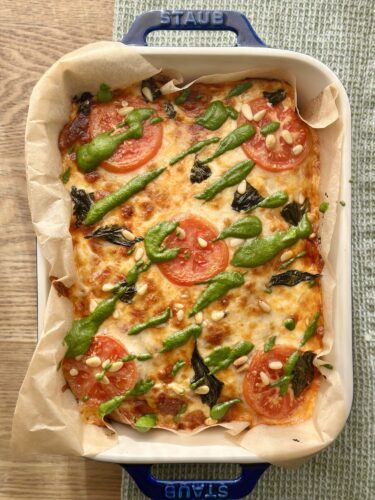
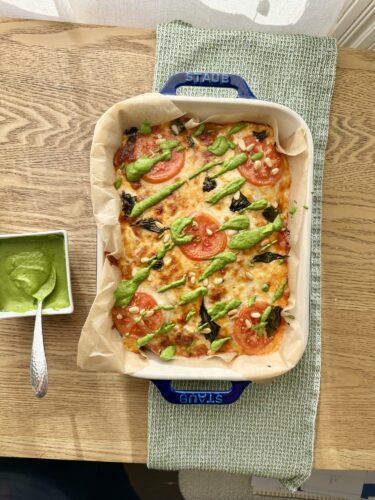
After the pizza has cooled slightly, I add a few spoonfuls of homemade pesto scattered across the top. Not baked in, after. The heat from the pizza softens it slightly without cooking it, which preserves that fresh, bright flavor.
If you don’t have pesto, a drizzle of really good olive oil and a pinch of flaky salt does something similar. A few fresh basil leaves. Some red pepper flakes. Whatever makes you feel like yourself in the kitchen.
How to Store and Reheat Focaccia Pizza
Leftovers (if there are any) keep well.
Storage: Wrap or container in the fridge for up to 3 days. The crust will soften overnight, which I actually don’t mind. It becomes more like a dense, oily bread and less like a crispy pizza, which has its own appeal.
Reheating: Oven or air fryer. The oven (350°F for about 8 minutes) brings it closest to freshly baked. The air fryer is faster and crisps up the bottom beautifully. The microwave works in a pinch but softens everything- use it only if speed is truly the priority.
Questions I Get Asked All the Time
Can I make the dough the night before?
Yes, and it’s actually better this way. After making the dough, cover the bowl tightly and refrigerate overnight. The slow, cold rise develops even more flavor. Pull it out about 1-2 hours before you want to use it so it can come back to room temperature. Then continue with step 4 where you divide the dough and let rise in the 9×13 pan for one hour.
Can I freeze this dough?
You can. Freeze it after the first rise, wrapped tightly. Thaw in the fridge overnight, then let it come to room temperature on the counter before the second rise and bake.
My focaccia turned out dense. What happened?
Nine times out of ten: the yeast wasn’t fully active (it may have been old or the water too hot), or the dough didn’t rise long enough. Give it the full time. And check that yeast.
Can I use bread flour instead of all-purpose?
Yes. You’ll get a slightly chewier, more structured crust. Both are delicious. I default to all-purpose because I always have it, but bread flour is a nice upgrade if you want to experiment.
What size pan should I use?
A 9×13-inch pan is the standard for half the dough. If you’re using the whole batch, use a sheet pan or two 9×13 pans.

A Few Lessons This Recipe Has Taught Me
I’ve made this focaccia pizza recipe more times than I can count at this point, and I’m still learning from it.
Don’t rush the rise. Every time I’ve tried to shortcut the three-hour rise-warming the oven slightly, setting the bowl near the stove, I’ve gotten a denser, less flavorful result. The long rise isn’t just about volume. It’s about fermentation, flavor development, and structure. Let it happen.
Be generous with the olive oil. This dough can handle it. The oil is doing three things: adding flavor, creating the crispy bottom, and preventing sticking. Don’t be shy.
Imperfect is fine. If the dough doesn’t fill the pan perfectly evenly, if the crust has a few thick spots, if your toppings are slightly uneven, it’s all fine. Focaccia is a rustic bread. It’s supposed to look handmade.
Pre-bake every time. I’ve tried skipping it when I was in a hurry. The results were fine but not great. The pre-bake is a ten-minute investment that pays off every time.
Focaccia Pizza Recipe:
Makes 2 pizzas · 5 hours total · Serves 6–8
Ingredients
- 4 cups all-purpose flour
- 1¾ cups warm water
- 2¼ tsp active dry yeast (1 packet)
- 1½ tsp sugar
- 2 tsp salt
- 5–6 tbsp olive oil
Toppings (per pizza)
- ½ to 3/4 cup red pizza sauce
- 6 oz fresh mozzarella
- 2 Roma tomatoes, sliced
- Fresh basil + pesto to finish
Instructions
- Mix warm water and sugar. Add yeast, wait 10 min until foamy.
- Stir in flour and salt until a shaggy dough forms. No kneading.
- Drizzle with 2 tbsp olive oil, cover, and rise 3 hours at room temp.
- Fold edges to center, cut dough in half. Press into a parchment-lined 9×13″ pan.
- Cover and rise 1 more hour. Preheat oven to 400°F.
- Drizzle with oil, press dimples with your fingers, bake 12 min.
- Add toppings. Bake another 10–12 min until bubbly and golden.
- Cool 10 min, add fresh basil and pesto. Slice and serve.
Tip: Don’t skip the pre-bake in step 6 , it’s what keeps the crust crispy.
Enjoy!
This focaccia pizza recipe has become something more than a recipe in my kitchen. It’s become a way to fill the house with the smell of something good when the week ahead feels heavy or the weather has turned gray. It’s the recipe I make when I want to slow down and actually be present in my kitchen. When I want to cook something that takes time because I have time, or I want to create the feeling of having time.
And the best part? It almost always turns out well. Not perfectly, not identically every time, but delicious in the way that homemade things are almost always better than they need to be just by virtue of existing. If you make this, I want to know: do you go for two pizzas, or one pizza and one plain focaccia loaf? Do you add the finishing pesto, or keep it simple? Are you a white pizza person or a red sauce person? Either way, you really can’t go wrong. And the smell alone is worth every one of those five hours.
With love,
Bri and Cat
Affiliate Disclaimer:
As an Amazon Associate I earn from qualifying purchases. This comes at no additional cost to you. We only recommend products that we believe will add value to our readers.
Focaccia Pizza Recipe
Ingredients
- 4 cups all-purpose flour
- 1¾ cups warm water
- 2¼ tsp active dry yeast 1 packet
- 1½ tsp sugar
- 2 tsp salt
- 5–6 tbsp olive oil
- ½ to 3/4 cup red pizza sauce
- 6 oz fresh mozzarella
- 2 roma tomatoes sliced
- Fresh basil + pesto to finish
Equipment
- 9×13 Ceramic Baking Dish
Method
- Mix warm water and sugar.
- Add yeast, wait 10 min until foamy.
- Stir in flour and salt until a shaggy dough forms. No kneading.
- Drizzle with 2 tbsp olive oil, cover, and rise 3 hours at room temp.
- Fold edges to center, cut dough in half.
- Press into a parchment-lined 9×13″ pan.
- Cover and rise 1 more hour.
- Preheat oven to 400°F.
- Drizzle with oil, press dimples with your fingers, bake 12 min.
- Add pizza toppings.
- Bake another 10–12 min until bubbly and golden.
- Cool 10 min, add fresh basil and pesto.
- Slice and serve.
Leave a Reply