
This site contains affiliate links, view the disclaimer page for more information.
Grandma hobbies have slowly become one of my favorite ways to unplug, reset, and reconnect with the simple parts of life that feel grounding and real. In a world where everything moves fast- messages, deadlines, scrolling, constant updates, I’ve found myself craving activities that ask me to slow down instead of speed up. That’s exactly what grandma hobbies offer.
At first, I laughed at the phrase. Grandma hobbies? It sounded like something reserved for rocking chairs and afternoon tea. But the more I leaned into slower living, the more I realized these hobbies aren’t outdated at all. They’re timeless.
They teach patience. They encourage mindfulness. And maybe most importantly, they remind us that not everything needs to be optimized, monetized, or rushed. Over the past few years, I’ve intentionally added more slow, hands-on activities into my routine. Some came from childhood memories. Others started during stressful seasons when I needed something calming to do with my hands. What surprised me most is how deeply these hobbies improved my mood, focus, and creativity.
If you’ve been feeling overwhelmed, burned out, or just disconnected from joy lately, grandma hobbies might be exactly what you need.

Table of Contents
What Are Grandma Hobbies?
When I talk about grandma hobbies, I’m referring to traditional, creative, hands-on activities that have been passed down through generations. These are hobbies rooted in patience, craftsmanship, and presence rather than speed or productivity.
Think about activities like:
- Baking from scratch
- Knitting or crocheting
- Gardening
- Sewing or mending
- Journaling or reading
These hobbies were once everyday skills. Our grandparents didn’t pick them up for aesthetics, they were simply part of life. But somewhere along the way, convenience replaced process, and many of us lost touch with slower rhythms. Now, people are rediscovering them for a different reason: mental wellness.
I noticed this shift in myself during a particularly busy season. I spent entire evenings scrolling but still felt restless. My brain was overstimulated, yet I felt oddly unfulfilled. One weekend, I baked banana bread using a family recipe, and something changed. The measuring. The mixing. The waiting while it baked. For the first time all week, my mind felt quiet. That’s the magic of grandma hobbies.
Why Grandma Hobbies Are So Good for Stress, Mindfulness, and Patience
Grandma hobbies naturally encourage mindfulness because they require attention without pressure. You can’t rush knitting stitches. Plants grow on their own timeline. Bread rises when it’s ready, not when you want it to. These activities gently force us to slow down. Here’s what I’ve personally noticed after incorporating more grandma hobbies into my life:
- My stress levels drop faster after work.
- I feel less tied to my phone.
- Creativity flows more easily.
- I experience a stronger sense of accomplishment.
Unlike digital tasks, grandma hobbies give visible progress. You can see what you made. And that matters more than we realize.
The mental health benefits I’ve experienced:
- Repetitive motions calm racing thoughts.
- Creative focus reduces anxiety.
- Slower pacing builds patience.
- Completing projects boosts confidence.
Sometimes mindfulness feels intimidating, meditation apps, structured routines, expectations. Grandma hobbies offer mindfulness without trying too hard. You’re simply present because the activity requires it.
1. Baking: Comfort You Can Taste

Baking was my gateway into grandma hobbies. There’s something deeply comforting about pulling ingredients from the pantry and turning them into something warm and homemade. Baking engages all your senses, smell, touch, taste, and sight, which naturally grounds you in the moment. I still remember baking cookies with my grandmother as a kid. She never rushed. She measured loosely, told stories while mixing, and always said, “The kitchen is meant to be lived in.” Now when I bake, I notice the same rhythm happening:
- Measuring flour slows me down.
- Waiting for dough to chill teaches patience.
- Sharing baked goods builds connection.
Baking also offers easy wins. Even beginners can succeed quickly, which makes it encouraging rather than intimidating. Some simple ways to start:
- Try one family recipe.
- Bake on Sunday afternoons.
- Share extras with neighbors or friends.
It’s not just about food, it’s about creating warmth.
2. Cross-Stitch: Small Stitches, Big Calm

Cross-stitch surprised me. I assumed it would feel tedious, but it quickly became one of the most relaxing grandma hobbies I’ve tried. Each stitch is small and repetitive, which creates a meditative rhythm. After a few minutes, my thoughts slow naturally. There’s no urgency. Just stitch by stitch progress. What makes cross-stitch especially beginner-friendly:
- Patterns guide you step-by-step.
- Projects are portable.
- Mistakes are fixable.
- Progress is visible.
I often work on cross-stitch while listening to podcasts or sitting outside. It keeps my hands busy without overwhelming my brain. It’s also incredibly satisfying to watch an image slowly appear, almost like solving a puzzle one square at a time.
This is my favorite beginner Cross-stitch kit!
3. Knitting or Crocheting: The Ultimate Cozy Hobby

If grandma hobbies had a mascot, knitting or crocheting would probably be it. The rhythmic motion feels almost hypnotic. Many people describe knitting as meditation, and I completely understand why. When I first learned, I struggled. My stitches were uneven, and I dropped yarn constantly. But something interesting happened, instead of frustration, I felt patience growing.
Knitting teaches you:
- Progress takes time.
- Imperfection is part of learning.
- Consistency matters more than speed.
I love that these hobbies also create practical results: Over the years I’ve made scarves, blankets, hats and sweaters and because I made them by hand I cherish them so much more. There’s something deeply meaningful about giving someone an item you made slowly with your own hands.
Ready to start? Get this beginner knitting kit!
4. Keeping a Garden: Learning From Nature
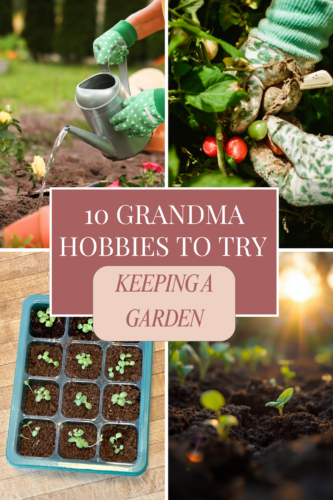
Gardening changed how I think about time. Plants don’t respond to urgency. They grow according to seasons, sunlight, and care, not schedules. The first time I planted herbs, I checked them constantly, expecting instant results. Nothing happened for days. Then suddenly, tiny green sprouts appeared. That moment felt surprisingly emotional. Gardening teaches patience better than almost anything.
Being outside instantly improves my mood and helps me feel more relaxed and refreshed. Caring for plants also creates a simple routine that gives my day a sense of rhythm and purpose. Even small gardens, like balcony containers, raised beds, or herb pots on a sunny windowsill, can bring daily satisfaction as you watch things slowly grow. Gardening reminds me that progress often happens quietly before we notice it. If you are interested in gardening, check out this post on 10 Steps to Starting Seeds Indoors.
5. Houseplants: Everyday Calm Inside Your Home

If outdoor gardening feels overwhelming, houseplants are the perfect entry into grandma hobbies. I started with one plant. Then two. Now my home feels noticeably calmer because of them. Caring for plants creates small daily rituals, like checking the soil moisture, rotating them toward sunlight, and watering them slowly. These tiny actions anchor my day.
Houseplants also teach observation. You begin noticing subtle changes, new leaves, growth patterns, color shifts. Beginner-friendly ideas include starting with low-maintenance plants, choosing one sunny corner of your home, and setting a simple weekly care routine. Houseplants quietly transform a space into something alive and peaceful.
My favorite three low maintenance beginner houseplants are: Snake plant, ZZ plant, and the Montsera.
6. Sewing: Creativity Meets Practical Skill

Sewing feels empowering in a way modern convenience rarely offers. Fixing a torn seam or hemming pants gives a sense of independence that’s incredibly satisfying. My first sewing attempt wasn’t glamorous, a crooked pillowcase that barely resembled a rectangle. But finishing it gave me confidence I didn’t expect.
Sewing combines creativity and practicality by allowing you to repair clothing instead of replacing it, personalize fabrics and designs, and reduce waste. Over time, it also helps you develop valuable skills like problem-solving and precision. It naturally builds patience and attention to detail as you work through each project step by step. Every project teaches something new.
I started off my sewing practice on a tiny starter sewing machine called the Lil Sew and Sew.
7. Scrapbook Making: Preserving Memories Intentionally

We take thousands of photos now, but rarely revisit them. Scrapbooking slows memory-keeping down. Instead of scrolling endlessly through digital albums, you choose meaningful moments and give them physical space. When I started scrapbooking, I noticed something surprising: I remembered events more vividly because I spent time reflecting on them.
Scrapbooking encourages gratitude, storytelling, creativity, and reflection as you look back on meaningful moments. It gives you a chance to slow down and thoughtfully preserve memories instead of letting them sit forgotten in your phone. You can include things like travel memories, family milestones, everyday moments, and seasonal highlights to create a collection that tells your story over time. It turns memories into something you can hold.
Start out with this cute scrapbook kit!
8. Painting or Drawing: Creating Without Pressure

One of the biggest lessons grandma hobbies taught me is this: creativity doesn’t require talent to be worthwhile. Painting or drawing isn’t about perfection, it’s about expression. Some days I paint simple watercolor shapes. Other days I sketch while drinking coffee. The result doesn’t matter nearly as much as the process.
This hobby reduces stress because there are no rules or deadlines, allowing creativity to flow freely without pressure. It provides emotional release through art and encourages a sense of playfulness that many of us lose as adults. Sometimes I even ask myself questions like what would happen if I created just for fun, or when I stopped making art without judging the result. Letting go of perfection is incredibly freeing. Try starting out with a paint by numbers kit.
9. Journaling: A Conversation With Yourself

Journaling might be the most accessible grandma hobby of all. All you need is paper and honesty. I started journaling during a busy season when my thoughts felt cluttered. Writing helped me untangle worries and notice patterns in my thinking. There are many different ways to journal, including writing daily reflections, making gratitude lists, doing morning brain dumps, or keeping memories from meaningful moments. The flexibility makes it easy to adapt journaling to whatever you need that day. Over time, I’ve noticed it leads to clearer thinking, reduced anxiety, and better self-awareness. Some nights I write only a few sentences. Other days I fill pages. Both count. Check out our post: 10 Best Gratitude Journals to Cultivate a Daily Mindset of Positivity
10. Reading or Joining a Book Club: Slow Entertainment That Stays With You

Reading feels almost rebellious in today’s fast digital culture. It requires sustained attention, something many of us are relearning. When I replaced evening scrolling with reading, I quickly noticed benefits like better sleep, improved focus, and a stronger sense of imagination. Reading helps my mind slow down in a way screens never seem to. Joining a book club adds another layer by creating space for community discussion, new perspectives, and a little accountability to keep reading. Even 15 minutes a day makes a difference. Reading reminds me that entertainment doesn’t have to be loud or instant to be meaningful.
How to Start Grandma Hobbies Without Overthinking It
When I first started exploring grandma hobbies, I made a mistake that I think a lot of people make: I tried to start everything at once. I bought a knitting kit, planted herbs, ordered embroidery supplies, and stacked three new books on my nightstand. Instead of feeling calm and inspired, I ended up feeling overwhelmed.

That’s when I realized something important about grandma hobbies. They’re meant to slow your life down not become another thing on your to-do list.
Grandma hobbies work best when they feel gentle, relaxed, and enjoyable. They aren’t about productivity or perfection. They’re about giving your mind a break and letting yourself enjoy the process. If you’re curious about trying one of these slower hobbies, the best place to start is simple and small.
Start With Just One Hobby
It’s tempting to try everything right away, especially when you’re excited. But choosing just one hobby makes it easier to build a routine and actually enjoy the experience.
Ask yourself:
- Which activity sounds the most relaxing?
- Which one sparks a little curiosity?
- Which hobby feels the least intimidating to start?
Maybe baking feels comforting because you grew up watching family members cook. Maybe gardening appeals to you because you want to spend more time outside. Or maybe journaling sounds appealing because your mind feels full and you want somewhere to put your thoughts. There’s no wrong answer. The best grandma hobby is simply the one you’re drawn to.
Start Small
One of the reasons grandma hobbies are so calming is because they allow you to take things step by step. But if you jump into complicated projects too quickly, the experience can become frustrating instead of relaxing. I’ve learned that starting small makes everything more enjoyable.
Instead of trying to knit a huge blanket right away, start with something simple like a scarf.
Instead of planting an entire garden, try a small pot of herbs on the windowsill. Instead of writing pages in a journal every day, begin with just a few sentences.
Some beginner-friendly ideas include:
- Baking a simple loaf of banana bread
- Growing basil or mint on a windowsill
- Writing one short journal entry at night
- Reading ten pages of a book before bed
- Practicing a few stitches of knitting or crochet
Create a Cozy Environment
Part of the joy of grandma hobbies is the atmosphere around them. These hobbies often feel best when they’re paired with a comfortable, peaceful environment. Think about how you can make your hobby time feel cozy and intentional.
For example:
- Light a candle or open a window for fresh air
- Play soft music or a favorite podcast
- Sit in your favorite chair with a blanket
- Make a cup of tea or coffee before you start
These little rituals turn your hobby into something you look forward to, rather than something you feel obligated to do. Over time, your brain begins to associate that cozy environment with relaxation.
Schedule Relaxed Time, Not Rigid Goals
Another thing I had to learn was letting go of the idea that hobbies need to be productive. At first, I approached hobbies the same way I approached work: with goals and expectations. I thought I needed to finish projects quickly or improve my skills right away. But grandma hobbies aren’t about efficiency.
They’re about presence. Instead of setting rigid goals like “finish this project today,” try setting aside relaxed time for the activity. Even twenty minutes in the evening can be enough to reset your mind after a busy day.
Some simple ways to build hobbies into your routine include:
- Baking on slow Sunday afternoons
- Journaling before bed
- Reading during your morning coffee
- Knitting while watching a movie
- Watering plants as part of your morning routine
Ask Yourself a Few Simple Questions
If you’re unsure where to begin, asking yourself a few reflective questions can help guide you toward the right hobby.
- What sounds calming right now?
- What hobbies did I enjoy as a child?
- What activity makes me lose track of time?
- When do I feel most relaxed during the day?
Often, the answers are simpler than we expect. For me, baking and journaling felt natural because they reminded me of slower moments growing up. Once I gave myself permission to enjoy those activities again, they quickly became part of my routine.
Remember: You Don’t Need to Be Good at It
This might be the most important part. You don’t need to be talented at your hobby for it to be meaningful. Grandma hobbies are about the experience, not the final result. Your first knitting project might be uneven. Your first garden might struggle a little. Your first sketches might look messy. And that’s completely okay. What matters is the act of showing up and giving yourself time to slow down.
So if you’re feeling curious about grandma hobbies, don’t overthink it. Choose something simple, create a cozy moment for yourself, and begin. You don’t need to be productive. You don’t need to be perfect. You just need to start.

Slowing Down Is the Real Goal
The biggest lesson grandma hobbies have taught me isn’t how to knit or bake better, it’s how to live more intentionally. In many ways, grandma hobbies reconnect us with wisdom older generations already understood: a good life isn’t built only from achievement, but from small, repeated moments of care. So if you’ve been feeling overwhelmed or disconnected, try one of these grandma hobbies this week. Bake something slowly. Plant a seed. Pick up a book. Write a page. You might discover that slowing down isn’t falling behind, it’s finally catching up with yourself.
With Love,
Bri & Cat
Affiliate Disclaimer:
As an Amazon Associate I earn from qualifying purchases. This comes at no additional cost to you. We only recommend products that we believe will add value to our readers.
Leave a Reply