
This site contains affiliate links, view the disclaimer page for more information.
Climbing two of the most famous Belgium belforts in a single trip taught me more about both cities than any guidebook did. I stood at the top of one with burning legs and a ringing in my ears, and at the top of the other feeling relaxed and ready to soak in the scenery. Both climbs were unforgettable, and both made me fall a little harder for Belgium.
If you are planning a trip to Bruges and Ghent and wondering whether the tower climb is worth your time, this post is for you. I will walk you through what each climb is really like, how the views compare, what the two cities feel like side by side, and which belfort I would pick if I could only do one.
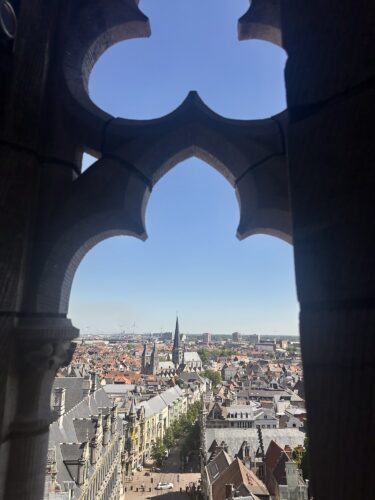
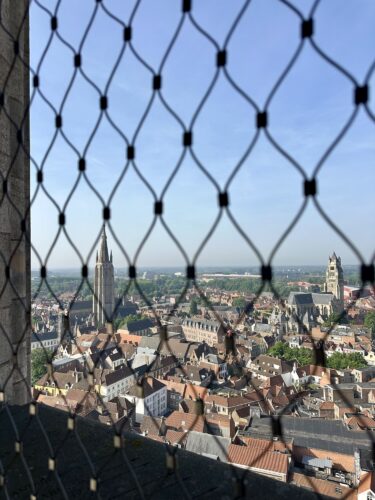
Table of Contents
What Is a Belfort, and Why Do Belgium Belforts Matter?
Before I get into the stairs and the views, a little context, because it makes the climb feel more meaningful.
A belfort (you will also see it spelled belfry) is a medieval bell tower that once served as the beating heart of a town. These towers did far more than tell time. They sounded alarms for fires and attacks, announced important events, and guarded the town’s most valuable documents and charters. In many Flemish cities, the belfort stood as a proud symbol of independence and civic power, often rising right beside the market hall or town hall.
Several Belgium belforts now hold UNESCO World Heritage status, which tells you how important they are to the country’s history. Bruges and Ghent each have a famous one, and the two towns sit close enough together that you can easily see both in one trip. That is exactly what I did, and I am so glad I did.
Why I Climbed Both
I did not set out to turn this trip into a stair-climbing challenge. I wanted great views, and I have learned over years of travel that the best way to understand a city is to rise above it. You see how the streets connect, where the water runs, and how the old center fits together. A ground-level wander tells you what a place feels like. A rooftop view tells you how it works.
When I realized the two towers offered such different experiences, one all stairs and one mostly elevator, I got curious. Would the harder climb make the view feel better? Would the easier one feel like cheating? Those questions became the heart of this post.
I visited at the end of March, and I got incredibly lucky with the weather. Both days were sunny and clear, which is exactly what you hope for when you are paying to climb a tower for a view. Spring in Belgium can be unpredictable, so I will say this up front: a clear day makes a huge difference, and I would check the forecast before choosing which day to go up.
The Bruges Belfort: Stairs Only, No Shortcuts
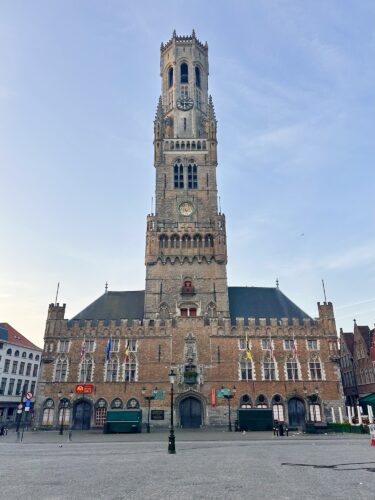
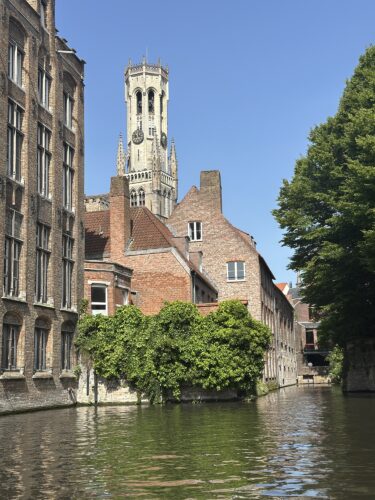
Let me start with Bruges, because it earned every bit of respect I have for it. The belfort in Bruges rises from the Markt, the main square, and it dominates everything around it. You spot it from blocks away as you walk through the cobblestone streets, and it pulls you toward it like a magnet. Standing in the square and looking up, I remember thinking, “Wait, I am going to walk all the way up that?”
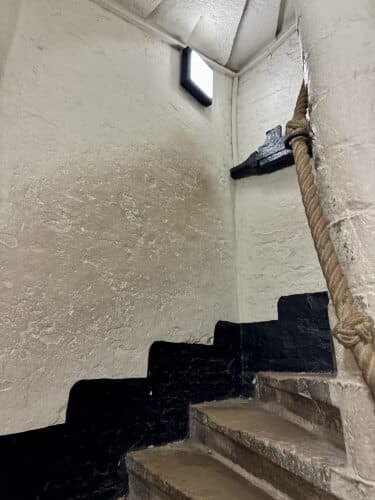
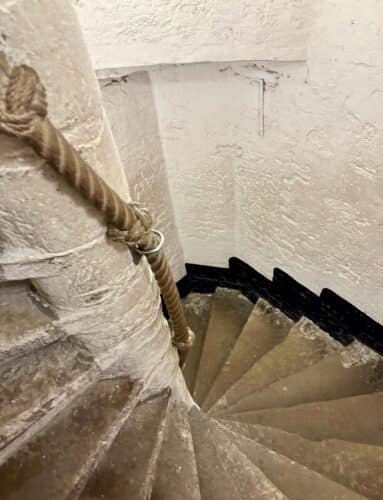
Yes, I was. There is no elevator and no alternative route. The only way to the top is to climb, and the staircase is famously long. Plan on roughly 366 steps.
Why I Went Right at Opening
Here is my best piece of strategy: I arrived right when the belfort opened. I did this for two reasons. First, I wanted to avoid the peak heat of the day. Climbing hundreds of steps in a narrow stone tower warms you up fast, and I knew that a sunny afternoon would only make it worse. Second, I wanted to beat the crowds. Visitors enter in limited groups, so lines can build up as the day goes on, and a crowded staircase means more waiting and more squeezing past people.
Going first thing in the morning meant a calmer climb, cooler air, and a quiet Markt square that felt almost like it belonged to me. I loved watching Bruges wake up below me as I waited to go in.
Opening hours depend on the season, so check before you go. From April 1 through November 2, the belfort opens daily from 9:00 AM to 8:00 PM. In the winter season, from November 3 through March 31, it opens Monday to Friday and Sunday from 10:00 AM to 6:00 PM, while Saturdays stay open from 9:00 AM to 8:00 PM. I visited at the end of March, so I was on the winter schedule.
Bruges Belfort Quick Facts
- Height: about 83 meters
- Steps: 366, all on a narrow, winding spiral staircase
- Elevator: none, stairs only
- Adult ticket: €16 in the summer, weekend, and Christmas seasons, and €15 on winter weekdays
- Under 18: €14 in summer and on weekends, €13 in winter
- Children under 7: free
- Summer hours (April 1 to November 2): daily, 9:00 AM to 8:00 PM
- Winter hours (November 3 to March 31): Monday to Friday and Sunday, 10:00 AM to 6:00 PM, and Saturday, 9:00 AM to 8:00 PM
Prices and hours change, so confirm on the official Musea Brugge website before your visit.
The Climb Itself
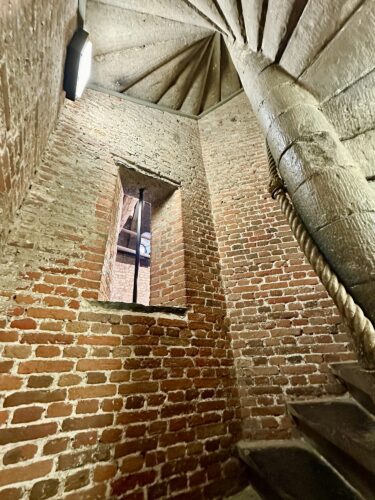
The staircase is narrow, tight, and winding. This is not a wide, modern stairwell with handrails on both sides. It is a medieval spiral that feels close and slightly mysterious as you ascend. The stone walls press in, the steps are uneven, and the air gets warmer the higher you go.
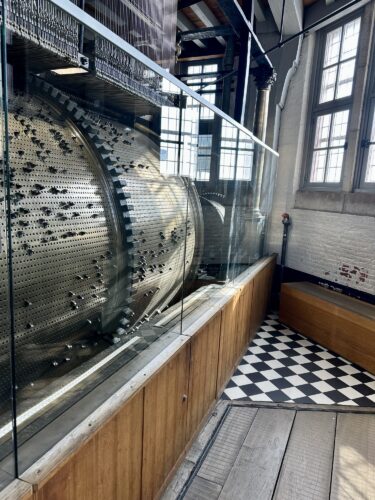
Here is what surprised me most: the climb is not one continuous slog. The tower has stopping points along the way, and each one gave me a reason to catch my breath and look around. I passed through the old treasury room, where the town once guarded its important charters and money. I saw the enormous clock mechanism, all gears and weights, still doing its job after all these years.
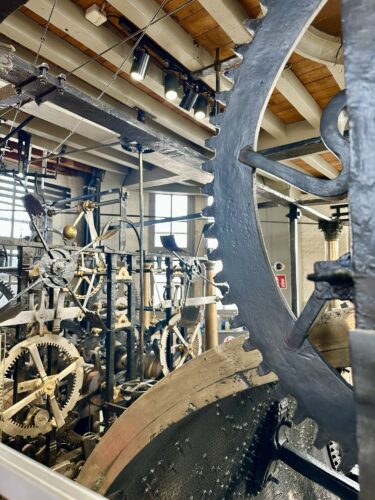
I also read the history displays along the way, and I loved them. They turned the climb from a workout into a story. I learned how the tower shaped daily life in Bruges, and I started to see the building as a living piece of the town’s past instead of a viewpoint. Stopping to read gave my legs a rest, too, which I will happily admit was a bonus.
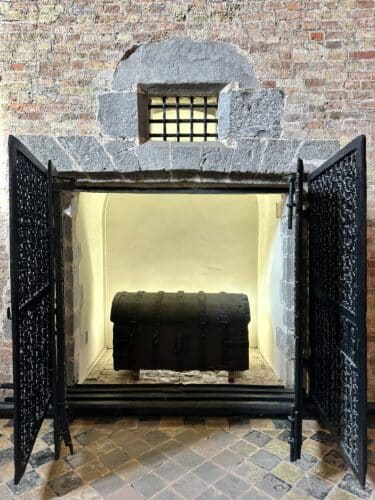
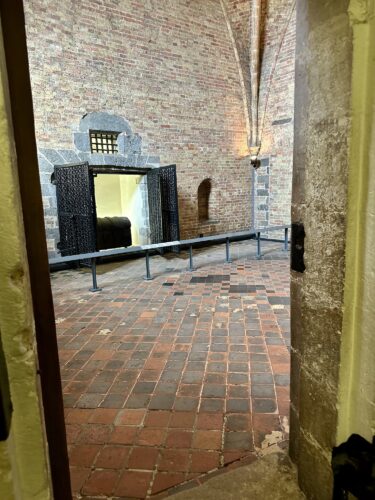
A few things made the climb easier for me:
- I wore comfortable shoes with good grip, since the stone steps can feel worn and slippery.
- I traveled light and left my heavy bag behind.
- I took the stairs at a steady pace instead of rushing and burning out early.
- I used the stopping points to rest, read, and take in the interior.
The Bells Are Loud, and I Mean Loud
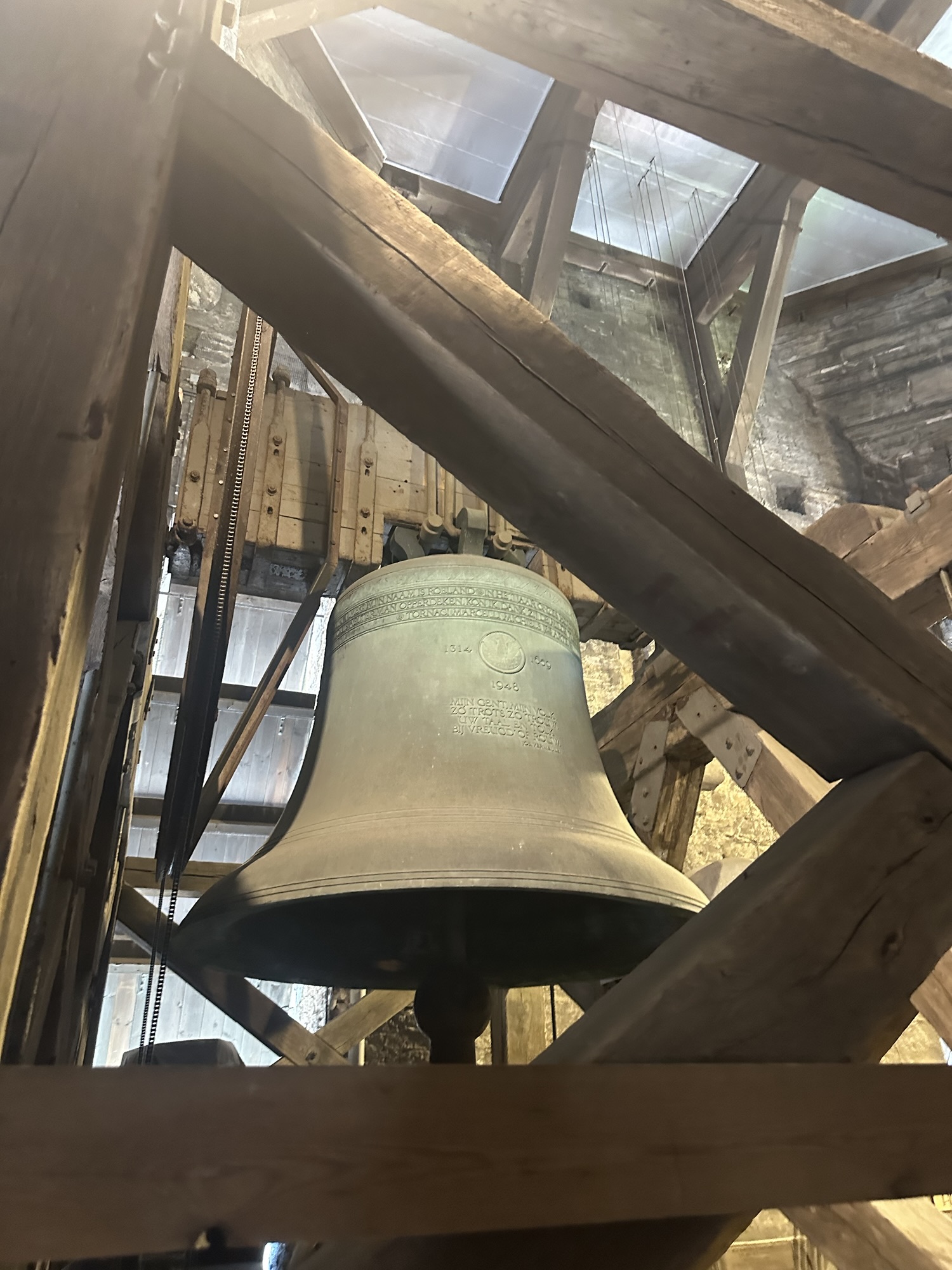
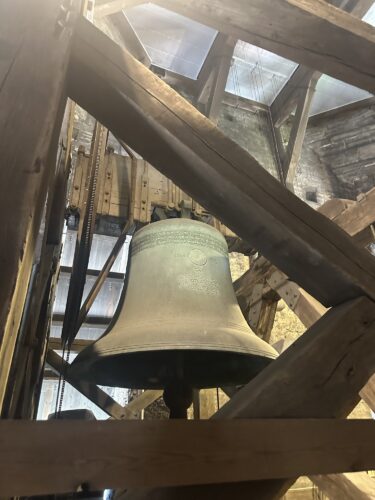
Now let me tell you about the part nobody prepared me for. I knew the tower held a carillon. What I did not understand was how loud the bells would be when I stood right inside the bell tower. I had pictured a pleasant chime drifting down over the square, the kind of sound you enjoy from a café table. Standing among the bells is a completely different experience. The sound is huge. It rattled through the stone, filled the whole space, and I felt it in my chest as much as I heard it with my ears.
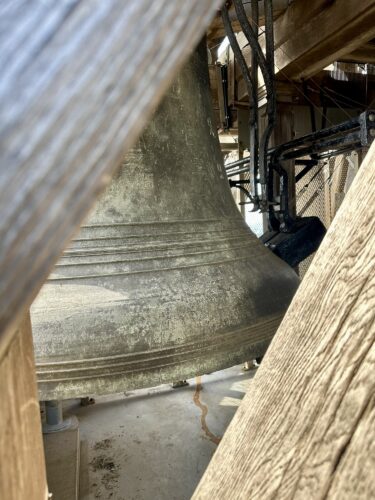
It was quite impressive, and a little overwhelming in the best way. I stood there with a big grin on my face, thinking about how people in medieval Bruges lived with this sound every day. These bells were meant to carry across the entire town, and up close, you understand exactly how. If you are sensitive to loud noise, or you are bringing kids, you may want to plan around the hour so you know when the bells will ring. If you love a dramatic moment, time it so you are up there when they go off. I am so glad I got to experience it.
The View from the Top
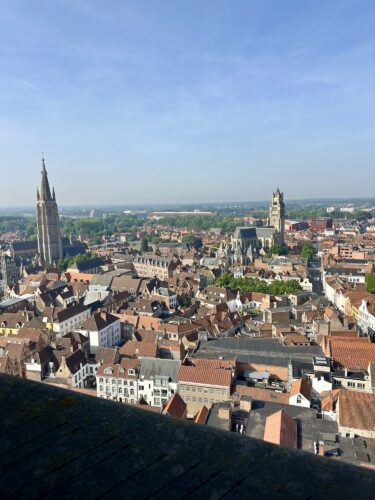
Then I stepped out into open air, and every single one of those steps felt worth it. The view over Bruges is pure storybook. Red-tiled rooftops spread out in every direction, curving canals thread through the old town, and the Markt sits far below, looking like a miniature set. With the clear sunny sky, the colors popped. I could trace the medieval street layout with my eyes, and I finally understood why Bruges feels so compact and walkable. Beyond the rooftops, the flat Flemish countryside stretches toward the horizon.
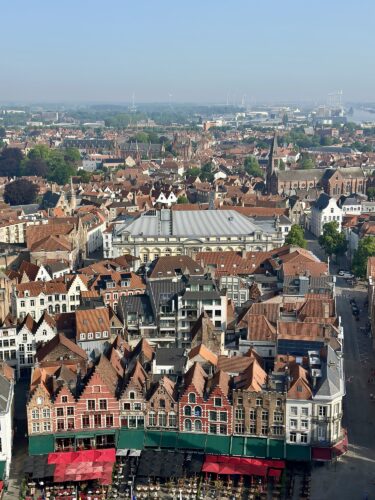
I lingered for a long time. I leaned on the rail, took far too many photos, and just let myself soak it in.
The Cat Silhouette in the Water: A Fun Hidden Detail from the Bruges Belfort
Here is the part of the Bruges climb I did not see coming, and it might be my favorite detail of the whole trip.
If you go up in the morning, you can spot the silhouette of a cat reflected on the surface of the water below. The shadows of the surrounding buildings fall across the canal and form the outline, and the still water reflects it back. I felt like I had stumbled onto a little secret that most people climbing the tower never notice.
Where do you look? Turn toward Rozenhoedkaai, the Quay of the Rosary, which is one of the most photographed corners of Bruges. That is where I found the outline.
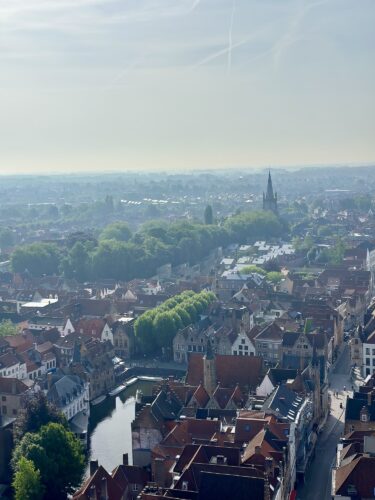
Timing matters. The cat looked sharpest to me in the morning, when the sun sat low and the shadows fell long and clear. As the sun climbs higher, the angle changes, and the shadow shortens and distorts until the shape fades. I visited at the end of March, and the sun’s position shifts through the year, so the best time will likely vary depending on the season you go. Treat my experience as a starting point and not a guarantee.
Here is how I would give yourself the best chance of spotting it:
- Go up early, since the low morning sun gives the longest, sharpest shadows.
- Choose a clear, sunny day so the buildings cast strong shadows.
- Look toward Rozenhoedkaai as soon as you step out onto the viewing area.
- Take a photo so you can zoom in later and find the outline more easily.
- Check back a little later if you can, and watch how the shape stretches and fades as the sun rises.
This was one more reason I was glad I climbed right at opening. The early start gave me cooler air for the stairs and the best light for finding the cat. It reminded me how much of travel comes down to looking closely. The sweeping view over the rooftops is stunning, but this small, fleeting detail stayed with me just as much.
Is the Bruges belfort worth it? Absolutely, if you can handle the stairs. The effort makes the view feel earned, and that sense of accomplishment is a big part of the magic.
The Ghent Belfort: Elevator Up, Stairs Down
A short time later, I headed to Ghent, and the experience felt completely different, in the best way.
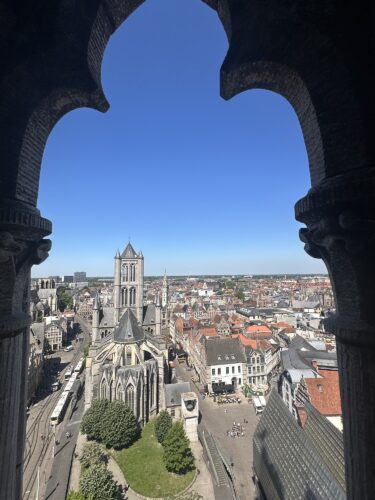
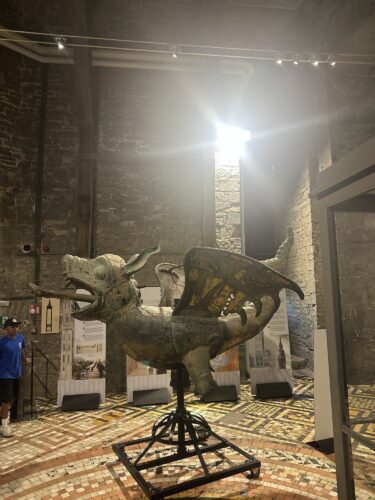
Ghent has a more lived-in, energetic feel than Bruges, and its belfort reflects that. It rises beside St. Bavo’s Cathedral and the old Cloth Hall, part of a cluster of historic buildings in the heart of the city. At its peak sits a golden dragon, which gives the tower a personality all its own. I loved spotting that dragon from different corners of the city.
How the Visit Works
Here is the big difference: Ghent lets you ride an elevator nearly all the way to the top. You finish the last stretch on foot, and you take the stairs on the way back down.
I will admit, I was thrilled to see that elevator. After the effort in Bruges, I was very happy to ride up instead of climbing again. Some people feel that taking an elevator is cheating. I disagree. A tower view is the reward, and nobody gets extra credit for suffering. Arriving at the top fresh instead of out of breath meant I could enjoy the view from the first second.
The View and the History
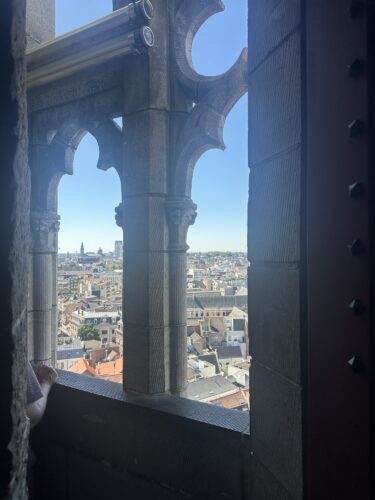
The elevator whisked me up with almost no effort, and I stepped out ready to take it all in. That matters more than you might think. At the top of Bruges, I spent my first few minutes catching my breath. At the top of Ghent, I started looking around right away.
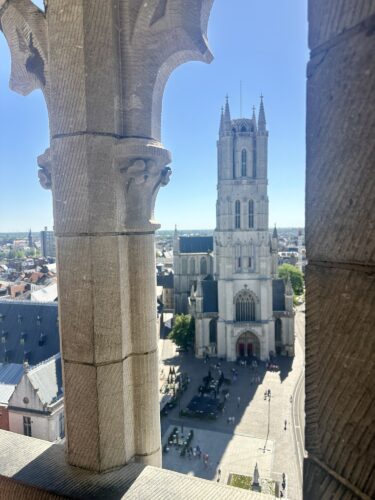
And what a scene it is. Ghent spreads out below like a layered puzzle of rooftops, spires, and waterways. You can see the three famous towers lined up across the skyline, the canals flowing through the city, and the lively waterfront where the old guild houses stand shoulder to shoulder. Under the sunny sky, the whole city looked bright and alive.
As in Bruges, I enjoyed reading about the history while I visited. The displays explained how the belfort fit into Ghent’s story, and I came away with a much better sense of why the tower matters to the city. I like when a viewpoint also teaches me something, and both towers delivered on that.
The Walk Down
Taking the stairs back down turned out to be one of my favorite parts. Instead of riding a sealed elevator, I descended slowly through the tower and saw pieces of its history along the way. I got a different perspective on the structure itself, from the inside out. The walk also made me appreciate what the Bruges climb demanded, since I got a small taste of that same stairwell experience without the hard part.
If you have mobility concerns or you simply want a more relaxed visit, the Ghent belfort is a great option among the Belgium belforts. You still get a real tower experience and a spectacular view, without the strain.
Bruges vs. Ghent: Head-to-Head
So how do these two stack up? Here is how I would break it down.
Access and effort
- Bruges: Stairs only, roughly 366 steps, and physically demanding.
- Ghent: Elevator nearly all the way up, stairs on the way down, and much easier overall.
The sense of achievement
- Bruges wins here, hands down. Every step you climb makes the view feel more rewarding.
- Ghent gives you a big view without the sweat, which feels more relaxed.
The interior experience
- Bruges takes you through the treasury, the clock mechanism, and the loud, impressive bells.
- Ghent lets you enjoy the history displays, the dragon, and a different perspective on the way down.
The view
- Bruges offers a classic, fairy-tale panorama of red rooftops and canals.
- Ghent offers a layered, dynamic skyline of towers, spires, and busy waterways.
Accessibility
- Ghent is the clear winner for families, older travelers, and anyone who cannot manage a long staircase.
- Bruges is best for travelers who are comfortable with a real climb.
Neither one is better in every way. They are simply different, and that is the fun of visiting both.
How the Views Compare
I want to spend a little more time on the views, since that is the whole reason we go up.
From the top of the Bruges belfort, I felt like I was looking at a perfectly preserved medieval painting. The city is small and tightly packed, so you take in nearly the entire old center in one sweeping glance. The scale feels intimate, and the red rooftops create a warm, cohesive picture. If I had to describe it in one word, I would say “charming.”
From the top of the Ghent belfort, I felt like I was looking at a city with layers. The skyline has more variety, with towers of different shapes, spires reaching up from different directions, and canals that cut through the landscape in surprising ways. The scale feels larger and more energetic. In one word, I would say “dynamic.”
Which one is more beautiful? That depends on your taste. If you love postcard-perfect scenery, Bruges will melt your heart. If you love cities with texture and personality, Ghent will win you over. I loved both for completely different reasons.
How the Two Cities Compare
Climbing the Belgium belforts gave me a bird’s-eye understanding of each town, and it matched what I felt on the ground.
Bruges feels polished and picturesque. The canals glide past perfectly preserved buildings, the streets are lined with chocolate shops and lace stores, and the whole place has a hush to it, especially early in the morning. It can get crowded during the day, since so many visitors come on day trips, but the early hours and evenings feel peaceful and romantic.
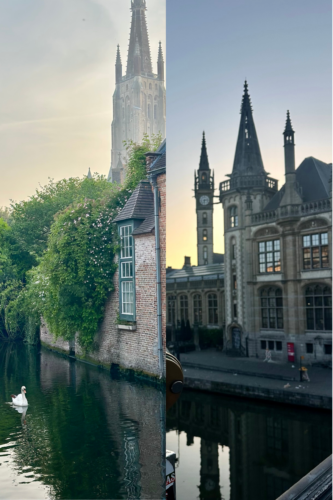
Ghent feels more local and more lively. You see students cycling past, locals gathering along the waterfront, and a real mix of old and new. The restaurants and cafés felt a little more casual and less tourist-driven. The city has an energy that Bruges, with all its beauty, does not quite match.
If you are asking yourself whether you need both cities, here is my honest take: they complement each other perfectly. Bruges gives you the fairy-tale Belgium that you imagined before you arrived. Ghent gives you the real, living Belgium that you did not know you would love. Together, they make a fuller picture.
Check out my post on decising which city to visit Bruges Vs Ghent
Practical Tips for Climbing Belgium Belforts
After doing both climbs, I picked up a few lessons that I wish I had known beforehand. Here is what I would tell a friend.
- Check current hours and ticket prices before you go. They change by season, and the winter schedule opens later on weekdays than in summer.
- Arrive right at opening, especially in Bruges. You get cooler air, smaller crowds, and a calmer climb.
- Wear comfortable shoes. This matters most in Bruges, where the stone steps are narrow and worn.
- Pack light. A big backpack makes the narrow staircase harder and can bump into other climbers.
- Prepare for loud bells. In Bruges, the sound inside the bell tower is far bigger than I expected, so consider ear protection if you are sensitive to noise or traveling with small children.
- Bring a charged phone or camera. You will take more photos than you expect.
- Check the weather. Clear days give the best views, and low clouds or fog can ruin them. Late March gave me sunshine, but spring can change quickly.
- Take time to read the history displays. They add so much to the experience, and they give you a good excuse to rest.
- Take your time on the way down in Ghent. The descent is part of the experience.
If you want to see both, I suggest spending a night in each city instead of rushing through on day trips. Staying overnight lets you enjoy the quieter hours, and that is when each town felt most magical to me. The train between Bruges and Ghent is quick and easy, so getting from one to the other takes very little effort.
Which Belfort Is Worth It?
Now for the question that gave this post its title. If I could only climb one, which would I choose?
I would climb Bruges.
I know that is not the easy answer. The Ghent belfort is wonderful, and its elevator makes it so much more accessible. But the Bruges climb gave me something the other one did not: a story. I remember the narrow staircase, the clock gears, the history displays, the roar of those bells, and that moment when I finally stepped into the open air. That experience stayed with me long after the trip ended, and it made the view feel like something I had truly earned.
That said, my answer comes with a big caveat. If you cannot manage a long staircase, or you are traveling with young children or older relatives, the Ghent belfort is the smarter and more enjoyable choice. A great view should never leave you miserable. You will still get a gorgeous panorama and a real taste of what Belgium belforts have to offer.
And if you have the time and the legs, do both. That is what I did, and I would do it again in a heartbeat.
Enjoy the view!
Looking back, the two Belgium belforts gave me far more than two great views. They gave me a way to understand each city, a few sore muscles to brag about, a set of history lessons I actually enjoyed, and a pair of memories I will keep for a very long time.
So here is my challenge to you: when you visit Belgium, skip the idea that you can see it all from the street. Go up. Climb the stairs in Bruges, ride the elevator in Ghent, and let both cities show you what they look like from above.
Have you climbed either of these towers? Which one did you prefer, and did the bells in Bruges catch you off guard like they did me? Tell me in the comments. I would love to hear your own belfort stories, and I will gladly help you plan your own Belgium trip.
With love,
Bri and Cat
Check out my other posts from Belgium:
One Day in Bruges : The Complete Guide to Belgium’s Most Beautiful City
Affiliate Disclaimer:
As an Amazon Associate I earn from qualifying purchases. This comes at no additional cost to you. We only recommend products that we believe will add value to our readers.
Leave a Reply