
This site contains affiliate links, view the disclaimer page for more information.
The wellness habits I kept over the last six months are not the ones I planned to keep. I want to start there, because that one sentence is more honest than most of what you’ll read in a wellness post. Six months ago, I sat down with a notebook, yes, an actual paper notebook, and wrote out a list of new habits I was committing to. It was ambitious. It was optimistic. It was, in retrospect, the kind of list a person writes when they’re feeling inspired on a Sunday afternoon and won’t look at again until Wednesday.
Some of those habits fell apart within two weeks. Others morphed into something I didn’t plan but genuinely love. A few surprised me completely by becoming the steadiest parts of my day. And the lessons from all of it, the keepers, the failures, the accidentals, taught me more about how wellness habits actually work in real life than any app, podcast, or productivity book ever has.
Table of Contents
First, Let’s Talk About the Ones That Didn’t Stick
I think the failures deserve to come first. Not to wallow in them, but because glossing over them would make everything that follows feel suspicious. If I lead with all the things I’m now doing beautifully, you’ll rightfully wonder what I’m leaving out.
So here it is: I did not meditate every morning. I tried. I genuinely tried. I had the app, I had the timer, I had the little cushion I bought specifically for this purpose. For about eleven days, I was a meditator. Then life happened, a deadline, a bad night’s sleep, a morning where the coffee needed to happen faster than any cushion-sitting could accommodate, and the streak broke. And once the streak broke, somehow the whole thing collapsed.
I also had grand plans for cold showers. I’d read about them extensively. The science is genuinely interesting. And yet, standing in front of that dial at 6am, knowing what was coming, I turned it to warm approximately one hundred percent of the time. That experiment lasted four days.
Here is what I’ve come to understand about these failures: they weren’t habits I was building for myself. They were habits I was building for the person I thought I should be. There’s a real difference. Wellness habits that stick are ones you genuinely want to do, or ones that slide so naturally into your life that you barely notice them becoming permanent. The ones that feel like punishments, even well-intentioned punishments, don’t tend to survive.
The Slow Morning Routine- Or Something Like It
I had a very specific vision of what a “slow morning” would look like. Waking early, warm light, journaling for twenty minutes, stretching, reading something meaningful, then easing into the day with intention and grace. What I actually built is different, and better, for me.

The one thing I committed to and kept was this: no phone for the first twenty minutes of my morning. That’s it. No Instagram, no email, no news. Just coffee and quiet. Sometimes I sit by the window. Sometimes I stare at nothing in particular. Sometimes I scribble something that might generously be called journaling. The point isn’t the activity, it’s the space.
What I gave up trying to fit in was almost everything else. The twenty-minute stretching routine lasted two weeks before I admitted I was doing it resentfully. The structured journaling prompts felt like homework. The early alarm made me grumpy for the rest of the day.
But those first twenty minutes of quiet? They changed something real. I’m calmer in the morning than I used to be. I’m less reactive. I start the day feeling like I chose how it began, rather than having it thrust upon me by a notification. That’s not a small thing.
The lesson I took from this: protecting twenty minutes is far more sustainable than designing an entire morning. Small anchors beat elaborate protocols. If you’re trying to build better wellness habits around your mornings, I’d start there. Just one thing. One protected window of time that belongs to you before the day has opinions.
Making Things From Scratch: The Habit I Didn’t Expect to Love
This one surprised me completely. It started practically, I was trying to spend less money and eat more intentionally, and turned into something I look forward to in a way I genuinely didn’t anticipate.
I started making things from scratch that I used to buy without a second thought. Salad dressings. Bread. Stock from vegetable scraps that I started collecting in a freezer bag. Yogurt, eventually, once I got comfortable with the process. Granola. A really good pasta sauce that takes forty minutes and ruins you for the jarred stuff forever.
Here’s what I didn’t expect: cooking from scratch is meditative in a way that actually worked for me where meditation didn’t. There’s something about the physicality of it, chopping, stirring, watching something transform, that quiets the mental noise in a way sitting still never quite managed. My hands are busy. My mind settles. And the wellness benefit isn’t just psychological. When you make your own food, you know exactly what’s in it. My salad dressing is olive oil, lemon, garlic, and salt. That’s it. Compare that to the ingredient list on the bottle I used to grab without reading. Knowing what’s in your food is a quiet, unsexy form of wellness that doesn’t get talked about enough.

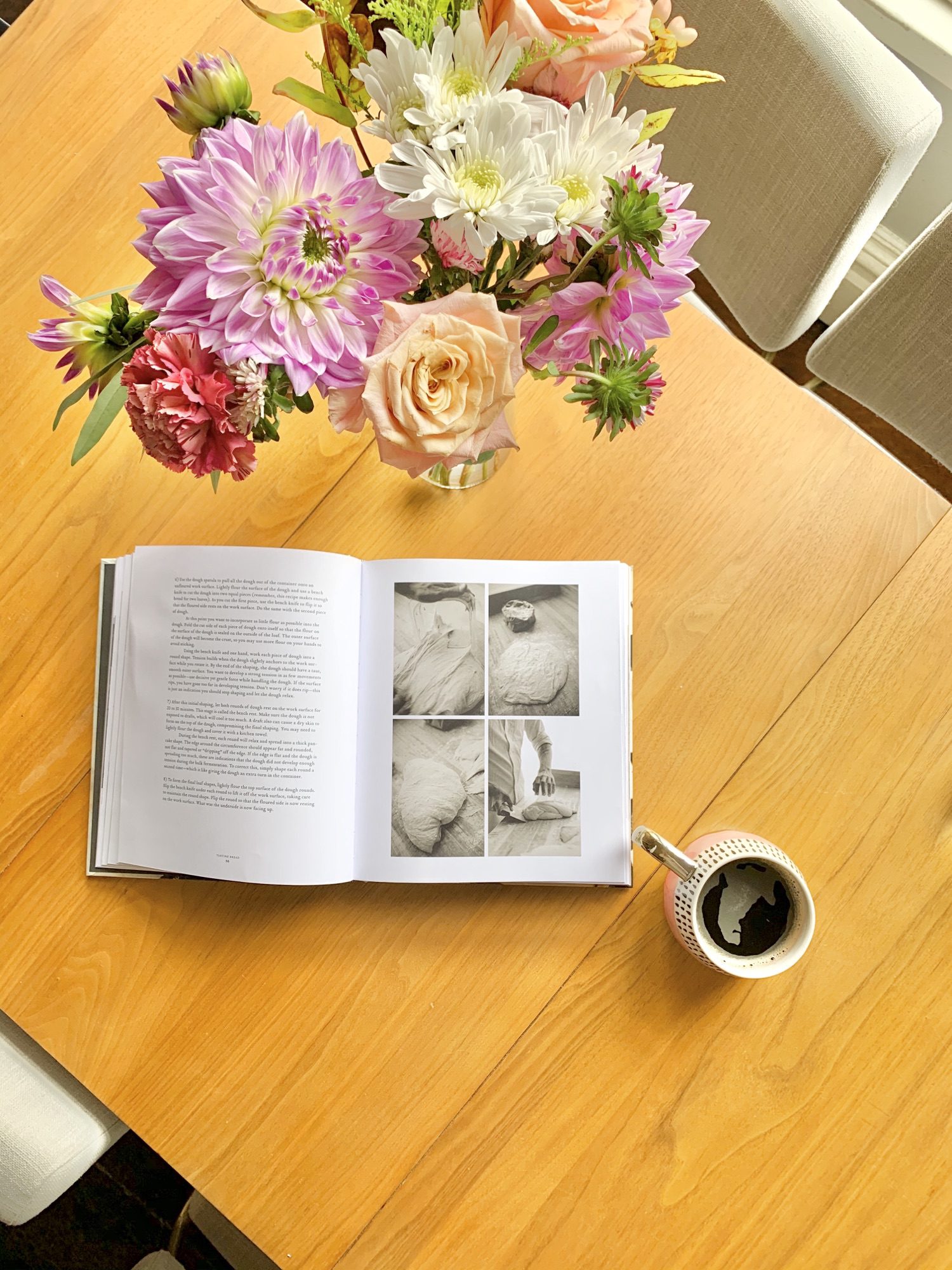
The learning curve was real, I’ll admit. My first sourdough loaf was dense enough to use as a doorstop. The yogurt separated in ways that were alarming before I understood why. There’s a period of experimentation that requires patience and a tolerance for imperfect results. But that period ends. And on the other side of it is a skill that compounds. Every time I make something from scratch, I get marginally better at it. After six months, I’m not a chef, I want to be honest about that. But I’m someone who makes their own bread on weekends and finds genuine pleasure in it, and that is not the person I was in January.
Things I’d suggest starting with if you want to try this:
- Granola: comes together in thirty minutes, lasts a week, and you control the sugar
- Peanut butter: four minutes in a food processor, and the difference in taste is genuinely shocking
- Vanilla extract: start it now, forget about it for a few months, thank yourself later
- Bread, when you’re ready: start with a simple no-knead loaf rather than sourdough
Does it happen every week without fail? No. Some weeks are a takeout week and that’s fine. The habit doesn’t have to be perfect to count.
Hobbies That Happen to Be Good for You
Here is something I’ve come to believe pretty firmly: the wellness habits most likely to stick are the ones where wellness is a side effect, not the goal. What I mean is this. If I go for a walk because I told myself I need to exercise, the walk feels like a chore I’m getting through. If I go for a walk because I want to listen to a specific podcast, or because I want to see the light in the evening, or because I’m thinking through a problem and walking helps me think, the walk happens effortlessly, and the exercise is incidental.
This is why I started thinking about wellness habits through the lens of hobbies. What do I genuinely want to spend time doing that also, quietly and without demanding credit for it, makes me healthier?
For me, over these six months, that’s been:
- Long evening walks, not power walks, just walks. Often with a podcast or sometimes without anything at all.
- Tending to a small herb garden on my windowsill, it sounds minor but it gives me something to check on daily, something that needs care, something alive that responds to attention.
- Knitting, which I picked back up after a decade away, it keeps my hands busy and my screen time down on the evenings I do it.
- Reading physical books before bed instead of scrolling, not as a wellness practice, but because the books are genuinely good and I was tired of feeling like I’d wasted my evening on nothing.
None of these started as wellness habits. They started as things I wanted to do. The wellness benefits, more movement, better sleep, lower anxiety, less mindless consumption, came along as passengers.

I think this is the single most underrated principle in building a sustainable wellness practice: stop trying to do things that are good for you. Start doing things you enjoy that happen to also be good for you. The sustainability difference is enormous. Ask yourself: what hobbies did I love as a kid, or have always wanted to try, that involve movement, creativity, or time away from screens? Start there. Let the wellness be the bonus, not the burden.
The Honest Shortlist: Wellness Habits That Genuinely Stuck
After six months of paying attention, here’s what I can say with confidence is actually part of my life now. Not aspirationally, actually.
- Phone-free mornings (20 minutes). Every day? No. Most days? Yes. And on the days I skip it, I notice the difference.
- Cooking from scratch at least a few times a week. It’s not every meal. Some weeks it’s just one big batch of something. But the intention is there and it’s become a genuine pleasure.
- Evening walks, most nights. Twenty to forty minutes. No agenda. This is the habit I’m most proud of because it doesn’t feel like a habit at all, it feels like something I want.
- Reading in bed instead of scrolling. I sleep better. Full stop.
- Drinking more water, more consistently. This one crept in without me trying. When you’re cooking more and going outside more, you just drink more water. Sometimes the habit you want comes as a side effect of another habit.
Notice that “consistently” isn’t in most of those descriptions. None of these happen every single day without exception. That’s not what sticking means. Sticking means it’s become a default, the thing I return to even when I fall off, the thing that feels like mine.

A Few Tools That Actually Helped
Neither of us are big on buying our way into better habits, but a few things genuinely made a difference in staying consistent.
The one Bri swears by is a sunrise alarm clock. Instead of being jolted awake by a blaring alarm, it gradually fills the room with light slowly over thirty minutes, simulating a natural sunrise. It sounds like a small thing until you experience the difference between waking up tense versus waking up already calm. This was especially helpful getting up early for work in the winter. For anyone trying to protect a slow morning, it’s hard to overstate how much easier that is when you don’t start the day in fight-or-flight mode. Cat was skeptical until she tried it, now she says it’s the one thing she’d replace immediately if it broke.
A large glass water bottle is unglamorous but it works. Cat started carrying a large one everywhere, to her desk, on her walks, to the couch, and her water intake went up without her ever having to think about it. No app, no tracking, no reminders. Just a bottle that’s always in her line of sight. Sometimes the simplest habit fix is the most embarrassingly obvious one.
For Bri, a cute bread mixing bowl was a quiet game changer. A large, wide bowl with a bowl cover that doubles as a proofing vessel made the whole from-scratch cooking routine feel less like a production and more like a natural part of the day. When the right tool is already on the counter, the habit has less friction to overcome. She went from making bread occasionally to making it most weekends simply because the setup stopped feeling like a project.
What Six Months Taught Me About Wellness Habits
If you’ve read this far, you might be waiting for the big takeaway, the framework, the system, the five-step approach. I’m not going to give you one, because I don’t have one, and I’m suspicious of anyone who does. What I have are a few things I now believe pretty deeply, that I didn’t have language for six months ago.
Small beats ambitious, every time. The habit that asks very little of you on a hard day is the habit that survives hard days. Protecting twenty minutes in the morning is more durable than a seventy-five minute morning routine, because twenty minutes is achievable even when life is messy.
Enjoyment isn’t optional. If you genuinely dread a wellness habit, it is not the right wellness habit for you. This isn’t laziness or lack of discipline, it’s basic psychology. Sustainable behavior change is built on positive associations, not gritted-teeth endurance.
Identity matters more than motivation. I stopped thinking about whether I felt motivated to go for a walk and started thinking about whether I was the kind of person who goes for walks. It sounds subtle. It isn’t. When a behavior is tied to who you are rather than how you feel, it doesn’t depend on the feeling being present.
Imperfect and consistent beats perfect and occasional. My bread isn’t always beautiful. My mornings aren’t always quiet. But I come back to both, again and again, and that returning is the habit. The streak doesn’t have to be unbroken to be real.

Six months in, I’m not optimized. I’m not living my best life by any magazine’s definition. I still have evenings where I eat crackers for dinner and scroll longer than I meant to. But I am, quietly and genuinely, living with more intention than I was before. I cook more. I’m outside more. I start my mornings a little slower and my days go better for it. That’s what wellness habits have actually given me. Not a transformation. Just a life that feels a little more like mine.
I’d love to know what’s stuck for you. The things you didn’t plan on keeping, the ones that quietly became part of your days. Leave a comment below!
With love,
Bri & Cat
Affiliate Disclaimer:
As an Amazon Associate I earn from qualifying purchases. This comes at no additional cost to you. We only recommend products that we believe will add value to our readers.
Leave a Reply