
This site contains affiliate links, view the disclaimer page for more information.
If you’ve been curious about homemade cleaning swaps but weren’t sure if they actually work, I’m here to tell you, they do, and they might just change the way you think about cleaning your home forever.
I still remember the day I opened my cabinet under the kitchen sink and counted seven different bottles of cleaning products. Seven. One for the counter, one for the glass, one for the bathroom, one for the toilet, one “multi-purpose” spray that I honestly wasn’t sure what it was for anymore. And every single one of them smelled like a swimming pool had a baby with a lemon factory. Synthetic, sharp, and weirdly overwhelming for something that was supposed to make my home feel fresh.
That was my turning point. I didn’t go all-in overnight, I’m not that person. I started with one swap, then another, and now my cleaning routine is almost entirely DIY, it smells like an actual spa, and I spend a fraction of what I used to spend on store-bought products. That’s the thing nobody tells you about homemade cleaning swaps: the hardest part is starting. Once you do, you won’t want to stop.
Table of Contents
Why I Made the Switch (And Why You Might Want To)
I wasn’t trying to become a “natural living” person. I just started reading labels. And once you read the labels on conventional cleaning products, the synthetic fragrances, the harsh surfactants, the warning symbols that say “harmful if inhaled” on something you’re supposed to spray all over your kitchen counters, it’s hard to un-see it.
Beyond the ingredient concerns, there’s the plastic waste. The cost. The fact that I was buying a separate product for every single surface in my home when, honestly, a few simple ingredients can do the same job for almost everything.
Here’s what I kept hearing though, and maybe you’ve heard it too: natural cleaners don’t actually work. That they’re fine for light tidying but can’t handle real grime, real bacteria, real life. I want to push back on that, hard. Because after years of making and using these recipes, I can tell you that the right homemade cleaning swaps are not only effective, they’re often better. They clean without leaving residue. They don’t trigger headaches. And they smell genuinely good, not artificially good.
What do you actually need to get started? Honestly, not much. Most of these recipes call for some combination of:
- White distilled vinegar
- Baking soda
- Washing soda
- Castile soap (liquid or bar)
- Distilled water
- Witch hazel
- Essential oils of your choice
That’s pretty much it. Most of those items cost just a few dollars and last for months. I did the math once and estimated I save somewhere around $200–$300 a year compared to what I used to spend on store-bought cleaners. And that’s a conservative estimate. Let’s get into the actual recipes.
Homemade Counter Cleaner Spray
This was my very first homemade cleaning swap, and it’s still the one I use every single day. If you’re only going to try one recipe from this entire post, make it this one. It’s that simple, that effective, and that satisfying to use.
The concept is straightforward: diluted white vinegar cuts through grease and kills bacteria, castile soap lifts grime, and essential oils add scent while also bringing their own antimicrobial properties to the party. You mix it in a spray bottle, shake it, and you’re done. Total prep time is about three minutes.
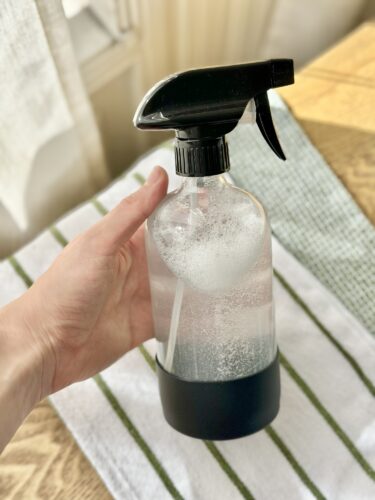
Here’s my go-to recipe:
- 1 cup distilled water
- 1/2 cup white distilled vinegar
- 1/4 teaspoon liquid castile soap
- 15–20 drops of essential oil (more on this below)
I use a 16-ounce glass spray bottle from Amazon, it looks beautiful on the counter, it doesn’t degrade from the vinegar over time the way plastic can, and it makes me genuinely happy to reach for it. That last part matters more than you’d think. When your cleaning supplies are pretty and smell good, you actually want to clean.
For essential oils, my absolute favorite combination is lemon and tea tree. The lemon is bright and clean-smelling, and the tea tree adds an extra layer of antibacterial power. In the winter I switch to eucalyptus and peppermint, which smells incredibly crisp and fresh. For a warmer, more relaxing vibe, lavender and rosemary is gorgeous.
One important note: do not use this spray on marble, granite, or unsealed stone surfaces. The vinegar is acidic and can etch those materials over time. For stone countertops, I use a simple dilution of castile soap and water instead. But for laminate, tile, sealed wood, stainless steel, and most other surfaces? This spray is magic.
Homemade Hand Soap
Once I made the switch to homemade counter cleaner and started thinking more carefully about what I was putting on my surfaces, it was only a matter of time before I started looking at what I was putting on my hands twenty times a day too.
Conventional liquid hand soaps are loaded with synthetic fragrances, preservatives, and in some cases, ingredients like triclosan that have been flagged by researchers for their potential effects on hormones and the environment. And honestly? A lot of them are incredibly drying. I used to keep a bottle of lotion right next to the kitchen sink because washing my hands left them feeling stripped. That felt like a problem worth solving.
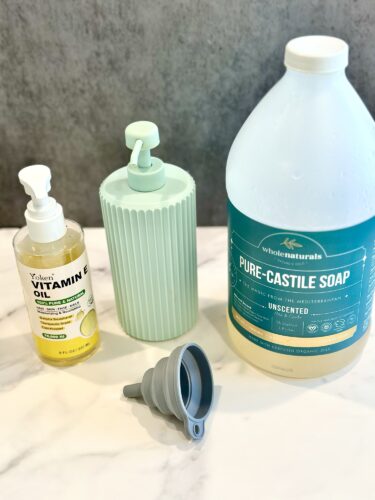
This homemade hand soap recipe changed that entirely. My hands feel soft after washing. My sink area smells beautiful. And one batch costs me maybe a dollar to make and lasts for weeks.
Here’s what you need:
- Liquid castile soap
- Water (distilled preferred)
- Vitamin E oil (5–8 pumps)
- Essential oils of your choice (10–15 drops, optional)
- A soap dispenser, glass is ideal, but any pump bottle works
For essential oil combinations, I’ve experimented a lot and landed on a few favorites depending on where the soap is going:
- Kitchen sink: lemon + rosemary (cuts through cooking smells, smells incredibly fresh)
- Bathroom: lavender + geranium (floral, calming, smells expensive)
- Kids’ bathroom: orange + vanilla (warm, sweet, and crowd-pleasing)
- Guest bathroom: bergamot + eucalyptus (clean and elevated, very “boutique hotel”)
A word on the vitamin E oil: don’t skip it. I know it might seem unnecessary, but that single tablespoon of Vitamin E oil is what separates this recipe from something that just cleans your hands versus something that actually nourishes them. It disperses into the soap and rinses clean without leaving a greasy residue. You won’t feel it on your hands, but you’ll notice its absence if you ever make a batch without it.
This is also one of those homemade cleaning swaps that is almost embarrassingly easy to make look beautiful. Decant it into a pretty glass soap dispenser, tie a sprig of dried lavender around the neck with twine, and suddenly your bathroom looks like it was styled for a magazine shoot. I’ve given these as housewarming gifts, holiday gifts, and “just because” gifts. People always ask where I bought it.
One quick tip: shake or swirl gently before each use, since the castile soap and water can separate slightly over time. And if you notice the pump getting sluggish, just add a tiny splash more water, sometimes the mixture thickens up a bit depending on your castile soap brand. Check out our full post on how to make DIY hand soap.
Homemade Laundry Detergent
Okay, I’ll be honest, this one took me the longest to commit to. Laundry felt high-stakes. What if my clothes came out dingy? What if it didn’t suds up enough? What if it smelled weird?
None of those things happened. This homemade laundry detergent recipe is one of my most-used swaps and one I’ve recommended to probably everyone I know. It gets clothes genuinely clean, it works in both standard and HE machines, and it makes laundry smell like something from a boutique hotel.
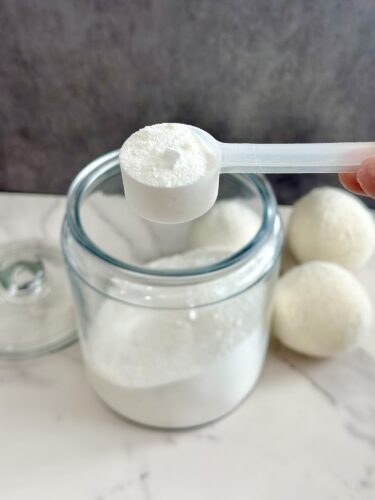
Here’s what you need:
- 2 cups washing soda
- 2 cups baking soda
- 2 bars unscented Castile soap, finely grated (Dr. Bronner’s Baby Unscented or Kirk’s Fragrance-Free)
- 1 cup Epsom salts
- Optional: 3–6 drops lavender or lemon essential oil
Mix everything together in a large bowl, making sure the soap is grated fine enough to blend in well, then store it in a glass jar with a lid. A wide-mouth mason jar with a little wooden scoop inside looks incredibly charming on a laundry room shelf, just saying.
Use 1–2 tablespoons per load. Yes, that little. It might feel like not enough, but washing soda and baking soda are workhorses, they soften water, boost cleaning power, and help neutralize odors. You don’t need a lot.
For scent, lavender is the classic choice and for good reason. It’s calming, clean, and universally loved. I’ve also done a eucalyptus and lemon combo that makes folding laundry feel like an event. If you have sensitive skin or are making this for kids, you can skip the essential oils entirely and it still works beautifully.
This is one of those homemade cleaning swaps that also makes a genuinely great gift. Package it in a pretty jar with a handwritten label and a wooden scoop and it looks like something you’d buy at a farmer’s market for $18. Here is our full post on how to make DIY laundry detergent.
Homemade Fruit and Vegetable Wash
This one surprised me the most when I first started making it, mostly because I didn’t realize how much I needed it until I started using it.
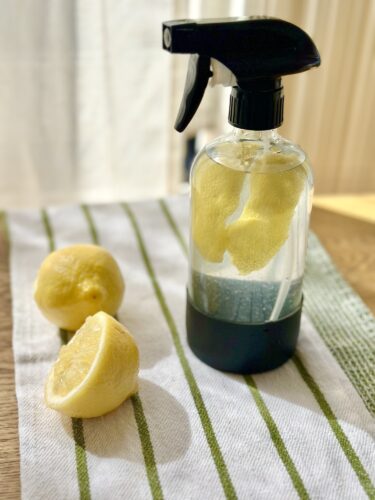
Here’s the thing: rinsing your produce under water alone doesn’t remove pesticide residue, wax coatings, or the general handling residue from everything your fruits and vegetables touched between the farm and your kitchen. A simple homemade fruit wash does, and it takes about thirty seconds to make.
My recipe:
- 1 cup distilled white vinegar: the backbone of the recipe; go for the plain
- 1 cup water: filtered or tap is fine; distilled is great if you have it
- Juice of ½ a lemon: fresh is best (more on why below)
- Optional: 1 tablespoon baking soda (add this last, it will fizz)
You can mix this in a spray bottle and spray it directly onto produce, let it sit for a minute, then rinse. Or for things like berries and grapes, you can fill a large bowl with water, add a splash of vinegar and a squeeze of lemon, and let the produce soak for five minutes before rinsing.
I want to address the concern I had when I first started: will my strawberries taste like vinegar? No. As long as you rinse thoroughly after soaking or spraying, there is zero vinegar taste left behind. I was skeptical too, but I promise. The first time I did this with a bowl of grapes and then rinsed and tasted them, they just tasted like… grapes. Clean, fresh, delicious grapes.
This is one of those small homemade cleaning swaps that makes a big difference in how you feel about the food you’re putting into your body. It’s also incredibly cheap, you probably have everything you need in your pantry right now. Here is our full post on how to make DIY fruit and veggie wash.
Homemade Linen Spray
If the counter cleaner is the most practical swap on this list, the linen spray is the most luxurious. This is the one that makes people walk into your home and say “it smells so good in here, what is that?” It’s the invisible upgrade that ties your whole natural home routine together.
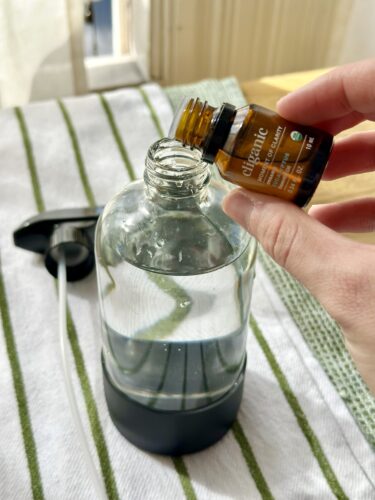
I started making linen spray because I wanted my bedroom to feel more like a hotel room, calm, clean, a little elevated. Now I use it everywhere. On my pillows before bed. On curtains and upholstery. On freshly washed towels before I fold them. On my yoga mat. On the couch after the dog has been particularly enthusiastic about claiming it.
Here’s the base recipe:
- 3/4 cup distilled water
- 2 tablespoons witch hazel (this helps the essential oils blend into the water and extends the scent)
- 20–30 drops of essential oil
That’s it. Shake before each use and spritz lightly on whatever you want to freshen up.
The fun part is customizing the scent by room or mood. Here are my favorite combinations:
- Bedroom: lavender + cedarwood (deeply calming, great before sleep)
- Living room: bergamot + orange (warm, welcoming, uplifting)
- Bathroom: eucalyptus + peppermint (clean and spa-like)
- Linen closet: lavender + clary sage (keeps everything smelling clean between washes)
One thing I love about linen spray as a homemade cleaning swap is that it’s also a sensory ritual. Spraying your pillows before bed, taking a breath, and feeling your shoulders drop, that’s not just cleaning, that’s self-care. It’s the kind of small, intentional habit that makes your home feel curated and calm rather than just maintained.
Reed Diffusers: The Finishing Touch to Your Natural Home
Once you start making homemade cleaning swaps that smell incredible, you naturally start thinking about the ambient scent of your home too, not just the surfaces. That’s where reed diffusers come in.
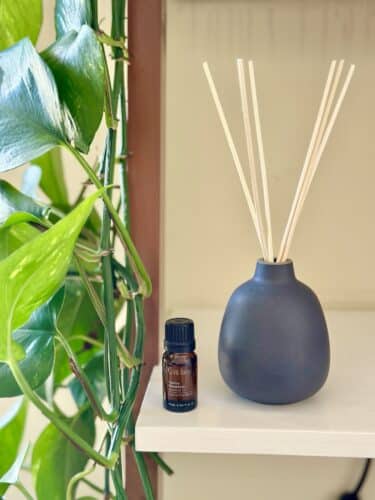
I wrote a whole post on making homemade reed diffusers (link here), but I want to mention them in this context because they really are the perfect companion to a non-toxic cleaning routine. Think about it: you’ve swapped out all the harsh synthetic-smelling cleaners, you’ve got your linen spray working beautifully, and then you walk into a room and there’s a gorgeous diffuser quietly scenting the air with the same essential oils you use everywhere else. It creates what I think of as a cohesive scent story throughout your home.
What you will need:
- ⅓ cup fractionated coconut oil
- 1 tablespoon vodka: Yes, regular drinking vodka.
- 25–30 drops essential oils
- Small bud vase
- Reed diffuser sticks
- Kitchen funnel
When your counter spray smells like lemon and eucalyptus, and your linen spray carries a hint of the same, and your reed diffuser in the living room ties it all together, your home stops smelling like a collection of products and starts smelling like a place. Your place. That’s a powerful thing.
If you haven’t tried making a DIY reed diffuser yet, it’s one of the most satisfying homemade cleaning and home fragrance swaps you can make. Head to our post on how to make them and start there, then come back and build out the rest of your routine.
How to Start Without Feeling Overwhelmed
I want to end with this because I know how it feels to look at a list of five new recipes and think “okay but when.” Life is full. Nobody has unlimited time to overhaul their cleaning routine in a single afternoon. Here’s my genuine advice: pick one swap. Just one. Start with the counter cleaner spray because it’s the quickest to make, the most immediately useful, and it will show you, in real time, that homemade cleaning swaps actually work. Once you’ve made that spray and used it for a week, you’ll be ready for the next one.
The goal isn’t perfection or doing everything at once. The goal is slowly, pleasantly replacing the things that aren’t serving you with things that do. That’s it. And these six swaps are a genuinely great place to begin.
To recap everything we covered:
- Homemade counter cleaner spray: vinegar + castile soap + essential oils in a glass spray bottle
- Homemade laundry detergent: washing soda + baking soda + grated castile soap bar
- Homemade fruit and vegetable wash: vinegar + lemon juice + baking soda + water
- Homemade linen spray: distilled water + witch hazel + essential oils
- Reed diffusers: the ambient scent anchor for your whole natural home routine
These homemade cleaning swaps are simple, affordable, non-toxic, and, this part is important, they genuinely smell amazing. Not fake-lemon amazing. Not industrial-pine amazing. Really, truly, walk-into-a-room-and-exhale amazing.
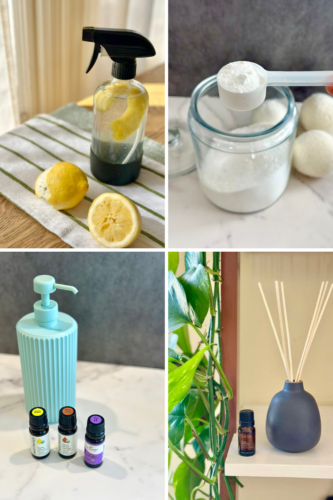
If you try any of these, I’d love to hear about it. Drop a comment below and tell me which swap you’re starting with. And if you found this post helpful, save it to your Pinterest boards, it’s a list of recipes you’ll want to come back to again and again.
Happy cleaning!
With love,
Bri & Cat
Affiliate Disclaimer:
As an Amazon Associate I earn from qualifying purchases. This comes at no additional cost to you. We only recommend products that we believe will add value to our readers.
Leave a Reply